Tag: Pellegrino Artusi

  • Italy’s ancient fruit preserves: the history of mostarda 🏺

    Italy’s ancient fruit preserves: the history of mostarda 🏺

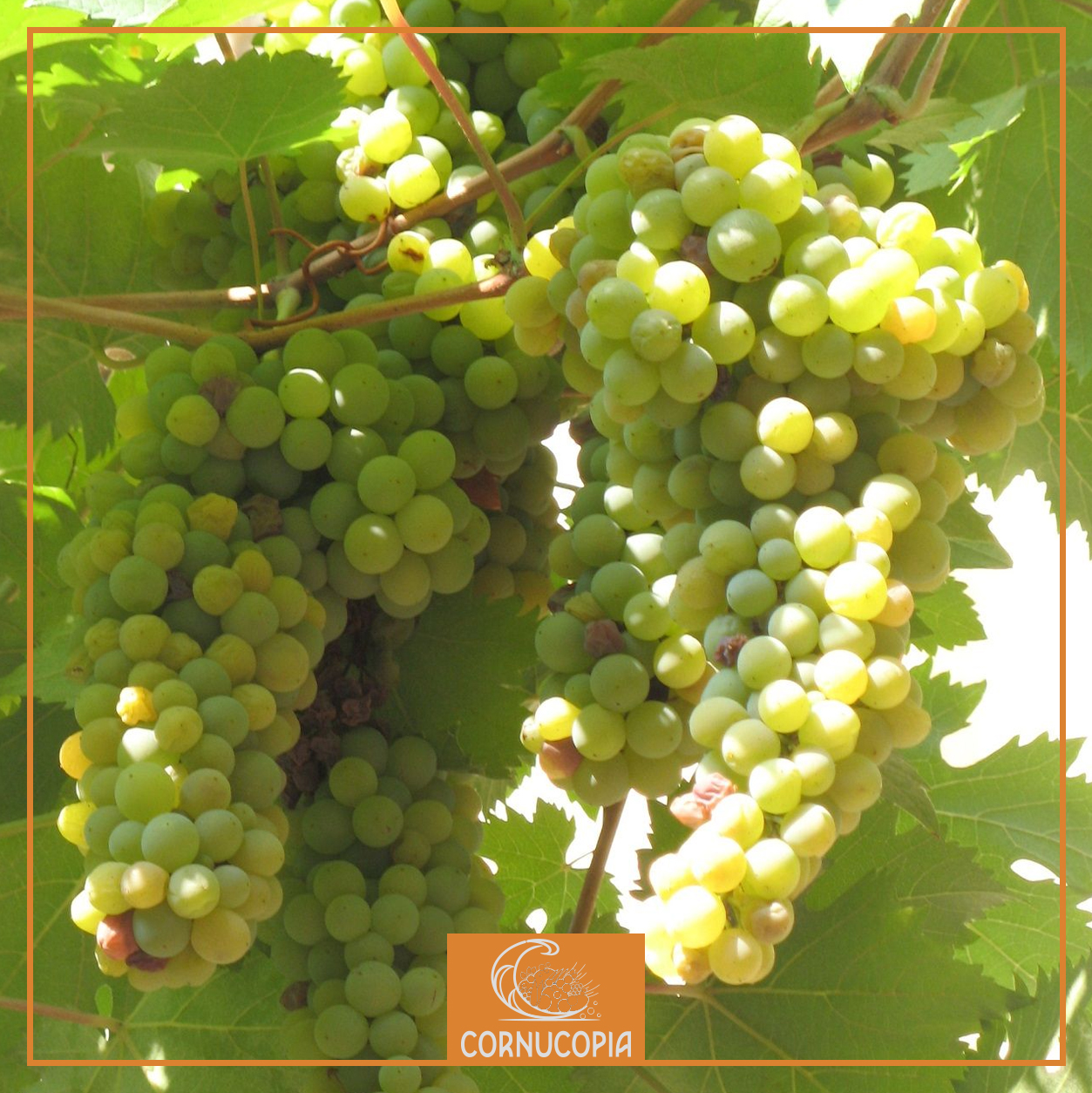
    Pliny the Elder’s bones were tested by a youth spent in war among the Germanic peoples, his skin mottled with scars and signs of military life. He found relief when he walked thoughtfully and meditatively among the cultivated fields in the Roman countryside. Pliny stopped near a tree around which a vine filled with large sweet berries had grown. A vine grown in the Etruscan way. The sun was high on that autumn afternoon, Pliny picked a few grapes, held them up to the light, ate them, and noted the shape and characteristics of each berry. In the midst of the fields there were men gathering clusters in large containers. The scents of fruit and cooked must soon mingled together. This year Pliny turns 2000 years old, but the tradition of cooking grape juice to reduce it to syrup is much older.

    In Pliny’s time, the countryside was cultivated orderly close to the large urban centers. Despite the hard work in the fields and legions, these men followed a predominantly vegetable-based diet, even the richest patricians and emperors. Eating little and in a controlled manner was an important cultural tradition for them, but they were also able to enjoy a rich and complex cuisine where sweets were mostly made of fruit, a delightful symbol of prestige.

    The farmers of the ager cultivated the vine according to techniques learned from the Etruscans and Greeks. In addition to wine, which as one can imagine required complex processing for the time and various corrective interventions, grapes were also used as a sweetener, alongside honey, a tradition that has been passed down to this day, although not always in an obvious way (I will talk about this later). One of the most popular uses of grape must, to prolong its preservation, was in fact to cook it.

    Even today, cooked must is the basis, for example, of Traditional Balsamic Vinegar of Modena, in some remote farmhouses in Modena and Reggio Emilia, some enthusiasts still cook must in large cauldrons inherited from their grandparents. Even then, 2000 years ago, the must collected from these vines twisted around the trees (an article on the so called married vines will arrive shortly) was boiled, spreading the scent carried by the autumnal breezes in the air. This must was then used, among other things, to preserve fruit. During this period, cooked must coexisted with mostarda, the latter being an appreciated ingredient in spelt sausages and some vegetables, while the syrup obtained from reducing grape juice already had multiple purposes, such as a preservative for fruit.

    Under the banner of the Visconti’s blue dragon over a millennium later, in the medieval period, cooked must reappears once again used as a condiment and preservative, this time enriched by apothecaries with ground and boiled mustard seeds, another ingredient of ancient origin that made it an appetizing spicy condiment to use on meats (no, not yet paired with cheese, “It is ideal for marinated pork and tench” cites the Liber de Coquina, which also suggests enriching the must with cloves, ginger, cinnamon). It was a spicy must, in short, “mustum ardens”, present at that time in the kitchens of House Gonzaga in Mantua in northern Italy and then spread throughout the known world. Let us not forget the commercial power of these two ancient Lombard families.

    It is in this late medieval period that mostarda appears as we know it today. The term will re-emerge in French and English attributed only to the element that enriches the must, the “mustard” seeds. Up there this term would then become forever identified with mustard (which, in Italy is called senape), also worked as it was in that period, boiled (in vinegar) for days to remove the bitter tones. It is interesting to note a note dating back to the Venice of the 14th century, where the fat that dripped from the roasts was added to this sauce.

    De musto et mustarda: sic para mustum pro mustarda conficienda: accipe mustum nouum, fac eum bullire quod quarta pars solum remaneat uela. Et caue a fumo et spumetur bene. Deinde, semen senapi cum predicto musto distemperando tere fortissime. Postea, pone in barillo, et poterit conseruari per 4 menses. Et ualet pro carnibus porcinis uel tincis salsatis. Mustum poteris seruare pro aliis ferculis. Liber de Coquina, XIV sec.

    In the 15th century, Maestro Martino mentions a white mostarda made with almond paste, mustard, agresto (sour grape juice) or vinegar and breadcrumbs, and a red mustard that contained raisins. Interesting is the reference to a third dry mustard, “da cavalcata” (“suitable for riding”), to be kept in saddlebags during journeys and then revived when necessary.

    A few centuries pass and Christopher Columbus sets foot in the future Americas. The Middle Ages academically ends here and scattered mentions of mostarda appear, but it is still difficult to understand exactly what is meant by this term, apart from the name, there are no references to the processing.

    Persutti accedant primo, bagnentur aceto,Apponatur apri lumbus, cui salsa maridet,Tripparumque buseccarumque adsit mihi conca,Rognones vituli lessi sapor albus odoret,Insurgant speto quaiae, mustarda sequatur!Sic vivenda vita haec: veteres migrate fasoli!Teofilo Folengo, XVI sec.

    L’assenza vostra ci corrompe ogni piacere, et non sinit esse integrimi; però tornate ed arete mustarda, e ogni bene che con voi ne portaste.Francesco Berni, XVI sec.

    We finally arrive in Carpi in the Renaissance period where grape must and mostarda are finally united in marriage (the famous “mostarda fina” on which I absolutely want to write an article in the future, but the documentation is scattered and difficult to find). Mustard begins to detach from the saba and will still appear with more or less shaded differences with the term “savor” (from saba, precisely, the cooked must) in the Bolognese and throughout Italy south of Lombardy, think of Sicilian mostarda, thickened with flour. Remaining in Emilia-Romagna, at the end of the 19th century Artusi mentions it as an excellent product of Savignano on Rubicone, for example, but the popularity of this condiment will remain linked to Lombardy and the territories of House Visconti and House Gonzaga influence as candied fruit immersed in a sugar and mustard syrup. It becomes, in effect, a “conserva”.

    It is worth making a quick note at this point about the city of Modena and its “mele campanine” (Campanine apples). The characteristic Campanino becomes the most distinctive element of Mantuan mostarda. Let us not be surprised, Modena had a brief period of Mantuan domination and anyway the relations between House Este (let us think of Isabella d’Este) and Gonzaga have always been very close. At an enogastronomic level, Modena is closer to Mantua than it is to Rimini or Cesena.

    We have as we have already said arrived at the 1800s, the century of Pellegrino Artusi. In an early 20th century text, the mustard of Cento is mentioned… I have found nothing about it, but if anyone has any information, please write me an email or share the research on the Facebook group of historical gastronomy enthusiasts or on the Telegram group.

    In this period, the documentation is richer and more generous. The mustard contained in the “mostarda”, it is said, was used to cover some defects of meats and preparations, it is not difficult to think that this has always been one of its main uses.

    Essentially, there are three different types of varying quality, also derived from the increasingly abundant presence of sugar that replaces the cooked grape must and honey: those based on reduced wine or cooked must are the cheapest and can be clarified with egg white (we remember the controversy over “vegan” wines), in the middle range are those based on honey (“mele” in old italian), and finally the best, based on sugar. With the spread of sugar beet in the Napoleonic period, these too will become a popular product, detached from court gastronomy. The historian Marc Bloch, as we all know today, wrote a seminal text on the production of jams (and yes, the differentiation of citrus-based marmalade is recent history).

    Two centuries ago, the production of these motarde, apart from the sugary base, was nevertheless similar. There are fascinating descriptions of early 20th-century procedures that describe fruits dried in the sun instead of candied. The mostarda was cooked on the edges of large cast-iron stoves where it had to simmer gently and be frequently stirred and skimmed so that the juice would not stick to the bottom. Interesting are the packaging techniques of our fathers, who filled the jars starting from the fruit that remained on the surface and therefore less cooked, adding that from the bottom on top, techniques of peasant wisdom that are still repeated today in large kitchens.

    The Cornucopia Experience

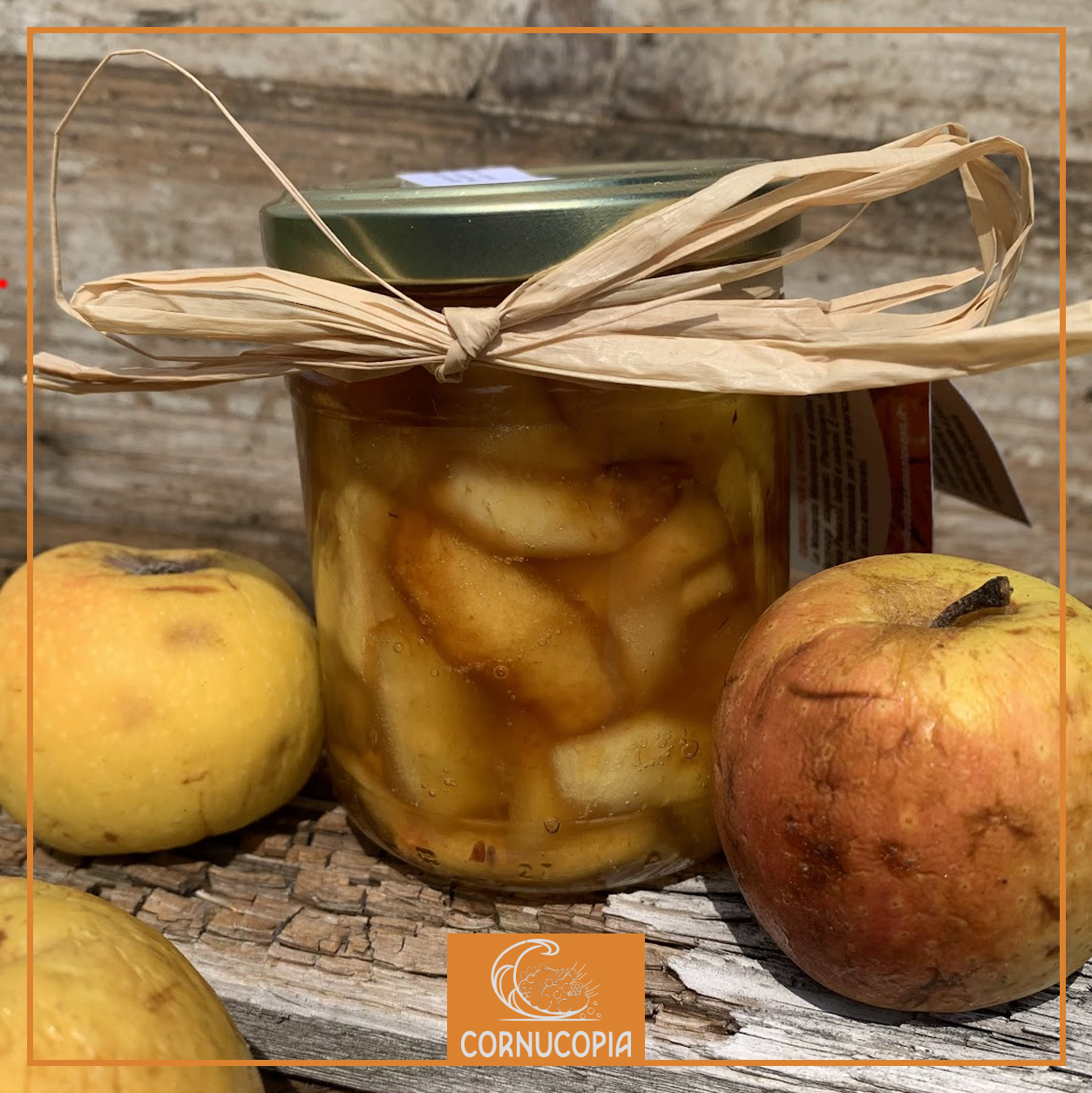
    Few traditional food products recall the flavors of the Middle Ages like mustards, with their sweet-spicy contrast to be paired with fatty and savory dishes. That of Campanine apple mostarda is probably the most emblematic representation of this sauce (or preserve), which combines a specific variety with a traditional processing.

    A small quantity of organic mostarda, which I have selected for authenticity and research of the product from the field to the laboratory, will soon be available for purchase in the e-commerce section. Products with this adherence to Cornucopia principles have been chosen to experience firsthand the history of our food and wine heritage, the same taste experiences as our ancestors.

    Follow the website, page, or channel for updates on a Cornucopia product that I am developing precisely these days, a product that combines the history of mostarda with that of the Campanina variety.
  • Storia della Mostarda

    Storia della Mostarda

    Le ossa di Plinio il vecchio erano provate da una gioventù passata in guerra tra i popoli germanici, la sua pelle screziata dalle cicatrici e dai segni della vita militare. Provava sollievo quando passava con fare pensieroso e meditabondo tra i campi coltivati nelle campagne dell’ager romano. Plinio si soffermò nei pressi di un albero attorno al quale era stata avvinghiata una liana colma di grosse bacche dolcissime. Una vite coltivata alla maniera etrusca. Il sole era alto in quel pomeriggio autunnale, Plinio staccò qualche chicco e lo guardò controluce, li mangiò e si annotò forma e caratteristiche di ogni bacca. In mezzo ai campi vi erano uomini che raccoglievano i grappoli in grandi contenitori. Dal fondo dei filari arrivavano i profumi della frutta e del mosto cotto che presto avrebbero vissuto assieme. Quest’anno Plinio compie 2000 anni, ma la tradizione di cuocere il succo d’uva per ridurlo a sciroppo è ben più antica.

    All’epoca di Plinio le campagne erano coltivate ordinatamente a ridosso dei grandi centri urbani. Nonostante il durissimo lavoro nei campi e nelle legioni, questi uomini seguivano una dieta prevalentemente vegetale, persino i patrizi più ricchi e gli stessi imperatori. Mangiare poco e in modo controllato era per loro un’importante tradizione culturale, ma erano anche in grado di godere di una cucina ricca e complessa dove i dolci erano per o più costituiti dalla frutta, una delizia simbolo di prestigio

    I contadini dell’ager coltivavano la vite secondo tecniche apprese dagli etruschi e dai greci. Oltre al vino, che come si può immaginare richiedeva lavorazioni complesse per l’epoca e vari interventi di correzione, l’uva era anche usata come dolcificante, affianco al miele, una tradizione che si tramanda fino a oggi, anche se non sempre in modo evidente (ne parlerò più avanti). Uno degli usi più popolari del mosto d’uva, per prolungarne la conservazione, era difatti quello di cuocerlo.

    Il mosto cotto è tutt’oggi la base, ad esempio dell’Aceto Balsamico Tradizionale di Modena (saba), in alcuni casolari remoti del modenese e del reggiano qualche appassionato ancora cuoce il mosto in grandi calderoni ereditati dai nonni. Anche allora, 2000 anni fa, il mosto raccolto da queste viti attorcigliate attorno agli alberi (sulle viti maritate arriverà a breve un articolo) veniva bollito facendo spandere nell’aria autunnale il profumo trasportato dalle brezze. Questo mosto veniva poi usato tra le altre cose per conservare la frutta. In questo periodo il mosto cotto coesisteva con la senape quest’ultima apprezzato ingrediente delle salsicce di farro e di alcune verdure, mentre lo sciroppo ricavato dalla riduzione del succo d’uva aveva già scopi molteplici come ad esempio conservante per la frutta.

    All’ombra del vessillo del drago azzurro dei Visconti oltre un millennio più tardi in epoca medioevale, il mosto cotto ricompare ancora usato come condimento e come conservante, questa volta arricchito dagli speziali con grani di senape macinata e bollita, un ingrediente anch’esso di natali antichi che lo rendeva un appetitoso condimento piccante da usare sulle carni (no, non ancora in abbinamento ai formaggi, “E’ ideale per carni di maiale e tinche marinate” cita il Liber de Coquina, che suggerisce anche di arricchire il mosto con chiodi di garofano, zenzero, cannella). Era un mosto piccante insomma, “mustum ardens“, presente allora nel Nord Italia nelle cucine dei Gonzaga di Mantova e poi diffuso in tutto il mondo conosciuto. Non dimentichiamo la potenza commerciale di queste due antichissime famiglie lombarde.

    Arriva in questo periodo tardo medievale la mostarda come la conosciamo oggi. Il termine riemergerà nella lingua francese e inglese attribuito però al solo elemento che arricchisce il mosto, “mustard“. Lassù questo termine sarebbe poi diventato per sempre identificativo della senape, lavorata per altro come la si lavorava in quel periodo ovvero bollita (in aceto) per giorni per rimuoverne le tonalità amare. Interessante una nota risalente alla Venezia del ‘300, dove il grasso che colava dagli arrosti veniva aggiunto a questa salsa.

    De musto et mustarda: sic para mustum pro mustarda conficienda: accipe mustum nouum, fac eum bullire quod quarta pars solum remaneat uela. Et caue a fumo et spumetur bene. Deinde, semen senapi cum predicto musto distemperando tere fortissime. Postea, pone in barillo, et poterit conseruari per 4 menses. Et ualet pro carnibus porcinis uel tincis salsatis. Mustum poteris seruare pro aliis ferculis.

    Liber de Coquina, XIV sec.

    Nel ‘400 Maestro Martino accenna a una mostarda bianca fatta con pasta di mandorle, senape, agresto (succo di uva acerba) o aceto e mollica e una mostarda rossa che contevev uva appassita. Interessante l’accenno ad una terza mostarda asciutta, da cavalcata, da tener nelle bisacce durante i viaggi per poterla poi rinvenire quando necessario.

    Passa qualche secolo e Cristoforo Colombo mette piede nelle future Americhe. Il Medioevo giunge accademicamente al termine qui e appaiono menzioni sparse sulla mostarda, ma è difficile ancora capire esattamente cosa si intenda con questo termine, oltre al nome, non vi sono accenni alla lavorazione.

    Persutti accedant primo, bagnentur aceto,
    Apponatur apri lumbus, cui salsa maridet,
    Tripparumque buseccarumque adsit mihi conca,
    Rognones vituli lessi sapor albus odoret,
    Insurgant speto quaiae, mostarda sequatur!
    Sic vivenda vita haec: veteres migrate fasoli!

    Teofilo Folengo, XVI sec.

    L’assenza vostra ci corrompe ogni piacere, et non sinit esse integrimi; però tornate ed arete mostarda, e ogni bene che con voi ne portaste.

    Francesco Berni, XVI sec.

    Arriviamo finalmente a Carpi in periodo rinascimentale dove riemerge il mosto d’uva cotto e la senape finalmente unite in matrimonio (la celeberrima mostarda fina sulla quale voglio assolutamente scrivere un articolo in futuro, ma le notizie sono sparse e difficili da reperire). La senape comincia a slegarsi dalla saba e apparirà ancora con differenze più o meno sfumate con il termine di savòr (da saba, appunto, il mosto cotto) a macchia di leopardo nel bolognese e in tutta Italia a sud della Lombardia, si pensi alla mostarda siciliana. Rimanendo in Emilia-Romagna a fine ‘800 Artusi la menziona come prodotto d’eccellenza di Savignano su Rubicone per esempio, ma la popolarità di questo condimento rimarrà collegata alla Lombardia e nei territori di influenza viscontea e gonzaghesca come frutta candita immersa in uno sciroppo dolce e senapato. Diventa a tutti gli effetti una “conserva”.

    Vale la pena a questo punto fare un veloce appunto sulla città di Modena e le sue mele campanine. Il caratteristico Campanino diventa l’elemento più caratteristico della mostarda mantovana. Non stupiamoci, Modena ha avuto un breve periodo di dominazione mantovana e comunque i rapporti tra Este (pensiamo ad Isabella d’Este) e Gonzaga sono sempre stati strettissimi. A livello enogastronomico Modena è più vicina a Mantova di quanto non lo sia a Rimini o Cesena.

    Siamo come abbiamo già detto arrivati al 1800, il secolo di Pellegrino Artusi. In un testo di inizio secolo si fa menzione alla Mostarda di Cento… Non ho trovato nulla a riguardo ma se qualcuno ha qualche informazione mi scriva cortesemente un’e-mail o condivida le ricerche sul gruppo Facebook degli appassionati di gastronomia storica o sul gruppo Telegram.

    In questo periodo la documentazione è più ricca e generosa. La senape contenuta nella mostarda, si dice, viene usata per coprire alcuni difetti delle carni e delle preparazioni, non è difficile pensare che questa sia sempre stato uno dei suoi principali utilizzi. Ne esistono sostanzialmente tre tipi di diversa qualità, derivati anche dalla presenza sempre più abbondante dello zucchero che si sostituisce al mosto cotto e al miele: quelle a base di vino ridotto o mosto cotto sono le più economiche e che si possono eventualmente chiarificare con l’albume (ricordiamo la diatriba sui vini “vegan”), in fascia media quelle a base di miele (“mele”) e infine le migliori, a base di zucchero. Con il diffondersi dello zucchero di barbabietola in periodo napoleonico, anche queste diventeranno un prodotto popolare, slegato dalle gastrofighetterie di corte. Lo storico Marc Bloch, sappiamo oggi tutti, scrisse un seminale testo proprio sulla produzione delle marmellate (e si, la differenziazione delle confetture a base di agrumi è storia recente).

    Due secoli fa la produzione di queste mostarde, a parte la base zuccherina, era comunque analoga. Ci sono affascinanti descrizioni di procedure di inizi ‘900 che descrivono frutti essiccati al sole anziché canditi. La mostarda veniva cotta ai bordi delle grandi stufe di ghisa dove dovevano sobbollire delicatamente ed essere spesso rimescolate e schiumate perché il succo non attaccasse sul fondo. Interessanti le tecniche di confezionamento dei nostri padri, che riempivano i vasi partendo dalla frutta che era rimasta in superficie e quindi meno cotta aggiungendo quella del fondo in cima, tecniche di saggezza contadina che ancora oggi si ripetono nelle grandi cucine.

    L’Eperienza Cornucopia

    Pochi sono i prodotti alimentari della tradizione che richiamano i sapori del medioevo come le mostarde, con il loro contrasto dolce-piccante da abbinarsi a piatti grassi e saporiti. Quella della mostarda di mele campanine è probabilmente la rappresentazione più emblematica di questa salsa (o conserva), che abbina una specifica varietà ad una lavorazione tradizionale.

    A breve sarà disponibile per l’acquisto nella sezione e-commerce un piccolo quantitativo di mostarda biologica, che ho selezionato per la autenticità e la ricerca del prodotto dal campo al laboratorio. Prodotti con questa aderenza ai principi Cornucopia sono stati scelti per fare vivere in prima persona la storia del nostro patrimonio enogastronomico le stesse esperienze di gusto dei nostri padri.

    Seguite il sito, la pagina o il canale per aggiornamenti su un prodotto Cornucopia che sto sviluppando proprio in questi giorni, un prodotto che unisce la storia della mostarda a quella della varietà Campanina.

  • The historical Macaroni Bolognese

    The historical Macaroni Bolognese

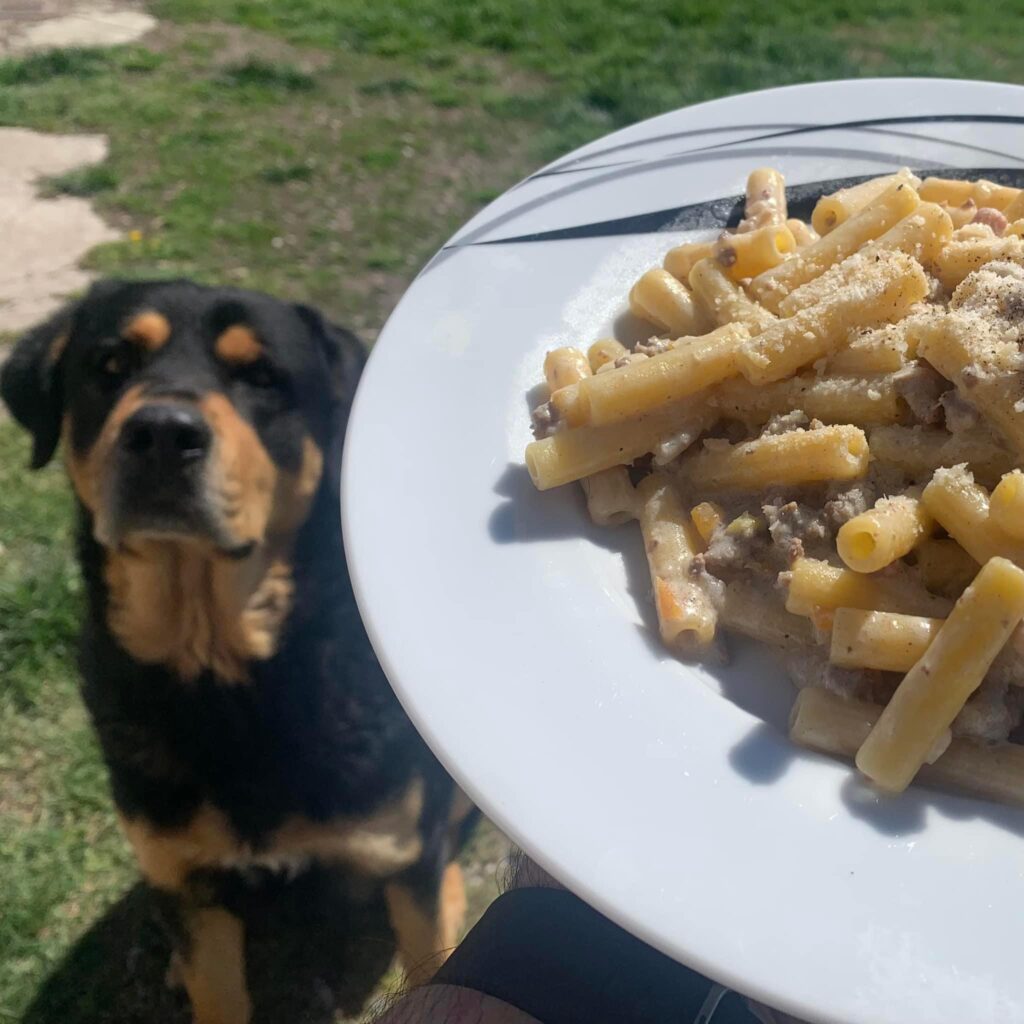
    For Bianchino and Sibillone

    Pellegrino Artusi

    Pellegrino Artusi was a wealthy man, born in what would become Romagna in pre-unification Italy in the early 1800s. A man who basically had two lives, split by a violent event that happened on his way out of a theater, not unlike what happened to Batman and his parents, a kind of dark knight of gastronomy in short, with a more disillusioned, sometimes cynical second life, but with a deep sense of ethics and morality.

    Artusi was born into a wealthy environment, lacking a thorough education and devoted to the pleasures his station allowed him until he was 30, in the then Church state, at the time when the turmoil of the struggles that followed the chaos of 1848 led to the first of Italy’s three Wars of Independence. In the twilight of the first of these, just before Cavour became prime minister, a young Artusi was walking home after seeing a poem inspired by another battle, a biblical narrative that led to the death of the Canaanite general Sisarah at the hands of a prophetess of Israel. The spiral of violence that the 30-year-old Artusi saw on stage, however, unfortunately, did not end in the theater, as his home was ravaged by brigands, and his sisters were met with a frightening fate.

    Pellegrino’s character and life took a profound turn that day. He moved to Florence and very soon retired to a life of study in the then Grand Duchy of Tuscany. The other Wars raged and strong cultural currents brought unthinkable revolutions even in academia (his path often intersected with the chair of Agriculture in Florence). He devoted himself to the arts, literature, as well as gastronomy, with a disillusioned and fiercely anticlerical slant. He never hid his aversion to religion, preferring a more secular and universal view of the great principles of progress and coexistence among peoples. One of these was the conscious fusion of cultures, which saw in food a direct expression of their identities. The vicissitudes he faced in publishing his celebrated collection of recipes and scientific reflections on regional Italian cuisine at the dawn of its founding are many and deserve a separate article, but it is interesting to see how the evolution of the manuscript from less than 500 recipes (475) mostly from Northern Italy ended with a version of almost 800, several editions later, all edited by him. Today we will tell about one of them, which Pellegrino brings back from his experience in Bologna not too far from his birthplace, Macaroni Bolognese (Maccheroni alla Bolognese).

    A half glass of cream makes it more delicate, says the Pelly

    Pellegrino describes his recipes by inserting reflections of a more or less scientific nature. In this case he is not particularly kind to the pasta he met in his Tuscany, where he resided, by the way, until his death. In describing his macaroni, he describes soft wheat pasta as tending to flake. At that time, Strampelli had not yet developed his new varieties; it is presumable that Pellegrino was referring to something like the wheat of plenty, which had been known for centuries (perhaps even since the time of the Roman Empire) and identified by Linnaeus in the late 1700s.

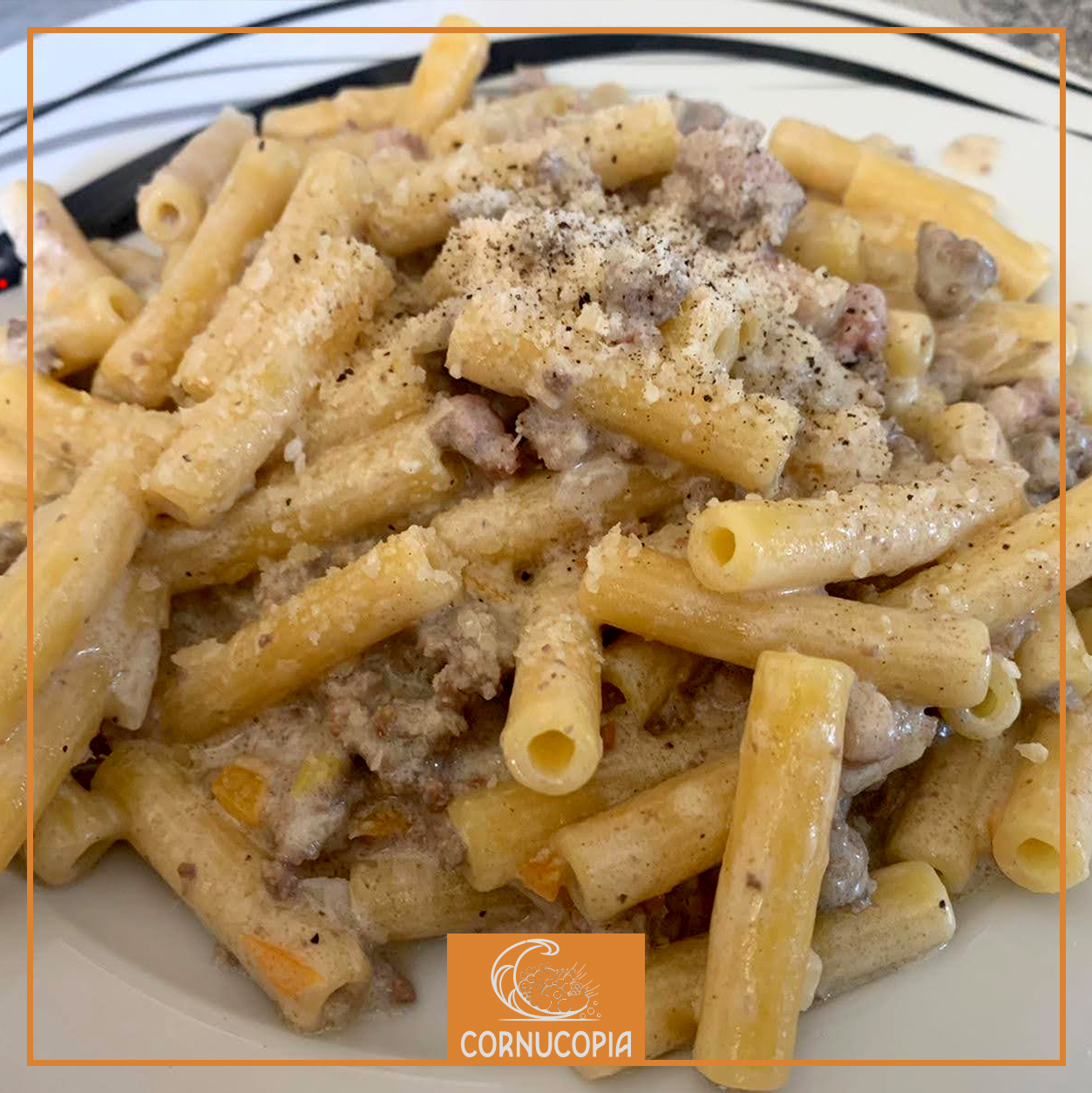
    The first striking thing about his macaroni is that it is “in bianco.” Tomatoes had not yet totally entered pasta recipes as we use them today, so it is not surprising that the use of a mixture of lean beef and pork fat, combined with the flour/butter/cream combination is more reminiscent of a lasagna filling than a ragout of today, even if Bolognese.

    Even the suggested addition of cream, chicken innards, or truffles is reminiscent of the flavors of a sophisticated baked pasta.

    Going to the ingredients I will try to suggest some varieties of Emilia-Romagna’s biodiversity, in conjunction with the Cornucopia idea.

    Maccheroni alla Bolognese

    • Lean veal (preferably in the tenderloin), Romagnola breed gr. 150.
    • Carnesecca (“pancetta tesa e salata”, Mora Romagnola breed), grams 50
    • Butter (Bianca Val Padana or Rossa Reggiana), grams 40
    • A quarter of a common onion.
    • One half carrot.
    • Two palm-long ribs of white celery, or the smell of green celery.
    • A pinch of flour, but very little (some variety from the Apennines, Mentana for example).
    • A small pot of broth.
    • Very little salt or point, on account of the carnesecca and broth being flavorful.
    • Pepper and, for those who like it, the smell of nutmeg.

    Cut the meat into small dice, finely chop with the lunette the carnesecca, onion and herbs, then put everything on the fire together, including the butter, and when the meat has taken on color add the pinch of flour, basting with the broth until cooked through.

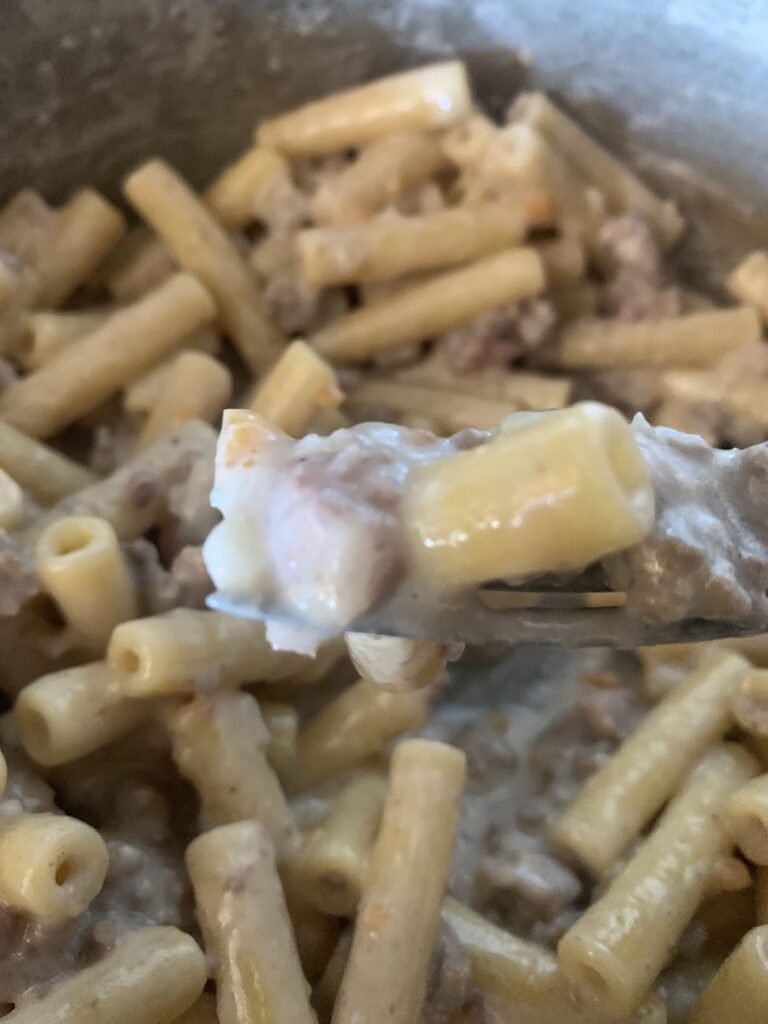
    Drain the macaroni well from the water and season it with Parmesan cheese and this gravy, which can also be made more grateful either with bits of dried mushrooms or with a few slices of truffles, or with a liver cooked between the meat and cut into small pieces; add, finally, when the gravy is made, if you want to make them even more delicate, half a glass of cream; in any case, it is good that the macaroni come to the table not secco arrabbiato, but diguazzanti in a little sauce.

    Pellegrino Artusi, “Science in the kitchen and the art of fine dining”
    Pantagruel seems to appreciate
  • I Maccheroni alla Bolognese

    I Maccheroni alla Bolognese

    Per Bianchino e Sibillone

    Pellegrino Artusi era un uomo benestante, nato in quella che sarebbe divenuta Romagna nell’Italia preunitaria, nei primi anni dell’Ottocento. Un uomo che ebbe sostanzialmente due vite, spaccate da un evento di violenza accaduto all’uscita di un teatro, non dissimilmente da quello che accadde a Batman e i suoi genitori, una specie di cavaliere oscuro della gastronomia insomma, con una seconda vita più disillusa, a volte cinica, ma con un profondo senso dell’etica e della morale.

    Artusi nasce in un’ambiente agiato, privo di un’istruzione approfondita e dedito ai piaceri che la sua stazione gli permetteva fino ai trent’anni, nell’allora stato della Chiesa, ai tempi in cui l’agitarsi delle lotte seguite al caos del 1848 portarono alla prima delle tre Guerre d’Indipendenza d’Italia. Al tramonto della prima di queste, poco prima che Cavour diventasse Primo Ministro, un giovane Artusi percorreva la via di casa dopo aver visto un poema ispirato ad un’altra battaglia, una narrazione biblica che portò alla morte del generale cananita Sisara per mano di una profetessa dìIsraele. La spirale di violenza che il trentenne Artusi vide sul palco però purtroppo non si estinse in teatro, perché la sua casa era stata devastata dai briganti, e alle sue sorelle fu riservata una sorte spaventosa.

    Il carattere e la vita di Pellegrino quel giorno ebbero una profonda svolta. Si spostò a Firenze e molto presto si ritirò ad una vita di studio nell’allora Granducato di Toscana. Le altre Guerre imperversavano e forti correnti culturali portavano rivoluzioni impensabili anche in ambito accademico (spesso il suo percorso si incrocià con la cattedra di Agricoltura di Firenze). Si dedicò alle arti, alla letteratura, nonché alla gastronomia, con un taglio disilluso e ferocemente anticlericale. Non nascose mai la sua avversione per la religione, preferendo una visione più laica e universale dei grandi principi di progresso e convivenza tra popoli. Uno di questi era la fusione consapevole delle culture, che nel cibo vedevano espressione diretta delle loro identità. Le peripezie che affrontò per pubblicare la sua celeberrima raccolta di ricette e riflessioni scientifiche sulla cucina regionale Italiana all’alba della sua fondazione sono tante e meritano un articolo a parte, ma è interessante vedere come l’evoluzione del manoscritto da meno di 500 ricette (475) per lo più del Nord Italia terminarò con una versione di quasi 800, diverse edizioni dopo, tutte curate da lui. Oggi narreremo di una di queste, che Pellegrino riporta dalla sua esperienza nella Bologna non troppo lontana dai suoi natali, i Maccheroni alla Bolognese.

    Un mezzo bicchiere di panna rende il tutto più delicato, dice il Pelly

    Pellegrino descrive le sue ricette inserendo riflessioni di carattere più o meno scientifico. In questo caso non è particolarmente gentile con la pasta che ha conosciuto nella sua Toscana, dove risiedette, per altro, fino alla morte. Nella descrzione dei suoi maccheroni descrive la pasta di grano tenere come una pasta che tende a sfaldarsi. A quei tempi, Strampelli non aveva ancora sviluppato le sue nuove varietà, è presumibile che Pellegrino si riferisse a qualcosa di simile al grano dell’abbondanza, conosciuto da secoli (forse addirittura dai tempi del Romano Impero) e identificato da Linneo a fine ‘700.

    La prima cosa che colpisce dei suoi maccheroni è che sono “in bianco”. Il pomodoro ancora non era entrato totalmente nelle ricette di pasta come lo usiamo oggi, non sorprende che l’utilizzo di una miscela di carni magre bovine e grassi suini, unito alla combinazione farina/burro/panna ricordi più il ripeno di una lasagna che non un ragù di oggi, anche se Bolognese.

    Anche l’aggiunta suggerita di panna, interiora di pollo, o tartufi, ricorda i profumi di una sofisticata pasta al forno.

    Andando agli ingredienti proverò a suggerire qualche varietà della biodiversità emiliano-romagnola, in concomitanza con l’idea Cornucopia.

    Maccheroni alla Bolognese

    • Carne magra di vitella (meglio se nel filetto), razza Romagnola gr. 150.
    • Carnesecca (pancetta tesa e salata, di Mora Romagnola), grammi 50
    • Burro (Bianca Val Padana o Rossa Reggiana), grammi 40.
    • Un quarto di una cipolla comune.
    • Una mezza carota.
    • Due costole di sedano bianco lunghe un palmo, oppure l’odore del sedano verde.
    • Un pizzico di farina, ma scarso assai (qualche varietà dell’appennino, un Mentana ad esempio).
    • Un pentolino di brodo.
    • Sale pochissimo o punto, a motivo della carnesecca e del brodo che sono saporiti.
    • Pepe e, a chi piace, l’odore della noce moscata.

    Tagliate la carne a piccoli dadi, tritate fine colla lunetta la carnesecca, la cipolla e gli odori, poi mettete al fuoco ogni cosa insieme, compreso il burro, e quando la carne avrà preso colore aggiungete il pizzico della farina, bagnando col brodo fino a cottura intera.

    Scolate bene i maccheroni dall’acqua e conditeli col parmigiano e con questo intingolo, il quale si può rendere anche più grato o con dei pezzetti di funghi secchi o con qualche fettina di tartufi, o con un fegatino cotto fra la carne e tagliato a pezzetti; unite, infine, quando è fatto l’intingolo, se volete renderli anche più delicati, mezzo bicchiere di panna; in ogni modo è bene che i maccheroni vengano in tavola non asciutti arrabbiati, ma diguazzanti in un poco di sugo.

    Pellegrino Artusi, La scienza in cucina e l’arte di mangiar bene
    Pantagruele sembra apprezzare
  • The Forked Grapes

    The Forked Grapes

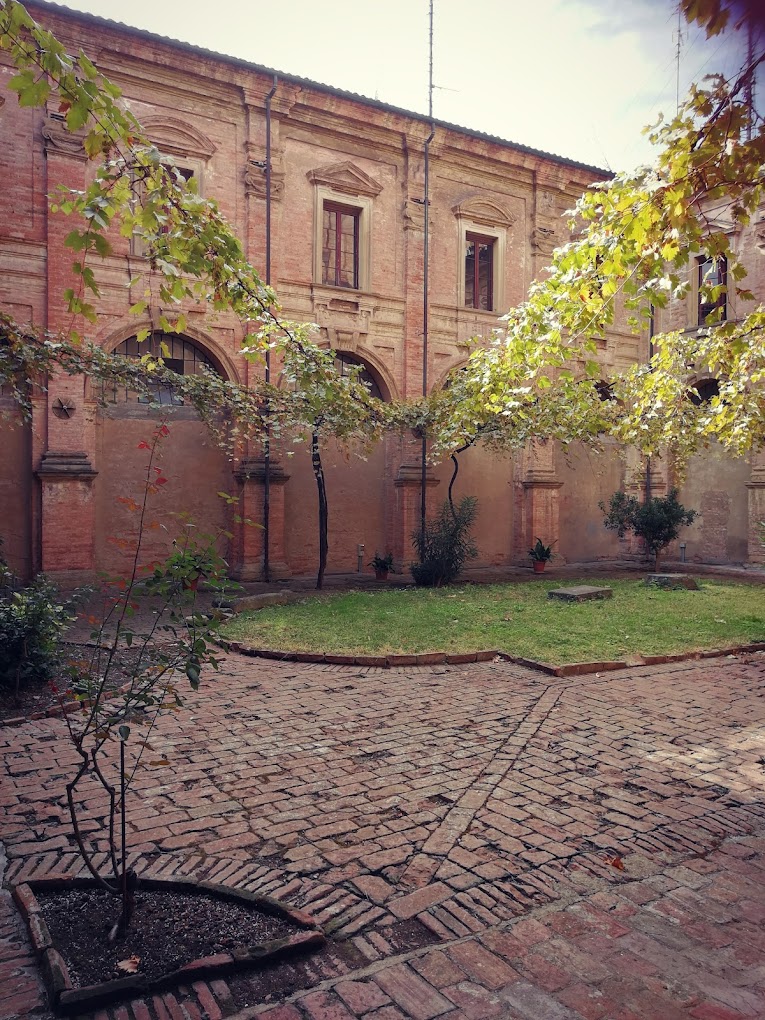
    It was the early 1600s when Marquis Vincenzo Tanara in Bologna wrote the splendid L’economia del cittadino in villa (The citizen’s economy in the villa), which we have also mentioned in other articles. Tanara, a magistrate and marquis in the then papal state, leaves us writings rich in detail concerning the administration of a mansion in a Bologna of bygone days, just a few decades after the famous coronation of Charles V at San Petronio. “On my kingdom,” goes the Emperor’s famous phrase, “the sun never sets” (In meinem Reich geht die Sonne niemals unter). And it is good that this is so because a good vineyard requires sun, wind, water and land. It was also during those years that the cloister of a Benedictine monastery was built, which is of interest to us because it houses a very old vine that is still, all things considered, going strong, in the very center of Imola.

    Tanara is famous in agrarian and gastronomic historiography for many reasons, but of particular interest to us today is his classification of vines at that time, among which ticks the name of a grape that has held its own in the area for centuries, the vine of that cloister. The Forcella grape (the Fork).

    Around the Forcella orbits a confusion that spreads even on today’s ministerial documents, where it is only derubricated as a variant (or “clone”) of Albana di Romagna, so called because of the bifurcation that its long clusters present at their end. Today, however, we are not dealing with Albana Forcella, but with the Forcella that was also cultivated for centuries in the town where I live, Castelfranco Emilia. Or rather, it was even cultivated in the street where I live, although it has obviously been extirpated entirely. Fortunately, a far-sighted person has recovered cuttings so the Forcella of the street where Ser Parsifal lives are still alive, and will give us excellent wines.

    Ser Parsifal oversees his estate- on the horizon the land where he grew among other grapes, the Forcella

    This vine is becoming less and less widespread, a fate that in this area has also befallen the other great absentee of local wine biodiversity: the Alionza. The only one that still enjoys some health is the equally historic Montuni (with which an honest Bianco di Castelfranco Emilia is produced).

    An important 1914 text edited by Cavazza mentions Forcella as being used for the production of table wines, given to the sapling, rustic and expansive, very productive and almost always used in blends. It is a passage that leads to many reflections on the nature of an area everywhere less and less interested in its historic winemaking vocation. Around the home of my lord Ser Parsifal above, the lands now host blanket cultivations of Lambrusco and Pignoletto of not only often terrifying quality but stubbornly condemned to single-varietal, when I wonder if this could still be a land of great whites, in the hands of skilled winemakers.

    Vite  secolare nei pressi di Santa Maria in Regola
    Patriarch of the fruit in the former Benedictine convent of the Olivetan congregation, Imola

    To honor the city of Imola and the Forcella plant above, today’s Cornucopia recipe will be about a typical local dessert, handed down to us thanks to a recipe by the very famous Pellegrino Artusi.

    Migliaccio di Romagna con saba di Uva Forcella

    • Milk, deciliters No. 7.
    • “Undone” pig’s blood, grams 330.
    • Forcella grape sapa, grams 200.
    • Peeled sweet almonds, grams 100.
    • Sugar, grams 100.
    • Very fine breadcrumbs, grams 80.
    • Candied fruit, grams 50.
    • Butter, grams 50.
    • Fine spices, two teaspoons.
    • Chocolate, grams 100.
    • Nutmeg, one teaspoon.
    • One strip of lemon peel.

    Pound in a mortar the almonds together with the candied fruit, which you will have first cut into small pieces, sprinkle them from time to time with a few teaspoons of milk and pass them through a sieve. Place the milk on the fire with the lemon peel, which must then be removed, and boil it for 10 minutes ; then add to it the grated chocolate, and when this has melted, remove it from the fire and let it cool a little. Then pour into the same pot the blood, already passed through istaccio (sieve), and all the other ingredients, saving for last the breadcrumbs, of which, if it were too much, a part can be left behind. Put the mixture to cook in a bain-marie and remove it often with the ladle so that it does not stick to the pot. The cooking and the degree of right density that is needed can be known from the ladle, which, left in the middle of the mixture, must remain upright. If this does not happen, add the rest of the breadcrumbs, assuming you have not poured it all in. For the remainder, do the same as for the ricotta cake No. 488, that is, pour it into a pan lined with the flat dough No. 118 and, when it is well browned, cut it into almonds. Cook the pasta matta a little so that it can be cut easily, and do not let the migliaccio dry out over the fire, but take it out when it comes out clean a granata twig dipped in it. If you use honey instead of sapa, taste it before adding the sugar so that it does not turn out too sweet, and note that one of the virtues of this dish is that it is mantecato, that is, of very fine composition. The fear of not being understood by everyone, in describing these dishes, often makes me descend to too much minute detail, which I would gladly spare.

    Pellegrino Artusi, La scienza in cucina e l’arte di mangiar bene
  • Una forcella per i capelli

    Una forcella per i capelli

    Erano i primi anni del 1600 quando a Bologna il marchese Vincenzo Tanara scriveva lo splendido L’economia del cittadino in villa, del quale abbiamo accennato anche in altri articoli. Il Tanara, magistrato e marchese nell’allora stato pontificio ci lascia scritti ricchi di dettagli relativi l’amministrazione della una villa di una Bologna di altri tempi, a pochi decenni dalla celebre incoronazione di Carlo V a San Petronio. “Sul mio regno”, recita la celebre frase dell’Imperatore, “non tramonta mai il sole” (In meinem Reich geht die Sonne niemals unter). Ed è un bene che sia così perché una buona vigna richiede sole, vento, acqua e terra. Fu proprio in quegli anni che venne costruito anche il chiostro di un monastero benedettino che ci interessa, perché ospita una antichissima vite ancora, tutto sommato, in forze, nel centro stesso di Imola.

    Tanara è famoso nell’ambito della storiografia agraria e gastronomica per tanti motivi ma di particolare interesse per noi oggi è la sua classificazione dei vitigni a quell’epoca, tra e quali spunta il nome di un’uva che ha retto per secoli nel territorio, la vite di quel chiostro. La Forcella.

    Attorno alla Forcella orbita una confusione che si propaga persino su documenti ministeriali odierni, dove viene derubricata solo come una variante (o “clone”) dell’albana di Romagna, chiamata così per la biforcazione che presentano i suoi lunghi grappoli al loro termine. Oggi però non trattiamo l’Albana Forcella, ma quella Forcella che si coltivava da secoli anche nel paese in cui vivo, Castelfranco Emilia. O meglio, si coltivava addirittura nella via dove abito, anche se è stata ovviamente espiantata interamente. Fortunatamente una perona lungimirante ha recuperato delle talee per cui la Forcella della via dove abita Ser Parsifal è ancora in vita, e ci donerà ottimi vini.

    Ser Parsifal supervisiona il suo fondo – all’orizzonte i terreni dove cresceva tra le altre uve, anche la Forcella

    Questo vitigno è sempre meno diffuso, sorte che in questa zona è toccata anche all’altro grande assente della biodiversità vinicola locale: l’Alionza. L’unico che gode ancora di una certa salute è l’altrettanto storico Montuni (con il quale si produce un onesto Bianco di Castelfranco Emilia).

    Un importante testo del 1914 curato da Cavazza, cita la Forcella come impiegata per la produzione di vini da pasto, datto all’alberello, rustica ed espansiva, molto produttiva e quasi sempre usata in uvaggi. Un passaggio che porta a molte riflessioni sulla natura di un territorio ovunque sempre meno interessato alla sua vocazione vinifera storica. Attorno a casa del mio signore Ser Parsifal qui sopra, i terreni ospitano oggi coltivazioni a tappeto di Lambruschi e Pignoletto di qualità non solo spesso terrificante, ma ostinatamente condannati al monovitigno, quando mi chiedo se questa potrebbe essere ancora terra di grandi bianchi, nelle mani di enologi esperti.

    Vite  secolare nei pressi di Santa Maria in Regola
    Patriarca del frutto nell’ex-Convento benedettino della congregazione degli Olivetani, Imola

    Per far onore alla città di Imola e alla pianta di Forcella qui sopra, la ricetta Cornucopia di oggi riguarderà un dolce tipico della zona, tramandato a noi grazie ad una ricetta del celeberrimo Pellegrino Artusi.

    Migliaccio di Romagna con saba di Uva Forcella

    • Latte, decilitri N. 7.
    • Sangue di maiale disfatto, grammi 330.
    • Sapa di uva Forcella, grammi 200.
    • Mandorle dolci sbucciate, grammi 100.
    • Zucchero, grammi 100.
    • Pangrattato finissimo, grammi 80.
    • Candito, grammi 50.
    • Burro, grammi 50.
    • Spezie fini, due cucchiaini.
    • Cioccolata, grammi 100.
    • Noce moscata, un cucchiaino.
    • Una striscia di scorza di limone.

    Pestate in un mortaio le mandorle insieme col candito, che avrete prima tagliato a pezzetti, bagnatele di tanto in tanto con qualche cucchiaino di latte e passatele per istaccio. Ponete il latte al fuoco con la buccia di limone, che poi va levata, e fatelo bollire per 10 minuti ; unite quindi al medesimo la cioccolata grattata, e quando questa sarà sciolta, levatelo dal fuoco e lasciatelo freddare un poco. Poi versate nello stesso vaso il sangue, già passato per istaccio, e tutti gli altri ingredienti serbando per ultimo il pangrattato, del quale, se fosse troppo, si può lasciare addietro una parte. Mettete il composto a cuocere a bagnomaria e rimuovetelo spesso col mestolo onde non si attacchi al vaso. La cottura e il grado di giusta densità che fa d’uopo, si conoscono dal mestolo che, lasciato in mezzo al composto, deve rimanere ritto. Se ciò non avviene, aggiungete il resto del pangrattato, supposto non l’abbiate versato tutto. Pel rimanente regolatevi come alla torta di ricotta N. 488, cioè versatelo in una teglia foderata colla pasta matta N. 118 e, quando sarà ben diaccio, tagliatelo a mandorle. Cuocete poco la pasta matta per poterla tagliar facilmente e non lasciate risecchire il migliaccio al fuoco, ma levatelo quando si estrae pulito un fuscello di granata immersovi. Se vi servite del miele invece della sapa, assaggiate avanti di aggiunger lo zucchero onde non riesca troppo dolce, e notate che uno de’pregi di questo piatto è che sia mantecato, cioè di composizione ben fine. Il timore di non essere inteso da tutti, nella descrizione di queste pietanze, mi fa scendere spesso a troppo minuti particolari, che risparmierei volentieri.

    Pellegrino Artusi, La scienza in cucina e l’arte di mangiar bene