Categoria: English

  • Chickens of Modena (and Nonantola and Reggio Emilia)

    Chickens of Modena (and Nonantola and Reggio Emilia)

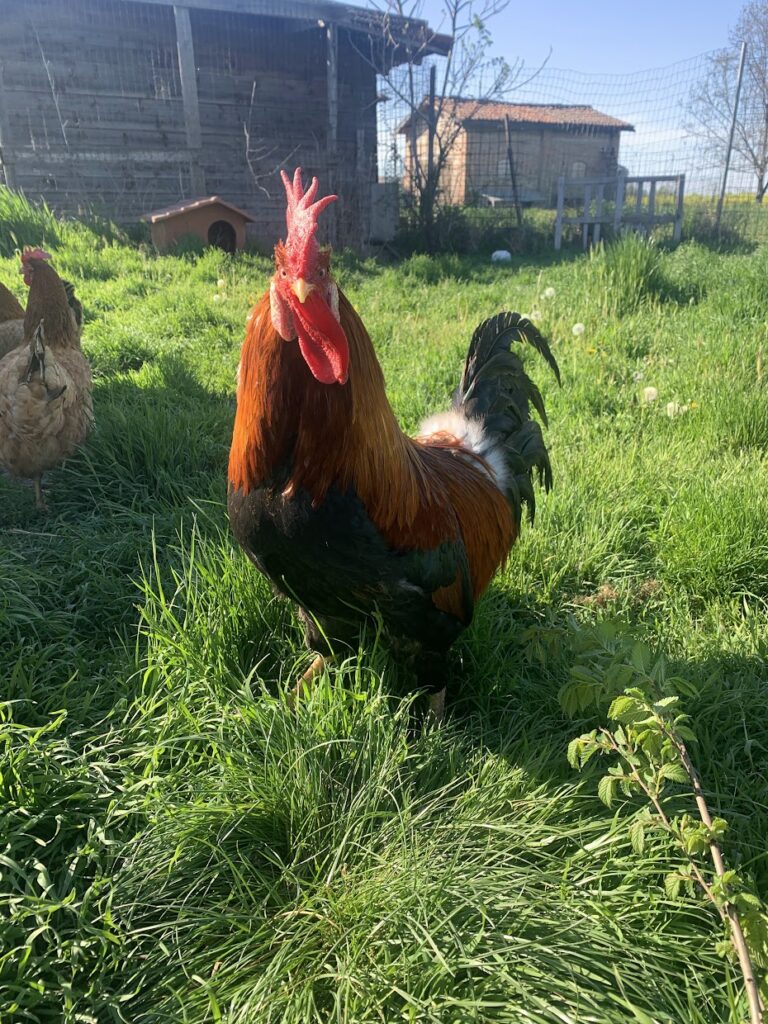
    Marcus Aemilius Lepidus, my Modenese rooster

    When in 1900 Gaetano Chierici, the recently elected mayor in the lists of the new socialist party, returned exhausted to his home in Reggio Emilia, he probably allowed himself to sink into the cushion of his soft armchair, observing the paintings hanging on the walls of the house, retracing his long past as a painter in his mind. Drinking a glass of acqua d’orcio (“barley water”), he was perhaps contemplating the evolution of his style, dwelling on the realist and hyperkinetic subjects of his last genre period. Here, amidst leggy kids and amusing moments of rural life immortalized on canvas, the wild golden wheat livery of the Modenese hen stood out.

    These paintings allowed the keeper breeders of Modena and neighboring provinces decades later to have a common point of reference to identify the breed par excellence of the chicken of Emilia. These are the same paintings that a few decades later would debunk the thesis that the Modenese hen is actually a new cross between the Padovana and Livorno Bianca e Dorata breeds.

    Like all native Mediterranean breeds of that period, the Modenese hen is a hen of Indian origin, with its white earlobes and even whiter eggs. That evolutive trunk of Roman and Phoenician origins from which all native Mediterranean breeds derive.
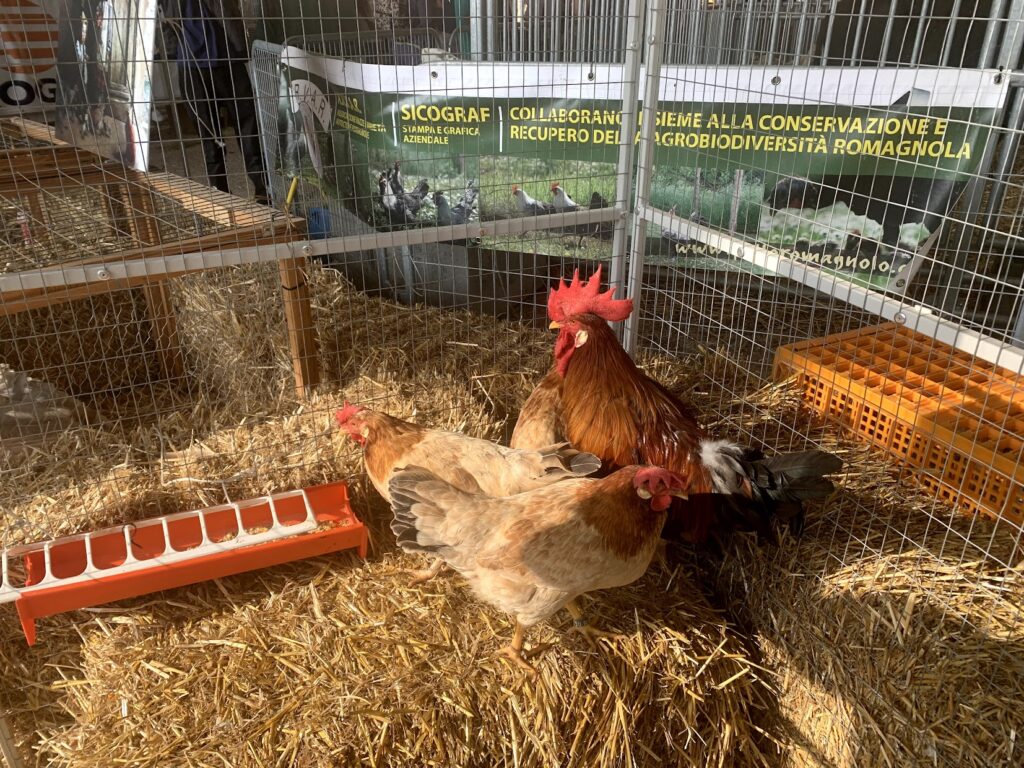
    Gallina Modenese o Fulva di Modena
    Modenese Hen or Fulva di Modena

    With the arrival of the great post-war Atlanticist revolution, native breeds (and not just poultry) began to disappear. The Modenese hen became almost extinct. Almost. In a courtyard in Nonantola, in the province of Modena, the Modenese was alive and well. And she enjoyed excellent company.

    Perhaps Giuliano Serafini’s grandmother had never seen Chierici’s paintings. She was in charge of the household, making ends meet, and looking after the family henhouse. Perhaps unwittingly, however, she saved the whole race from oblivion.

    What this woman knew was that these were the hens of her land and that it was important to look after them. From this small initial nucleus, year after year, interest in this breed with its old-fashioned characteristics grew. An interest that remains alive due to the tenacity of a few breeders, despite several timid attempts at recovery by associations and institutions that have evidently never really believed in it, or that perhaps have more interest in doing photo shoots when the moment is propitious than in guaranteeing these breeds a sustainable life.

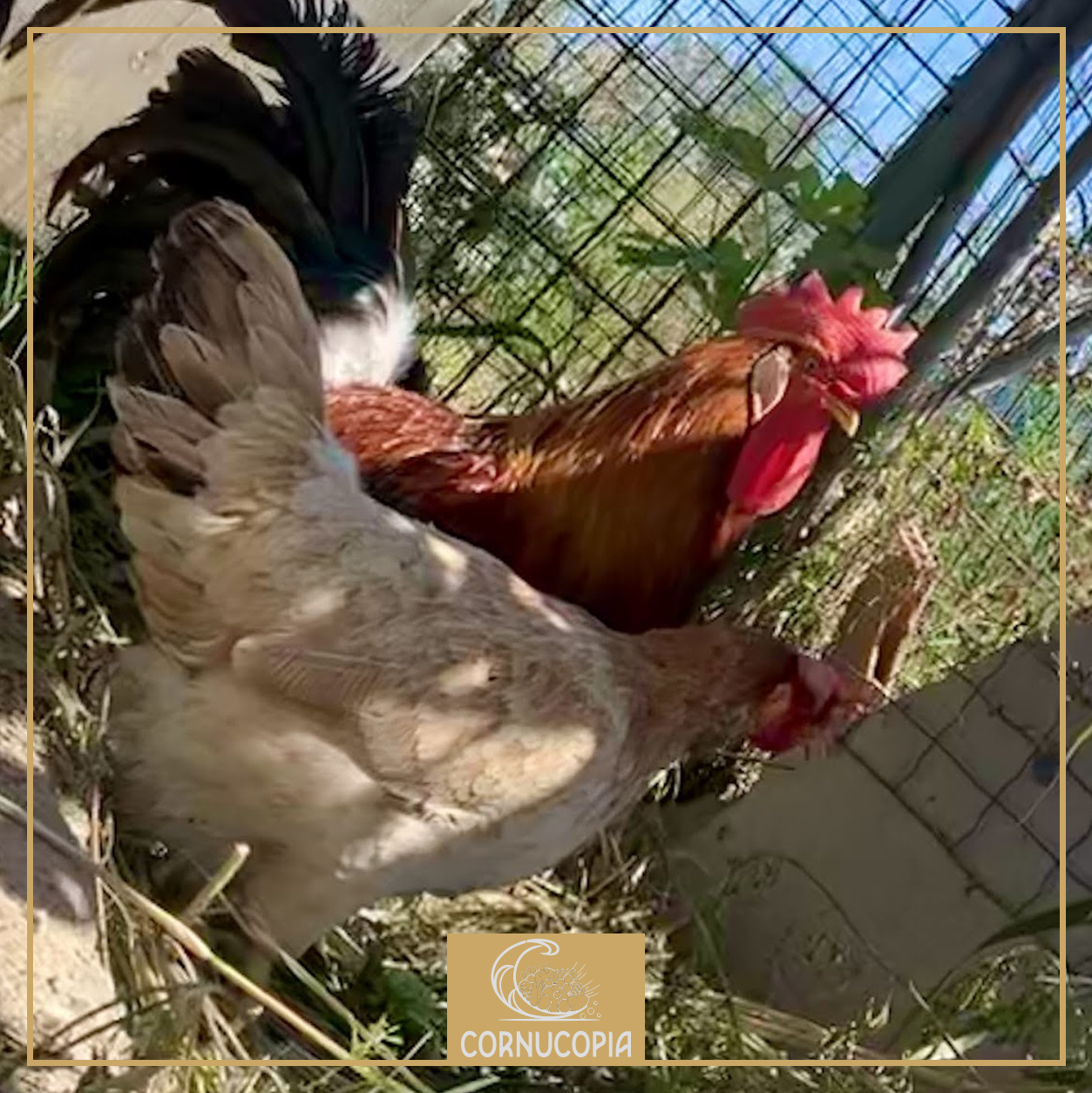
    Modeneses, as mentioned, are very rustic, very energic. If you don’t have a strong hand and don’t know how to handle them, you find them on the roof and in the trees, mind the words of the writer who has got to know them first hand. They rage like mad. Independent in character, and frugal, they do not need special feeds or supplements. If you treat them well they live at least ten years. Giuliano brings the testimony of a hen that reached twenty-two years of age.

    Modenese eggs are small, white-shelled, all yolk. Their meat is tough and yellow fat, with a very thin skin that makes the cockerels a sight for the palate. And I won’t comment on the capons *drool*.

    The Cornucopia recipe for Modenese hen is a homage to the countryside of Reggio Emilia in the 19th century, which inspired the great artist Chierici. I think it is appropriate to talk about a little-known dish from the agricultural table of Reggio Emilia, a little-known dish but still alive and true, like the Modenese hen: al ris cun la tevdura.

    Al Ris Cun La Tevdura e i Ov Ed Mudnesa

    • rice, 250 g
    • stock, 1 lt
    • 🥚 Gallina Modenese eggs, 3
    • 🧀 Grana Reggiano… (Calm down, that’s what it was called in those days!), 3 spoonfuls
    • Pepper, a pinch
    • Salt

    Cook the rice in the broth. Beat the egg with the grated Grana Reggiano cheese (possibly from milk of Rossa Reggiana or Bianca Val Padana breeds) and pepper, then quickly add it to the cooked rice so that it becomes a thick, fragrant broth. You have no idea how delicious this dish is…

    Traditional Reggiano dish
  • Grandma’s apple

    Grandma’s apple

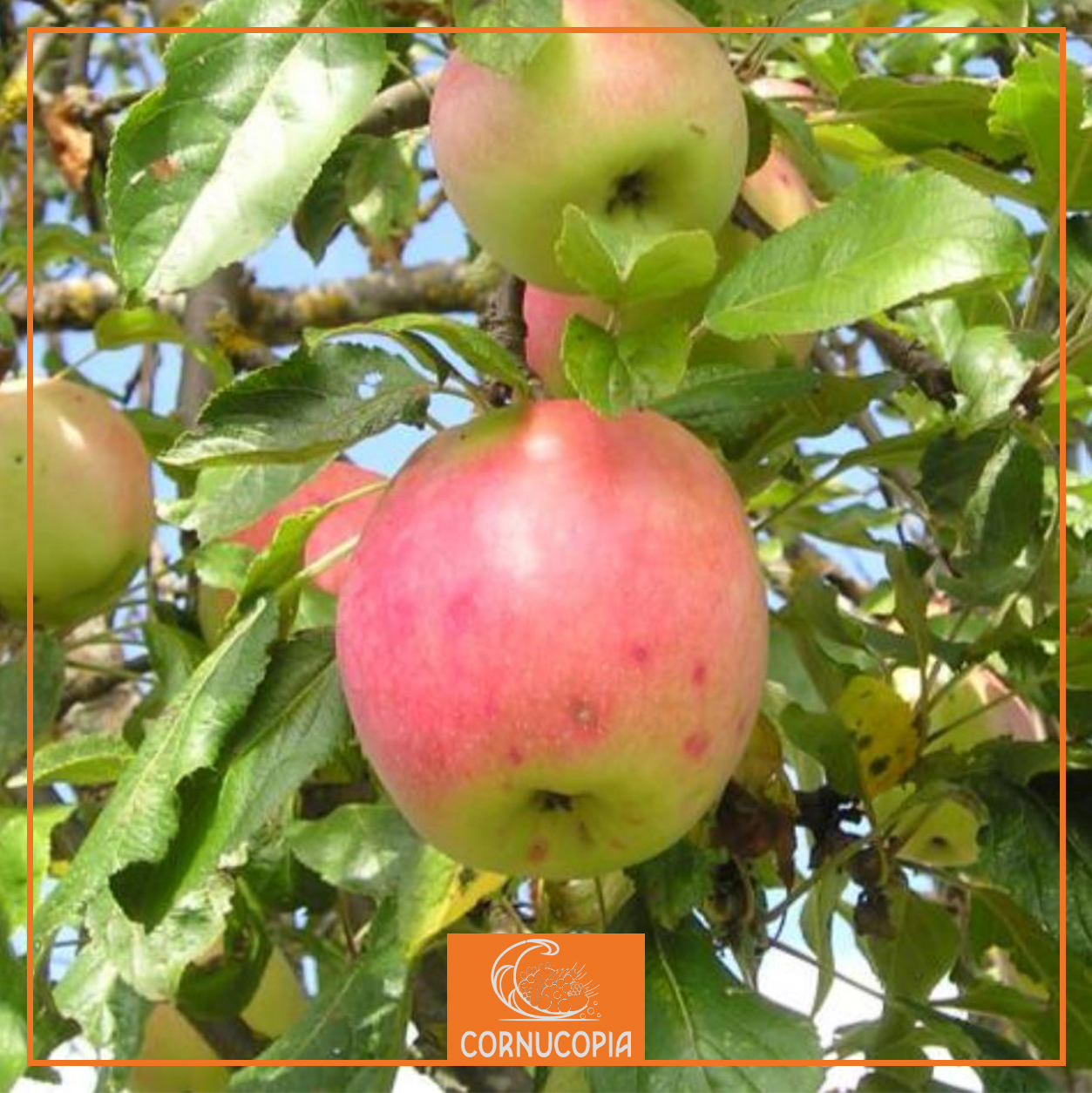
    In the cities of Emilia, Romagna and Le Marche, the shouts of the Thirty Years’ War resounded, and the Baroque spread through churches and buildings, while the Este family held court in Modena. It was the 1600s, and far from the din of shouts and cannons in the surrounding countryside and hills, with the arrival of autumn, the ground softened and mists spread silently among the rows of vines. Here, children were able to amuse themselves with what the land offered them, such as the so-called granny apple or ‘rattle apple’ (sunaìa in dialect). This apple, which elsewhere was also called ‘batocchia‘ after the sound of the bell’s clapper, took its name from a particular characteristic: the seeds inside the fruit tended to detach, creating a rattling sound when the apple was shaken. This apple was greenish-yellow in colour, with shades of bright red at sun-exposed spots, creating a wonderful colour effect. Its flesh was sweet and slightly sour, and it had that characteristic smell of apples of yesteryear. That apple is still there, fortunately, although there are no children to shake it.

    The sunaia apple shares a peculiar characteristic with one of its sister apples, typical of the Modena area: the cavicchia apple (cavécc in dialect, with the ‘c’ pronounced like the ‘c’ in chocolate and the ‘a’ closed in the Modenese way). Both apples have a particularly large internal cavity, which contains the seeds that break off and dance inside 🍎.

    As mentioned above, in addition to the hills of Emilia, the ‘mela sunaia’ was also popular in the Marche region, particularly in the area of the Sibillini and Nera river valleys and then down further to Perugia. In the Marche region, before the 1950s, mela sunaia was used to prepare paccucce, quarters of apples that were left to dry in the sun on trays or willow trellises and baked in the oven to prevent spoilage. Spartecche were often eaten as the main course of the peasant dinner during times of scarcity.

    Medicinally, apple parcels were used to treat colds in the form of herbal teas. This ancient apple was thus a valuable resource for rural populations, not only as a source of nourishment, but also for its therapeutic properties.

    In Umbria, our beloved apple takes on a wonderful role as a filling for Rocciata Folignate, a dessert made of apples, sultanas and dried fruit that is very popular throughout the region.

    Although it indicated this apple as an orange (autumn) fruit, only the harvest took place in October, but then the apple was left to ripen in the fruit cellar until December, when it released its full aroma. So delicious was the aroma that it was even used to deodorise laundry.

    The Cornucopia Recipe: Pastry of Stewed Sunaie Apples

    With this post I shall venture to inaugurate this section of Cornucopia recipes, or rather, suggestions for historical recipes attributable to the Emilia and Romagna region and to be used to enhance our agricultural biodiversity. Recipe and variety from the same region in short. This is the idea that lies at the heart of the genesis of Cornucopia, namely to create a connection between cuisine and historical varieties. Obviously this project is open to suggestions and advice, especially regarding recipes from the early 1900s countryside that still remain hidden in grandmothers’ drawers and that someone might want to share 🍩. What better legacy for these recipes than to create a direct correlation with the raw materials of our history?

    So let’s start with grandma’s apple and a recipe from our Estense steward, Cristoforo Messisbugo, whom I may tell you about one day. He is a very important figure in the history of Renaissance cuisine in my region, but there is so much to say about him that he really deserves a whole article.

    Given the fragrance and the vocation of this apple for cooking, and since we have talked about the rocciata, which is a sheet of stuffed pastry, I thought I would propose the following recipe from the 1500s. The recipe for stewed apples (i.e. cut into pieces and cooked in wine) has two versions, one fat and one lean as they used to say in those days: as a thin pie (a ‘batter’) stuffed or as a dish containing only the filling.

    Take pears or apples in the necessary quantity to make the pastries or dishes you desire. I think you’ll need six for six pastries and eight for a dish. After giving them a good scorch in the fire, you will wash them and, once cooled, peel them while leaving the stem in the middle. Then, you will put them in a pot to boil in a good black wine with plenty of sugar, a few pieces of whole cinnamon, and a few whole cloves. You will let it cook until the flavor is well blended and it appears like a jelly. If you want to make pastries, you will prepare some crusts and fill them with the fruit mixture, or you will spread it on the dishes and sprinkle candied cinnamon on top. I think you will need six ounces of sugar, half an ounce of cinnamon, and ten cloves to make one of these pastries, while you will also use candied cinnamon to decorate the dishes or pastries.

  • Seawines of Italy, in times unsuspected

    Seawines of Italy, in times unsuspected

    Underwater cellars, wines matured in the sea, vague hints of saltiness, robust young men with long beards sporting a mixed Italo-Anglophone dictionary, shaking glasses with swollen chests like in the best marketing offices in Milan and Parma… Actually, sea wines are not exactly a novelty for our beloved fermented grape drink.

    In Cato‘s time (2nd century BC), the Romans’ appreciation of Greek wine was already evident to the point of being systematically imitated. Findings of amphorae in Modena, which had been wrested from the local Celt tribes, the Boi Gauls, as early as the 3rd century B.C. show that wine was very frequently present on the tables of the wealthy, to the point that, just as today, a strict classification by quality was made according to grape variety, processing, and origin. A bit like in our wine shops today.

    What does this have to do with sea wines? Well, it seems that oenological techniques were not exactly advanced at the time, and in these amphorae were found the remains of a wine that was laced and preserved with seawater and defrutum, a kind of cooked must related to the saba we (in Modena, Italy) use today, in Modena, as the base for balsamic vinegar.

    The greatest expert on wine in the history of Ancient Rome, the archaeologist André Tchernia (whose books have never been translated to Italian, it seems, much to the frustration of the undersigned who has to approach the French language with dictionary and apps) speaks extensively in his writings of wine preservation techniques permuted by the peoples of the eastern Mediterranean, from which the Romans later (and the Etruscans and Celts before them) purchased prized wines such as that of Kos (which is still produced with lots of resins! ) and that of Rhodes. Of these correction techniques and on how to save wines that were beginning to show an acetic hint I will tell you more later when we talk about posca, sguazzone, vin sottile and puntalone :-), but suffice it to say that herbs, honey, resins and spices were regularly added until the late 17th century to correct wine faults when ancient analogs of today’s vermuth and sangria were the order of the day on our tables.

    It also seems that in the Modena area, at the time when it was called Mutina, the most popular wines were precisely the latter, of a type that today we would call passiti, diluted therefore in small percentages with saline solutions that at the time were considered to have conservation functions, as is also the case with cheeses and cured meats. The Romans sadly tried to imitate them in a sometimes unequal competition, a bit like what happens today in the friendly competition that has been going on for decades between us and France, trying drying techniques that even reached four years under the sun (again, see Cato). Even Columella had codified procedures to imitate Greek wine, which was left to age in terracotta amphorae a bit like we do today with barrels such as the famous barrique.

    There is still a lot to be said about the production of wine in ancient times, and that it was also drunk here in Emilia-Romagna (as throughout the Roman Empire), from the crushing in the cocciopesto (Italian for ‘large vats with a bottom made of pressed shards and debris’), but that’s enough for today. I leave you with a recipe from Cato’s De Agri Coltura, the sea wine of the food snobs of the 2nd century BC.

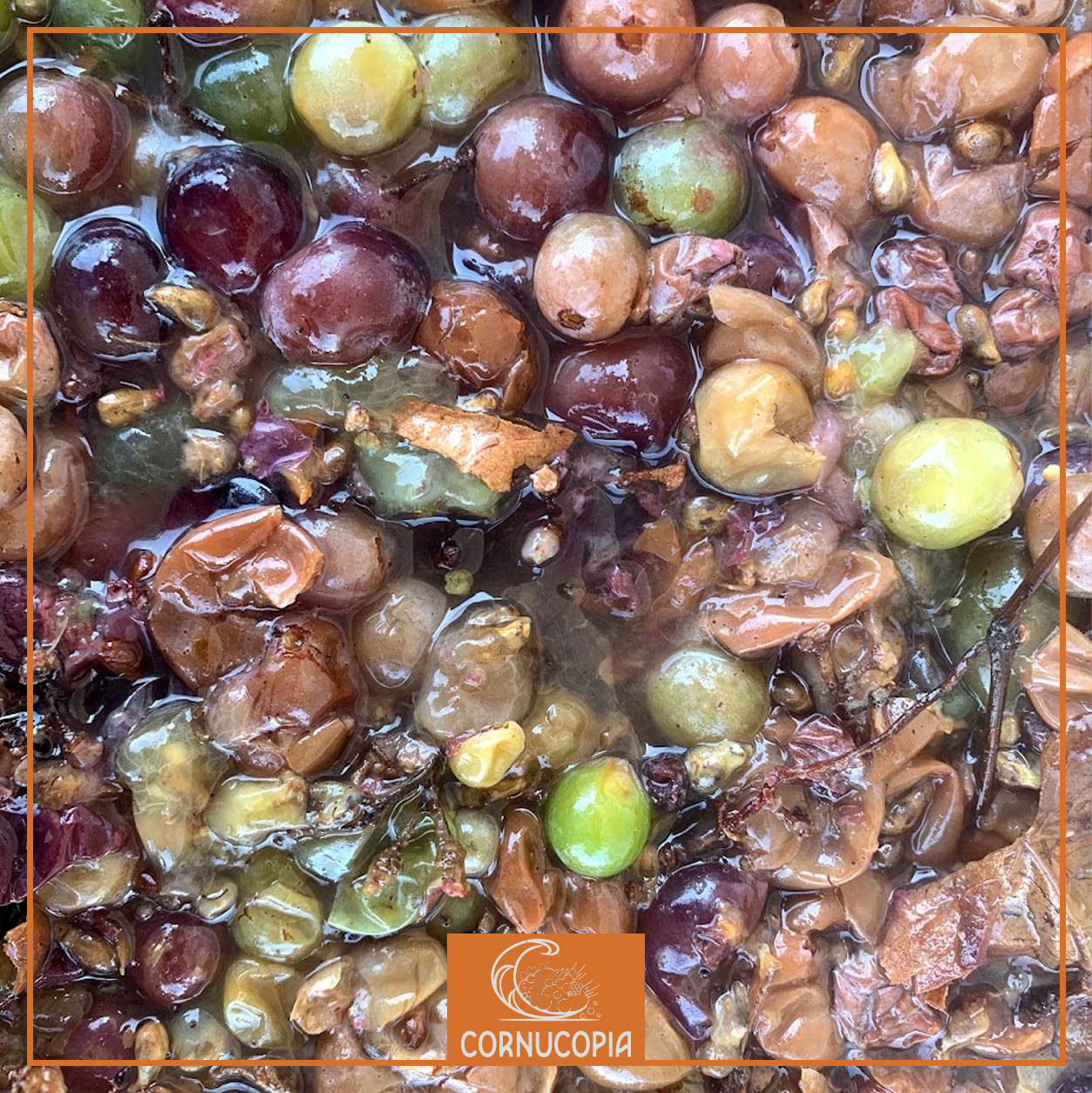
    If you want to make Coum wine, take seawater from the high seas on a calm day with no wind, 70 days before the grape harvest, so that fresh water does not arrive (rain could alter the quality of the sea water). Once it has been taken from the ocean, pour it into a barrel, not filling it completely but leaving a five-quarter empty space. Put the lid on but make sure there is airflow. After 30 days, decant into another barrel gently, leaving the deposit at the bottom. After another 20 days, decant into another barrel, repeating the operation until the harvest. To make Coum wine, leave the grapes on the vine until they are well ripened and then pick them when dry and out of the rain, leaving them in the open air in the sun for two or three days if it does not rain. If it rains, place it under the roof on trellises and remove every rotten grain. Then take 100 litres of sea water for 50 kg of mixed grapes [‘in dolium quinquagenarium infundito aquae marinae Q. X.’]. Remove the bunches from the grapes and pour the must into the dolia, continuing until it is completely filled. Press the grapes by hand so that they absorb the sea water. Close the barrel with the perforated lid and leave it in a cool, dry place for three days. After three days, remove the contents of the cask, press them in the wine press and pour the wine into clean, dry casks.

    Cato, De Agri Coltura