Since the moment I began to shape the Cornucopia project for the appreciation and dissemination of Italian historical agri-food culture, the world of wine has predictably played a particularly significant role. It’s a realm governed by sometimes absurd and arbitrary laws, constituting an important slice of our country’s agricultural production, and bringing together expertise in an incredible range of sectors more than any other. There’s history, science, dining, knowledge of the soil and tradition, economics.
The past of viticulture and wine production roots deep into the origins of our History and follows its course up to the present day, starting from the ancient populations that inhabited our peninsula. It’s an immense world, made of scientific discoveries and strong commercial influences, which follows the evolution of taste and adapts like a blanket to climates, cultures, and local customs. Every wine that ends up on our tables today can tell a story.
Yet, not all these stories have reached us. What we know today in the vast majority of cases is the last piece of this very long journey. We know wine as it is made today, whether it involves industrial “big cellar” wines or sought-after natural micro-productions. We are familiar with the flavors and cultivation methods we see in our countryside, and the scents of our grandparents’ cellars. And above all, we know the varieties that have passed the test of time, the sieves of the industrial revolution, the unification of Italy, the fascist era, the Marshall Plan. Those that survived the phylloxera genocide.
But what about before? How did we get here? Are we sure we really know everything about the history and evolution of Italian wine? How many and which grape varieties have we lost along the way? Are there still guardians who prevent certain flavors and aromas from falling into oblivion? And if so, where are they? Is it really worth it to recover certain varieties, or as some experts say, “if they were abandoned there was a reason”?
But above all, I believe that knowing our past well helps us to better understand what we know today. Obviously, my first hope is to contribute to networking and assembling news and curiosities about the world of wine in local history, to provide some tools and ideas to those who cultivate and produce wine, and to contribute to bringing back to the table grape varieties that do not deserve to disappear forever, because, contrary to a popular form of counter-information, many of these have not disappeared for lack of intrinsic value, but because a certain production approach was simply easier.
But, at the root of it all, the history of our country is a history of craftsmanship, study, and passions, not of monocultures, marketing, and massive distribution. With this Cornucopia project, I really would like to contribute to bringing our culture back into this splendid world, even if it were just one person, it would still be a victory.
And so, this Patreon project was born, a platform where it’s possible to subscribe to support this initiative. Here on the blog, in the Encyclopedia section, I will publish the sheets of grape varieties and in-depth studies on related topics, such as wine markets, customs, cultivation systems, analyses derived from agricultural texts of past centuries, and so on.
In the section for supporters, I will write how I arrived at certain conclusions, publish the bibliography and the texts consulted on each sheet, and possibly which texts were discarded and why. For example, there are sometimes contradictory news and often synonyms to unravel, in which case, through Patreon, it will be possible to access a Discord channel where we can exchange opinions. Consider Patreon as a “behind the scenes” of what will happen here.
I thank in advance those who will want to participate in the project. It’s been years now that I spend afternoons in archives, libraries, or online, it’s time to put some order and give meaning to all these data :-).
Italiano
Sin da quando ho cominciato a dar forma al progetto Cornucopia per la valorizzazione e divulgazione della cultura agroalimentare storica italiana, un ruolo particolarmente di rilievo ha avuto, prevedibilmente, il mondo del vino. Si tratta di un mondo regolamentato da leggi talvolta assurde ed arbitrarie, che costituisce una fetta importante della produzione agricola del nostro Paese, e che mette assieme più di ogni altro competenze in una rosa incredibile di settori. C’è la storia, la scienza, la ristorazione, la conoscenza del terreno e della tradizione, l’economia.
Il passato della viticoltura e della produzione di vino affonda le sue radici nelle origini della nostra Storia e ne segue tutto il percorso fino ai giorni nostri, sin dalle antiche popolazioni che abitavano la nostra penisola. E’ un mondo immenso, fatto di scoperte scientifiche e di forti condizionamenti commerciali, che segue l’evolversi del gusto e si adatta come una coperta ai climi, alle culture e ai costumi locali. Ogni vino che oggi finisce sulle nostre tavole può raccontare una storia.
Eppure, non tutte queste storie sono arrivate a noi. Quello che oggi conosciamo nella grande maggioranza dei casi è l’ultimo pezzo di questo lunghissimo viaggio. Conosciamo il vino come si fa oggi, indipendentemente che si tratti di vini industriali “da cantinone” o ricercate microproduzioni naturali. Conosciamo i sapori e i metodi di coltivazione che vediamo nelle nostre campagne, e i profumi delle cantine dei nostri nonni. E soprattutto, conosciamo le varietà che hanno passato la prova del tempo, i setacci della rivoluzione industriale, dell’unità d’Italia, del ventennio, del piano Marshall. Che sono sopravvissuti al genocidio della filossera.
Ma prima? Come siamo arrivati qui? Siamo sicuri di conoscere davvero tutto sulla storia e l’evoluzione del vino italiano? Quante e quali vitigni ci siamo persi per strada? Ci sono ancora custodi che impediscono a certi sapori e profumi di finire nell’oblio? E se si, dove si trovano? Ne vale davvero la pena di recuperare certi varietà, o come dicono certi espertoni “se sono state abbandonate c’era un motivo”?
Ma soprattutto, conoscere bene il proprio passato io penso aiuti a comprendere meglio quello che conosciamo oggi. Ovviamente la mia prima speranza è di dare un contributo nel far rete e mettere assieme notizie e curiosità sul mondo del vino nella storia locale, dare qualche strumento e qualche idea in più a chi coltiva e produce vino, e contribuire a riportare sulla tavola vitigni che non meritano di scomparire per sempre, perché, nonostante una popolare forma di contro-controinformazione, molti di questi non sono scomparsi per mancanza di valore intrinseco, ma perché un certo approccio produttivo era banalmente più facile.
Ma, a monte di tutto, la storia del nostro paese è una storia di artigianalità, studio e passioni, non di monocolture, marketing e grande distribuzione. Con questo progetto Cornucopia vorrei davvero contribuire a riportare la nostra cultura in questo splendido mondo, fosse anche una persona sola sarebbe già una vittoria.
E così nasce questo progetto Patreon, una piattaforma dove è possibile iscriversi per sostenere questa iniziativa. Qui sul blog, nella sezione Enciclopedia pubblicherò le schede dei vitigni e gli approfondimenti su argomenti correlati, come i mercati del vino, le usanze, i sistemi di coltivazione, analisi ricavate da testi di agricoltura dei secoli passati e così via.
Nella sezione per i sostenitori scriverò come sono arrivato a certe conclusioni, pubblicherò la bibliografia e i testi consultati su ogni scheda, ed eventualmente quali testi sono stati scartati e perchè. Ad esempio, ci sono talvolta notizie contraddittorie e spesso sinonimi da districare, nel qual caso, sempre attraverso Patreon, sarà possibile accedere ad un canale Discord dove possiamo scambiarci opinioni. Considerate Patreon come un “dietro le quinte” di quello che avverrà qui.
Ringrazio anticipatamente chi vorrà partecipare al progetto. Ormai sono anni che passo pomeriggi in archivio, nelle biblioteche o online, è ora di mettere un po’ d’ordine e dare un significato a tutti questi dati :-).
Finalmente ci siamo, sono ricominciati gli eventi Cornucopia per riscoprire le tradizioni enogastronomiche dell’Emilia-Romagna!
L’Emilia-Romagna è una regione dell’Italia famosa per la sua cucina e i suoi piatti tradizionali. Tra questi, uno dei più noti e apprezzati in tutto il mondo è il Parmigiano Reggiano, un formaggio dalle origini antichissime che è diventato un simbolo della gastronomia italiana.
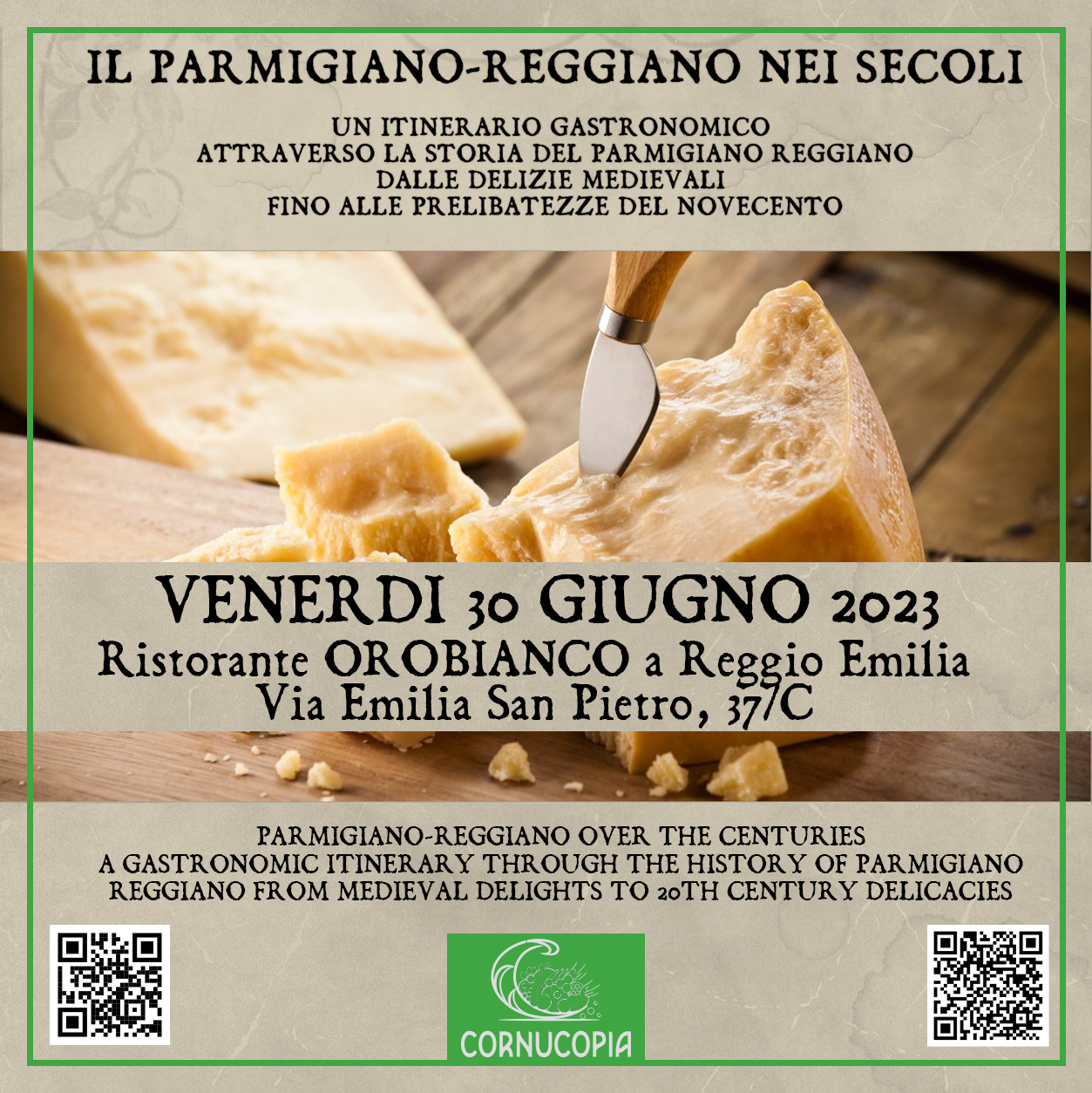
Per riscoprire la storia e le tradizioni legate a questo formaggio, ho organizzato assieme l’associazione culturale Opalia una cena presso il nuovissimo ristorante Orobianco a Reggio Emilia.
La cena, che si terrà il 30 di Giugno, sarà un’occasione unica per gustare piatti selezionati e preparati sulla base di ricette antiche, che rappresentano un vero e proprio viaggio nella storia della cucina emiliana dove si produce storicamente questo meraviglioso formaggio “a grana”.
Nei prossimi giorni su questo blog pubblicherò una serie di articoli che ci accompagneranno per mano alla serata con una storia dettagliata della caseificazione fino alla creazione del consorzio e del disciplinare corrente.
Sul blog è già stata pubblicata la storia della vacca Rossa Reggiana, la nostra autoctona di origini longobarde la cui vita è strettamente correlata a questo formaggio.
Il menù della serata
Il cuoco della storia Claudio Cavallotti presenterà tutte le portate della serata spiegando il contesto storico in cui sono state create. Attraverso una serie di piatti selezionati verrete trasportati dal tardo Medioevo fino agli ultimi secoli, in un percorso entusiasmante e ricco di sapori.
Il percorso si articola attraverso i seguenti piatti:
antipasto, un particolare tortino del Novecento
primo, lasagne del Quattrocento, le famigerate “laganam cum caseo” di fra Salimbene
secondo, a base di Mora Romagnola e come contorno uno sformato di Parmigiano dell’Ottocento
dolce, un budino del Settecento, sempre a base di Parmigiano Reggiano
Durante la serata sarà disponibile su richiesta un’alternativa senza carne (tuttavia, si ricorda per correttezza che il Parmigiano Reggiano viene prodotto utilizzando caglio animale). È importante che vengano segnalate in fase di prenotazione eventuali allergie alimentari!
È necessario il raggiungimento di una quota minima di persone per l’evento, in caso di mancato raggiungimento verrà emesso immediatamente il rimborso.
Per la serata è richiesto un contributo di € 40 a persona a favore dell’associazione Opalia, impegnata dal 2021 in opere divulgative sulla cultura gastronomica ed alimentare, importo che comprende anche acqua e due bicchieri di vino. Ulteriori bevande possono essere comunque consumate e pagate al locale dove è presente una gamma di vini genuini della campagna reggiana.
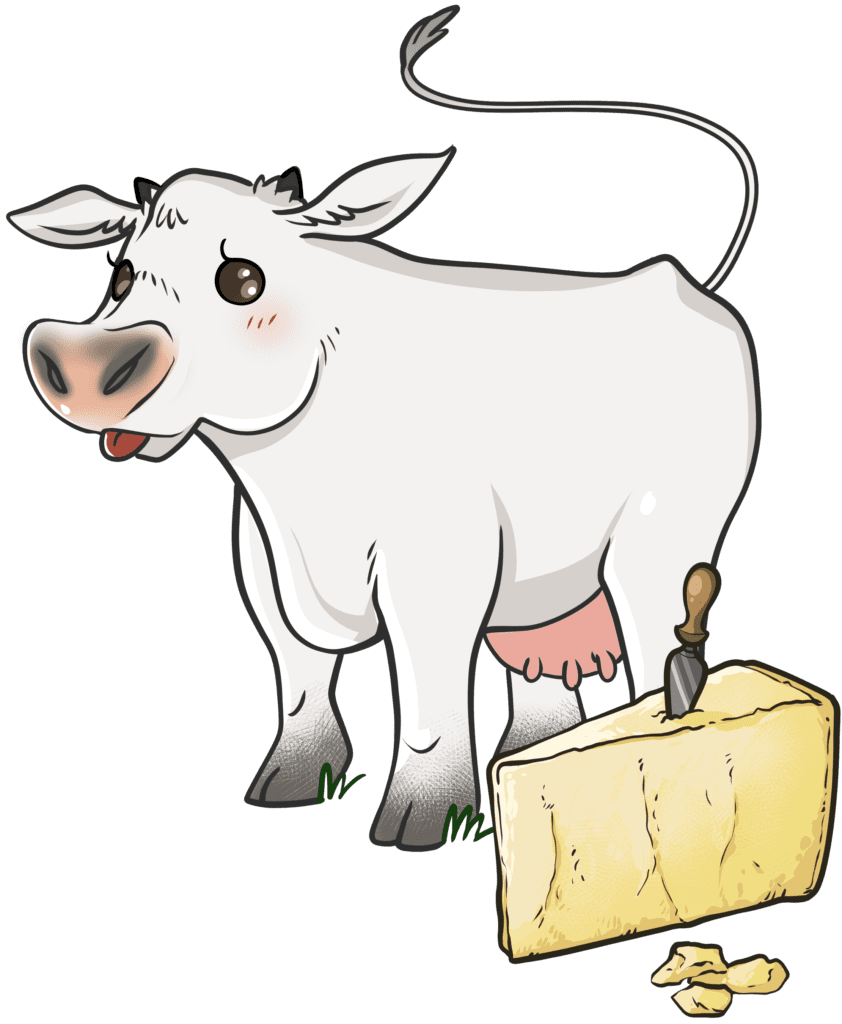
Se volete, durante la prenotazione è possibile anche prenotare un kg di Parmigiano di Vacche Bianche Modenesi, allevate al pascolo secondo la tradizione dei secoli scorsi (la Vacca Bianca è un animale di pianura), con l’aggiunta di € 20 alla donazione (€ 60 totali).
L’evento si terrà presso Orobianco, Via Emilia San Pietro, 37/C. Potete prenotare anche li se volete!
Le coordinate GPS sono: 44°41’47.2″N 10°38’13.1″E (44.696444, 10.636966) (Google Maps non è molto preciso, ci troverete davanti la chiesa di San Pietro.
La cena sulla storia del Parmigiano Reggiano è un’occasione unica per scoprire la storia e le tradizioni della cucina emiliana, attraverso piatti selezionati e preparati sulla base di ricette antiche. Non perdete l’opportunità di partecipare a questo evento unico nel suo genere e prenotate subito il vostro posto!
“And now what do I tell the prior, how do I climb up there?” Arnaldo looked thoughtfully at the vine shoots that grew from the base of the elm, climbing up its trunk to the cut-off top where the crown used to be, several meters higher, and then spreading out in a long vault loaded with grape clusters, stretched up to the next elm. In turn, the elm that was about ten steps to his right was wrapped in a pair of vines that also stretched out to the next one. The same pattern repeated to his left. In front of the perplexed man, a very long row of lovers, powerful, sinewy trees wrapped in the delicate limbs of the vine. The row stretched along the watercourse towards the Duke’s lands. Arnaldo’s feet were sunk in the soft ground, behind him, at a hundred steps, the shadows of another specular row. And then another one, and so on, as if a huge rake had plowed those lands, placing them like pawns on a chessboard, frozen knights and damsels in a synchronized dance, surprised by a magical winter that had turned them into plants. “Breeeee.” Arnaldo turned around, meeting a pair of horizontal pupils and yellow eyes. His musings had been interrupted by a sheep from the flock grazing in the middle of the rows. Around him, a couple of geese were rummaging in the grass around the smaller plants. Even though it was autumn, the field was teeming with life…
Invented
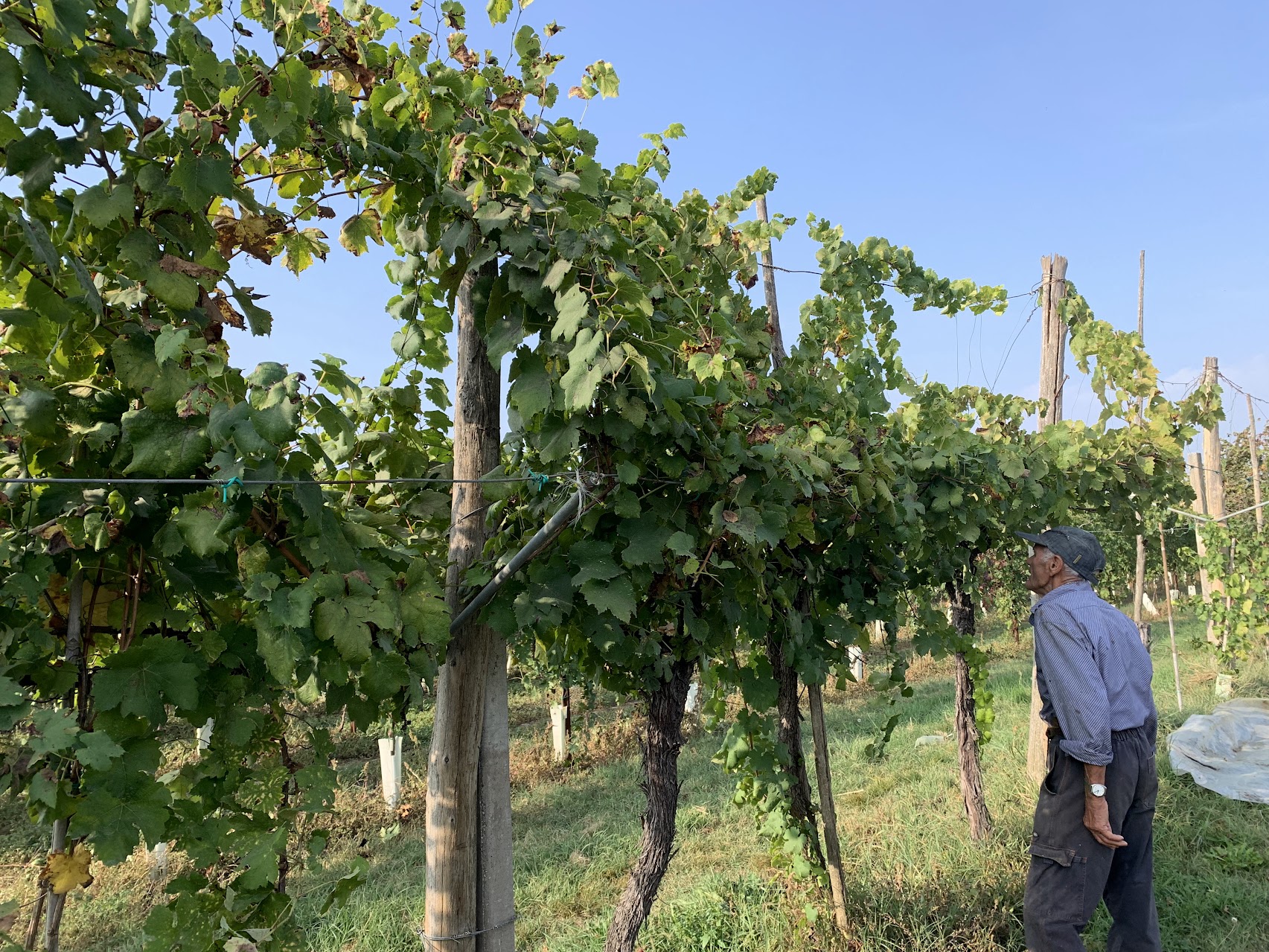
The above could be a description of a field from a century ago, as well as a millennium. The live stake cultivation had been a method used to grow vines for centuries. Books from the early 1900s still talk about it as a widely used method. Not a few. Out of four million hectares of vineyards, today only six hundred thousand remain. It is not entirely dedicated to monoculture, of course, the so-called “married” vine was part of a symbiotic system where wheat, legumes, and vegetables, coexisted with the vine and livestock. But let’s take a step at a time.
The Romans
Let’s go back a few centuries and make some hypotheses about the spread of these cultivation systems. In Rome, intensive vine cultivation around the capital became unsustainable, and the legionaries were tasked with exporting democ… Oh no, sorry, I meant to bring local culture to all the provinces of the Empire. Just as their bread remains with us in the form of piadine, flatbreads and crescentinas, and the olive has found its peace in the ammoniacal hills of Romagna, even wine cultivation techniques took root, mixing with the cultures of the native populations, as here in Cisalpine Gaul (Emilia-Romagna in my case), where the Romans found this curious system known in the future as the “arbustum gallicum.”
Columella, an ancient Roman writer and farmer, extols the closeness of two plants in his work. He speaks with great enthusiasm about the combination of a vine with a delicate appearance and juicy fruits, with a robust and austere tree that supports it.
“Vitibus etiam admodum antiquum genus est, quod non alit se solo, sed adiutore alio vivit, arborum frondibus: et ea vitis adhuc in Italia rarissima est, quae in arboribus nascitur; iam vero in Hispania frequens, nec ulli gentium magis placet. Nomina eius in his locis varia, namque aut platanus est aut populus aut salix aut ulmus aut pinus, etiam ilia quae apud nos vite appellatur, atque haec admodum plurima, quae varie appellantur. In his arboribus educatae vitis et in sola quidem Hispania notissima, adeo ut in hac una regione vitiis ad hoc institutis omnibus aliis locis praestet. Quaedam autem et in Italia nascuntur, sed rarae, etiam in Graecia, ubi in arundinibus educatur, et iam in Asia et Africa. Haec vitis non ita altum scandit, sed tantum quantum sufficit ad fructum ferendum. Nec tamen omnes arbores idoneae sunt, sed eas maxime quae frondibus laxioribus, ut platanus et ulmus, etiam populus, non minus salix; pinus tamen non satis. Arborum autem natura illud maximum tribuit, quod vitis saepe salubritatem afferat. Ad hanc arborum frondem vitis inhaeret, nec multum opus est ad eam sustentandam, nisi ut a radicibus singulis stirpibus adnexam arbori adhaereat. Ita unius arboris adiutorio etiam centum vites coluntur, et singulis annis ex iisdem arboribus vina feruntur, quae sunt maxime laudata.”
“There is also a very old type of vine that cannot live alone but relies on another, that is, on the leaves of the trees: this vine is still very rare in Italy, while in Spain, it is widespread and appreciated by everyone. In these places, it has various names, for it is called either plane tree, poplar, willow, elm, pine, and even the one called vine among us, and there are many other varieties with different names. The vines grown on these trees are well known only in Spain, to the point that in this region alone they exceed all others in this type of cultivation. Some of these vines also grow in Italy, but they are rare, as well as in Greece, where they are grown on reeds, and now in Asia and Africa. This vine does not climb too high, but only as much as is necessary to produce fruit. Not all trees are suitable for this cultivation, but only those with looser leaves, such as plane trees and elms, and also poplars, not to mention willows; pines, however, are not suitable. The nature of trees gives the greatest advantage, since the vine often brings them health. The vine clings to the leaves of the trees, and it does not take much effort to support it, except that it must be attached to the tree by the roots of the single plant. In this way, even a hundred vines can be cultivated with the help of a single tree, and every year the wines obtained from these same trees are highly praised.”
Columella
The Supreme Poet
Even Virgil, Dante’s guide in the afterlife, hints at the presence of this cultivation in his Georgics, a four-part poem that focuses on the practical aspects of rural life, such as agriculture, animal husbandry, beekeeping, and wine production. Written during the reign of the Roman Emperor Augustus, it was intended to promote the values of agriculture and the Roman way of life.
Colli bus an plano melius sit ponere vitem, quaere prius. Si pinguis agros metabere campi, densa sere (in denso non segnior ubere Bacchus); sin tumulis acclive solum collisque supinos, indulge ordinibus.
Virgil
Planting a vineyard on a hill is best, but first seek out the best spot. If you are tilling a rich plain, plant densely (for Bacchus does not prefer sparse soil); but if on hillsides and sloping ground, plant in rows.
Virgil
The mentioned lines, part of Book II, describe how to plant vines and where to do it. The passage suggests planting the vines on hilly or flat terrain, depending on the quality of the soil. If the soil is rich, the vines should be planted close together, while in less fertile soil, they should be spaced apart. The lines also suggest that the vines should be arranged in rows on the slopes of hills and on slightly sloping hills. Trees can influence the growth of the vine in various ways: they can protect it from the wind, provide shade during the hottest hours of the day, contribute to maintaining the moisture of the soil, and, above all, provide support to the vines so that they can grow healthily and regularly. In particular, the poet recommends using trees that have a sturdy and straight trunk so that they can support the weight of the vines and grapes without bending or breaking.
Virgil suggests avoiding trees that release harmful substances to the vines, such as oak, which produces an acid that can damage the plant. This last attention has not been confirmed by modern science but is a symbol of the great attention that the ancients had for agriculture.
The Middle Ages
Cultivation, like the lives of many, came to a halt with the arrival of the barbarians and the Middle Ages with the fall of the Western Roman Empire. No one would have wanted to live in the Po Valley during the terrifying period of the Gothic wars, devastated by famines and floods. The vine remained on the hill for centuries until the time of Matilda and the communal age, in the Late Middle Ages when the “arbustum gallicum” returned to the plain, this time together with cereals, in the system that would later be known for centuries as the “piantata padana.” Incidentally, this is the period in which important irrigation works were carried out, and a network of water distribution was dug, which allowed the optimization of the crops, creating a clever system of drains of various functionalities and sizes that brought together the knowledge of the monasteries that led to the famous Grana cheeses, including today’s Parmigiano Reggiano. We will come back to this (I am writing a long article, it takes time 🙂).
Today
In the nineteenth century, the “married” vine to the tree was widespread throughout Italy. In central Italy, it was the maple, then the elm in the north, sometimes the mulberry. In the South, it still survives together with the poplar, as in the discipline of Asprinio di Aversa.
Depending on the location, this cultivation method varied widely. I found documents that speak of an optimal marriage with the field maple because of a less extensive root system and a sparser canopy (the vine climbs the tree seeking warmth and sinks its roots seeking nutrients, a concept at the base of the quality of many fine wines).
In Marche and Campania (the “alberate” Aversane with its splendid “festoons“), the practice of harvesting on stairs still exists, elsewhere the practice had already been abandoned by the time of our grandparents.
Each plant had its pros and cons. The mulberry did not give excellent results, but it allowed for the collection of leaves excellent for livestock and silkworms. The walnut was perfect for lumber and dried fruit. The olive was wonderful, but it seems to have been abandoned very early due to complications with parasites. The elm has perhaps the longest and most documented history here in Emilia-Romagna, but the improvement of production techniques in the fields allowed the trees, which were previously cut down to a height of 8-10 meters, to be drastically lowered, while by the end of the 19th century, the trees had already been reduced to 3-4 meters.
Sometimes, some remnants of “planted” are still present near the homes of some old farmers who still recognize their merits today.
Emilia-Romagna
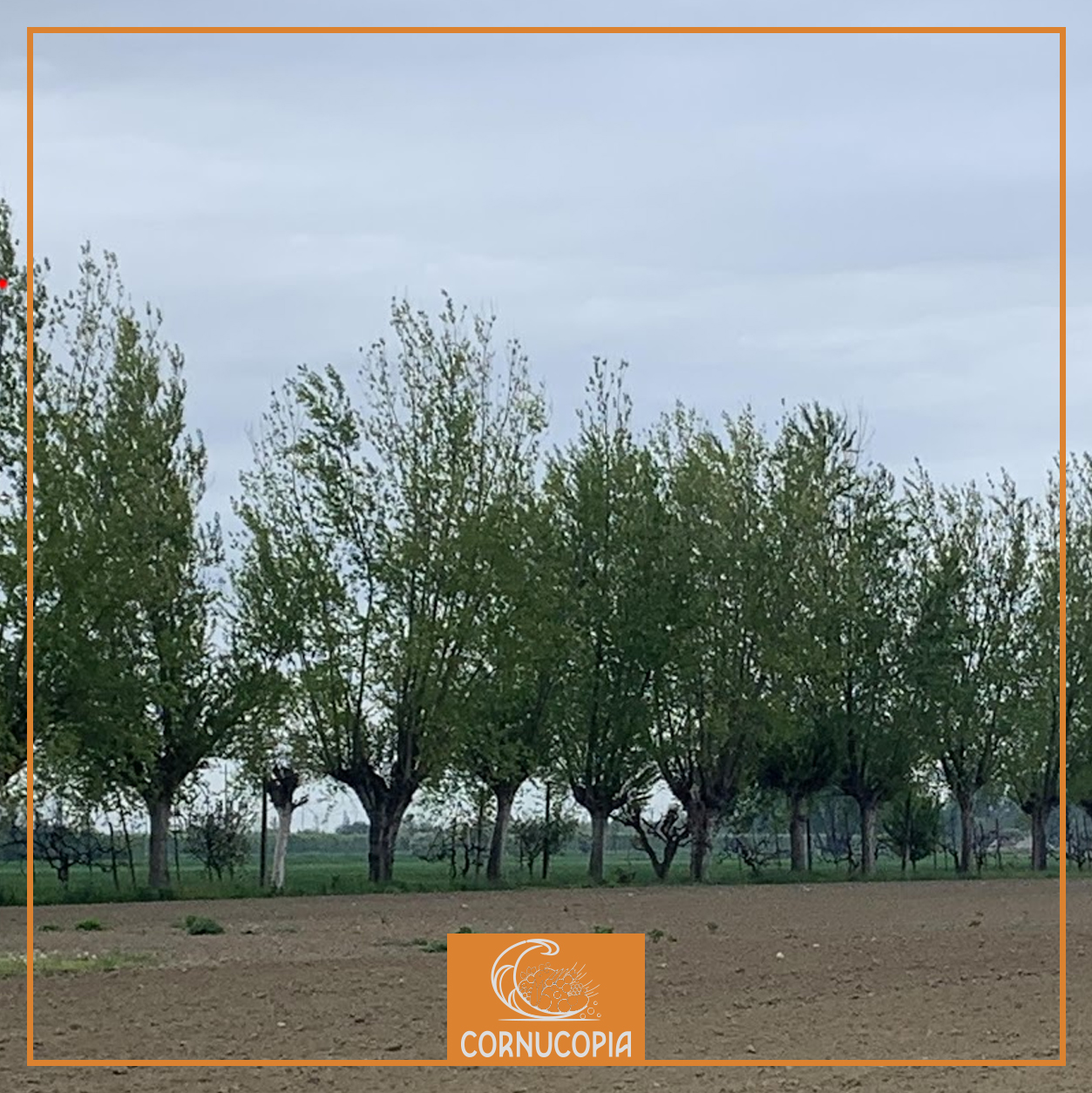
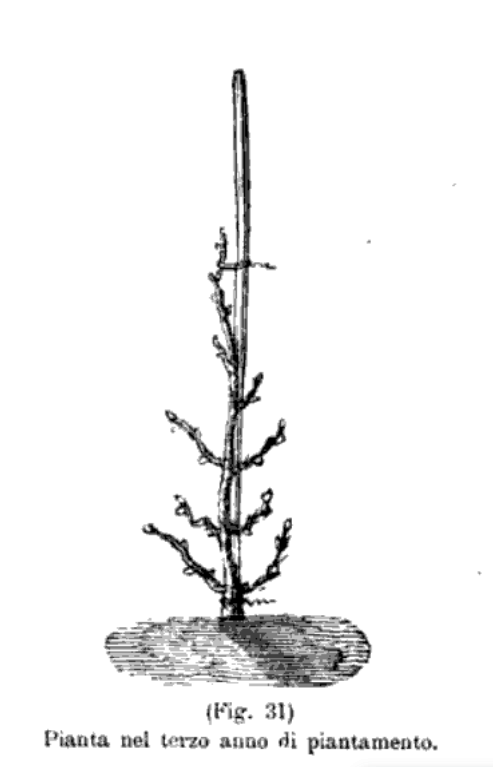
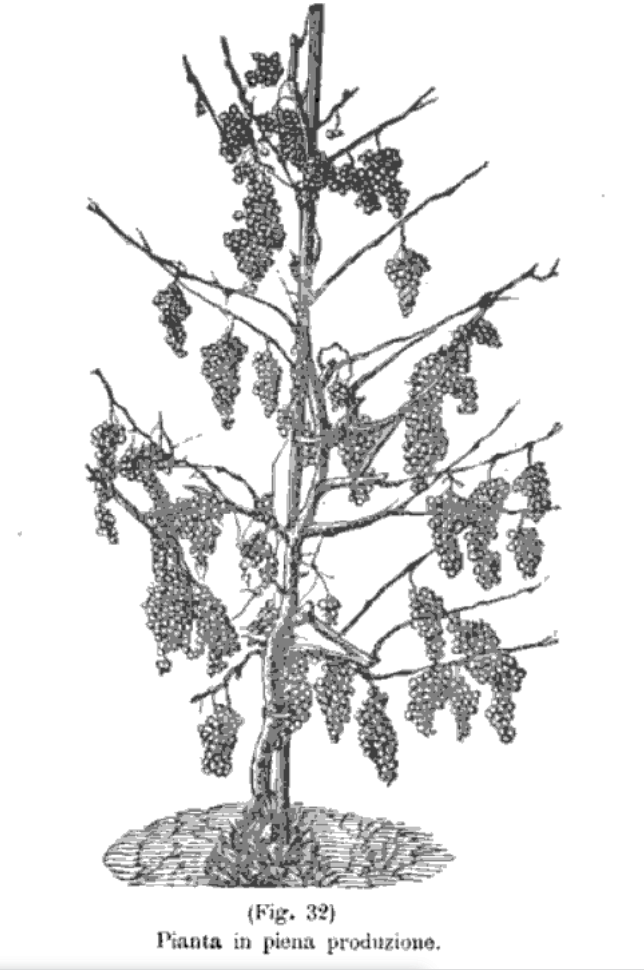
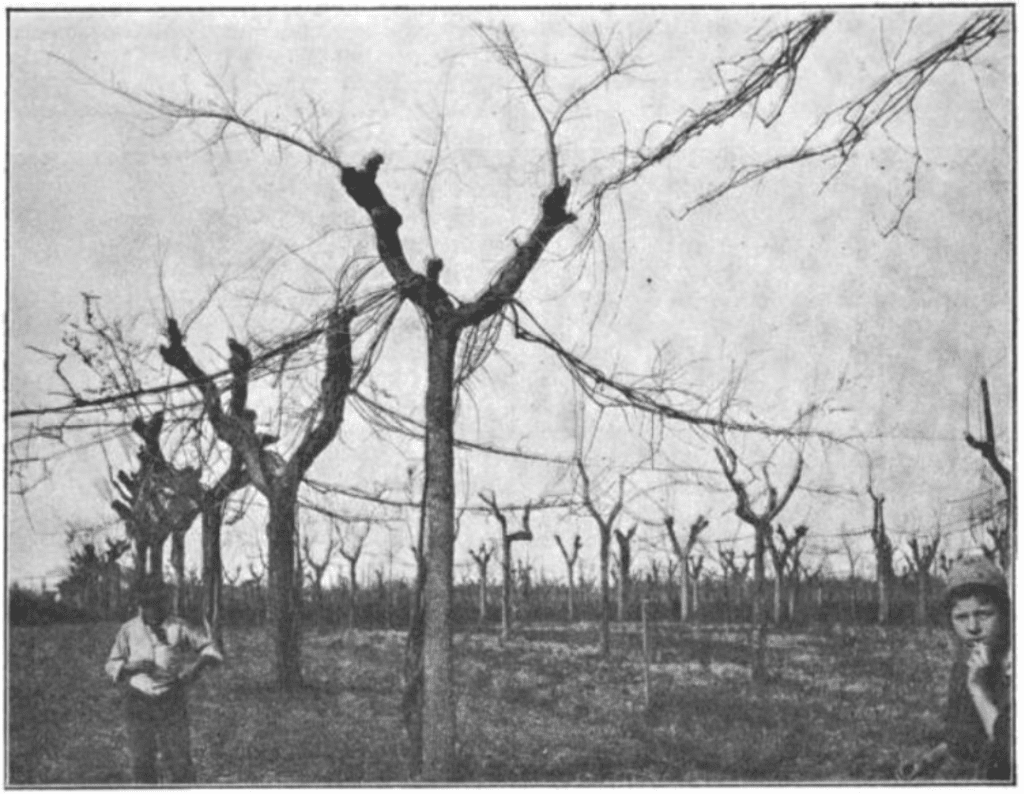
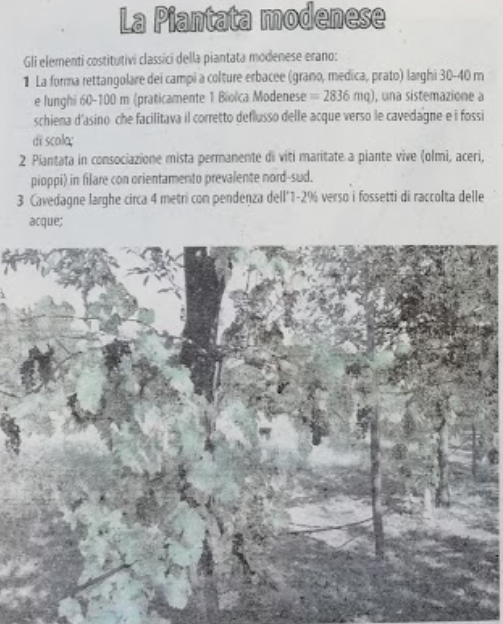
Traveling along the Via Emilia from Piacenza to Rimini in the early 1900s must have been enlightening. Each (current) province had its interpretation of the “piantata padana.” In my area, it was the elm that married the vine. I say “elm” (masculine) and not “elma” because in our parts, there is a feminine and a masculine for this plant. For “elm,” annual pruning was intended to form the rows in the countryside on which to grow the vine, crudely cut into the shape of a rudimentary sling, in jargon “capitozzati.” Even the trees changed, in Reggio Emilia, for example, the vine could also be seen married to the plum. In Bologna, they changed the number and position of the plants at the base of the support. At first, the elms were still very tall, but as I mentioned before, over time they were reduced in size. The reduced height still protected against frost, hail, flooding, and frost, even on these elms (which resisted capitozzatura or clipping very well) of medium height, certainly not 20 meters.
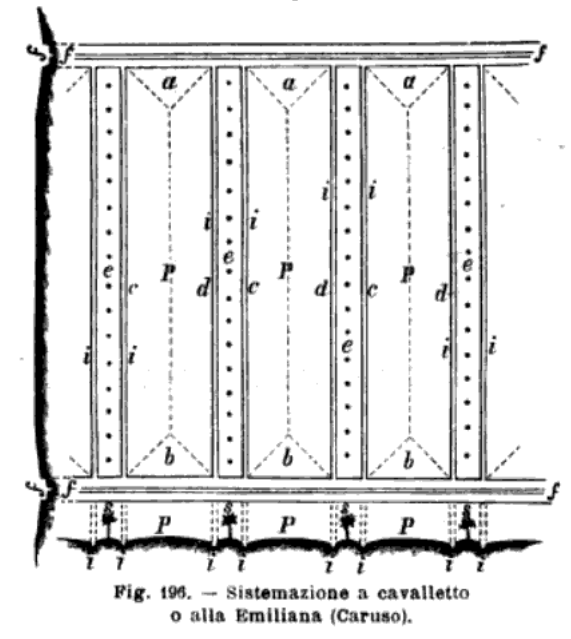
This system sees the vines married with their festoons as dividing the rectangular hills studied to drain the soil into drainage channels.
This system sees the vines married with their festoons as dividing rectangular mounds designed to let the soil drain into drainage channels.
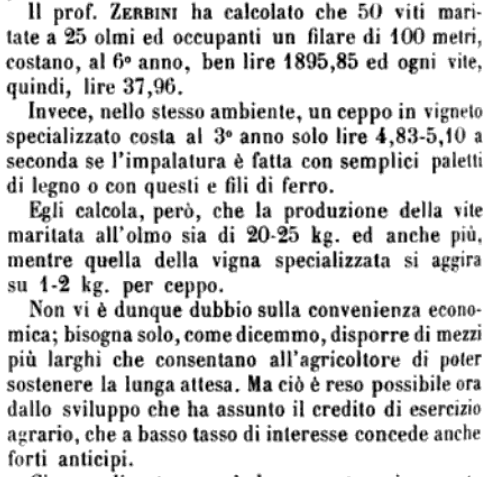
A text from the early 1900s mentions the wedded vine not only as present but as an excellent investment that can largely pay back what is spent, even if the vine takes six years to harvest and not two. Kind of reminds one of the story of the Friesian/Holstein and the Reggiana red cow, eh?
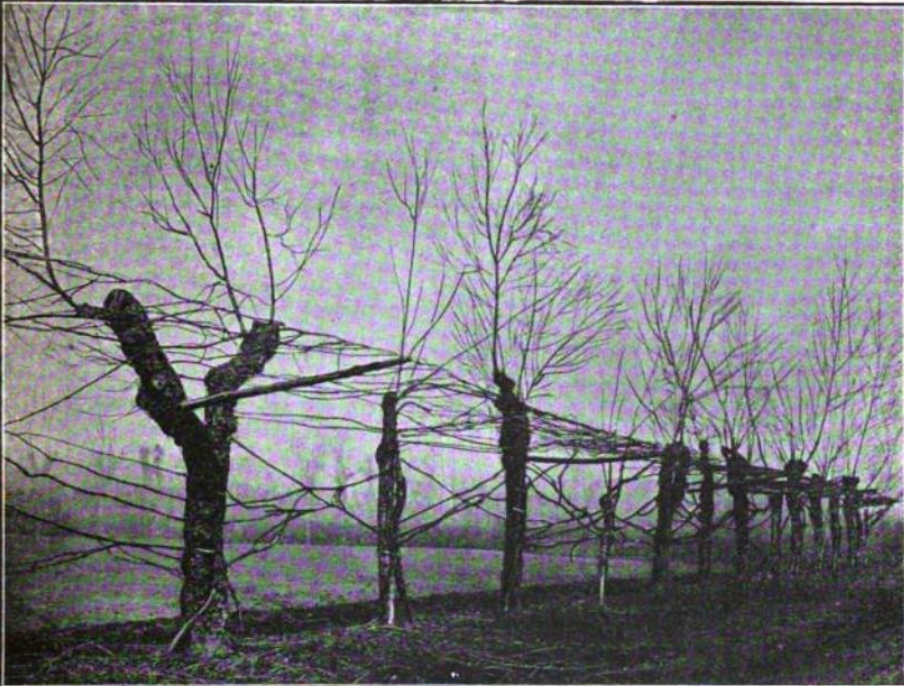
Between Modena and Reggio, the practice of pergolas on the vine rows lasted for a while, as can be seen below in an old photo of the Reggio countryside. In practice, the festoons were not only spread lengthwise, but also over the cultivated fields, on different rows, creating a large chessboard.
Between one row and the next, the fields were cultivated with turnips, oats, clover, but also horticultural crops with the rooted cuttings that were fertilised by the droppings of perches and cattle. There are texts that speak of an increase in grape production of almost 100%.
It should be noted that even dead posts, i.e. the wooden poles that replace trees (being rootless, they can be placed close together; an example of this practice is the mulberry tree, a plant with thick roots), were still 3-4 metres high until the early 1900s. Vines, in any case, were harvested high up here in the Po Valley, except in those places where they were cultivated in the field, as is done today: a practice that was once rare and called ‘low vine’.
1926
It is interesting to see how, over the centuries, dozens of planting evolutions have developed, including this interesting model that saw a pergola going out sideways on the sunniest side of the plant.
Modena
Going into more detail, let’s look at the city of Modena, where the vineyard was cultivated using the so-called “a cavalletto” system – that strip of land where vines and trees are planted, and which at that time constituted about one-fifth of the average arable surface. Once, in the Modena area, it was a “a gronda” strip, it is said, with dimensions of 20-30-35 meters by 80-100.
Until the 19th century, two cultivation methods were widespread in Modena, the other being the Mantuan method called “a piramide”, known as the Marchi system. At that time, the vine was still married to the poplar tree, as in the South, but it quickly disappeared to make way for the more profitable elm.
Between Modena and Reggio, the use of wire (after its introduction in vineyards in the 1820s in Lombardy) had created a spectacular effect of lattice-like festoons laden with hanging grapes over the cultivated fields, as can be seen in the photo below.
The once huge elms were pruned lower and lower until they were replaced by field maple (opium) following the decline in the importance of leaves in cattle feeding.
Francesco Aggazzotti, the first mayor of Formigine after the unification of Italy and the one I call without hesitation the Pellegrino Artusi of wine, gathered dozens of vine varieties in his vineyard, almost all of them marinated in elm. These include several lambrusco wines (full-bodied wines of a good 8 degrees, 8 and a half degrees :-)), including that of Sorbara and that of Tiepido, also known as the red graspa (Graspa Rossa). But let’s keep this name in mind because we will come back to it often in the future when talking about old local varieties.
Theoretically speaking, there is still a planting in Modena in Via Marconi at a nature reserve. I personally have never managed to find it open.
A short dissertation
The aim of Cornucopia is to provide reliable historical documentation by being as objective and open-minded as possible, objectively considering the reasons behind the abandonment of certain sometimes anachronistic production methods.
However, it is necessary to honestly examine all ethical, sustainable, and economic variables of the subject. The advantages of these cultivation methods are still objectively present and are suitable for high-quality production where wine is respected from its conception.
No one excludes the possibility of producing honest, qualitatively flawless, and harmless products even with advanced industrial methods. Research laboratories and control bodies prevent poison from ending up on our tables, which is still possible for small producers to bypass these screenings.
It must be said, however, that the same grip that cuts the “low” part of production is the same that cuts the high part. In other words, you lose the neighbor’s grape marc that crackles with sulfur dioxide added without any criteria in the unlabelled wine that is sold on the black market, as well as the carefully curated product, grape by grape, day by day, perhaps from an unregistered variety of vine entwined with the fig tree next to the chicken coop.
This flattening of quality towards a weighted average hammered by decrees mostly written by scientists and regulators whose natural habitat is a white formica desk covered with folders is quickly leading to the disappearance of all production that is no longer sustainable in a modern production perspective. Let’s be clear, doing business has never been an exclusively ethical process, selection was brutal even a thousand years ago, much biodiversity has been lost also thanks to a selection that led to the creation of most vegetables as we know them today, to name one. But selection took place on the objective peculiarities of the product, not on its yield on a large scale or its adaptability to production systems that clash with sustainability simply by knocking it down with increasingly sophisticated preservation techniques.
The concepts of shelf life are ancient, they are the basis for the birth of cured meats and cheeses, fruit preserves, fermentations. But how far can we go in this direction at the expense of the harmony between man and nature? Here, it is not a matter of starting to pick berries in the woods again, but of finding a balance, especially in production systems that allow small businesses to survive by giving them a chance. I would add that I am not sure that the production guidelines of most products in supermarkets will not have long-term repercussions, by milking the cow (strictly a beautiful black and white hyperthyroid Friesian, mind you, the one loved by the “consortia for the protection”) what we find on our tables are foods that are increasingly poor in nutrients.
But for that, I refer those who wish to read some scientific reviews that deal with the subject with numbers and considerations of competent personnel. The argument here could be “but the EU has already made it impossible to use various types of treatments, everything is converging towards the world of organic agriculture” etc. etc. True, absolutely. But I am not talking about soil exploitation, water resources, sustainability. Cornucopia is not an ecological project, but a project of tradition. Let’s be careful not to throw away historical cultivation methods like this.
Let’s think about the cattle farming hypothesized by André Voisin in the 1800s, now in 2023 the subject of study, or the real “piantate padane” (Padana plantations) in Germany where they are called by another name, but they are still plantations. In short, I hope that culture will not be lost, these systems, these plants, these jobs are part of our living identity and history that we can still keep alive. They are scents and flavors that we can still keep with us together with amphorae, palaces, and monuments.
If you feel like sharing photos, recipes, stories that speak of our past identity, I invite you to the Facebook group and the Telegram channel.
Pliny the Elder’s bones were tested by a youth spent in war among the Germanic peoples, his skin mottled with scars and signs of military life. He found relief when he walked thoughtfully and meditatively among the cultivated fields in the Roman countryside. Pliny stopped near a tree around which a vine filled with large sweet berries had grown. A vine grown in the Etruscan way. The sun was high on that autumn afternoon, Pliny picked a few grapes, held them up to the light, ate them, and noted the shape and characteristics of each berry. In the midst of the fields there were men gathering clusters in large containers. The scents of fruit and cooked must soon mingled together. This year Pliny turns 2000 years old, but the tradition of cooking grape juice to reduce it to syrup is much older.
In Pliny’s time, the countryside was cultivated orderly close to the large urban centers. Despite the hard work in the fields and legions, these men followed a predominantly vegetable-based diet, even the richest patricians and emperors. Eating little and in a controlled manner was an important cultural tradition for them, but they were also able to enjoy a rich and complex cuisine where sweets were mostly made of fruit, a delightful symbol of prestige.
The farmers of the ager cultivated the vine according to techniques learned from the Etruscans and Greeks. In addition to wine, which as one can imagine required complex processing for the time and various corrective interventions, grapes were also used as a sweetener, alongside honey, a tradition that has been passed down to this day, although not always in an obvious way (I will talk about this later). One of the most popular uses of grape must, to prolong its preservation, was in fact to cook it.
Even today, cooked must is the basis, for example, of Traditional Balsamic Vinegar of Modena, in some remote farmhouses in Modena and Reggio Emilia, some enthusiasts still cook must in large cauldrons inherited from their grandparents. Even then, 2000 years ago, the must collected from these vines twisted around the trees (an article on the so called married vines will arrive shortly) was boiled, spreading the scent carried by the autumnal breezes in the air. This must was then used, among other things, to preserve fruit. During this period, cooked must coexisted with mostarda, the latter being an appreciated ingredient in spelt sausages and some vegetables, while the syrup obtained from reducing grape juice already had multiple purposes, such as a preservative for fruit.
Under the banner of the Visconti’s blue dragon over a millennium later, in the medieval period, cooked must reappears once again used as a condiment and preservative, this time enriched by apothecaries with ground and boiled mustard seeds, another ingredient of ancient origin that made it an appetizing spicy condiment to use on meats (no, not yet paired with cheese, “It is ideal for marinated pork and tench” cites the Liber de Coquina, which also suggests enriching the must with cloves, ginger, cinnamon). It was a spicy must, in short, “mustum ardens”, present at that time in the kitchens of House Gonzaga in Mantua in northern Italy and then spread throughout the known world. Let us not forget the commercial power of these two ancient Lombard families.
It is in this late medieval period that mostarda appears as we know it today. The term will re-emerge in French and English attributed only to the element that enriches the must, the “mustard” seeds. Up there this term would then become forever identified with mustard (which, in Italy is called senape), also worked as it was in that period, boiled (in vinegar) for days to remove the bitter tones. It is interesting to note a note dating back to the Venice of the 14th century, where the fat that dripped from the roasts was added to this sauce.
De musto et mustarda: sic para mustum pro mustarda conficienda: accipe mustum nouum, fac eum bullire quod quarta pars solum remaneat uela. Et caue a fumo et spumetur bene. Deinde, semen senapi cum predicto musto distemperando tere fortissime. Postea, pone in barillo, et poterit conseruari per 4 menses. Et ualet pro carnibus porcinis uel tincis salsatis. Mustum poteris seruare pro aliis ferculis. Liber de Coquina, XIV sec.
In the 15th century, Maestro Martino mentions a white mostarda made with almond paste, mustard, agresto (sour grape juice) or vinegar and breadcrumbs, and a red mustard that contained raisins. Interesting is the reference to a third dry mustard, “da cavalcata” (“suitable for riding”), to be kept in saddlebags during journeys and then revived when necessary.
A few centuries pass and Christopher Columbus sets foot in the future Americas. The Middle Ages academically ends here and scattered mentions of mostarda appear, but it is still difficult to understand exactly what is meant by this term, apart from the name, there are no references to the processing.
Persutti accedant primo, bagnentur aceto,Apponatur apri lumbus, cui salsa maridet,Tripparumque buseccarumque adsit mihi conca,Rognones vituli lessi sapor albus odoret,Insurgant speto quaiae, mustarda sequatur!Sic vivenda vita haec: veteres migrate fasoli!Teofilo Folengo, XVI sec.
L’assenza vostra ci corrompe ogni piacere, et non sinit esse integrimi; però tornate ed arete mustarda, e ogni bene che con voi ne portaste.Francesco Berni, XVI sec.
We finally arrive in Carpi in the Renaissance period where grape must and mostarda are finally united in marriage (the famous “mostarda fina” on which I absolutely want to write an article in the future, but the documentation is scattered and difficult to find). Mustard begins to detach from the saba and will still appear with more or less shaded differences with the term “savor” (from saba, precisely, the cooked must) in the Bolognese and throughout Italy south of Lombardy, think of Sicilian mostarda, thickened with flour. Remaining in Emilia-Romagna, at the end of the 19th century Artusi mentions it as an excellent product of Savignano on Rubicone, for example, but the popularity of this condiment will remain linked to Lombardy and the territories of House Visconti and House Gonzaga influence as candied fruit immersed in a sugar and mustard syrup. It becomes, in effect, a “conserva”.
It is worth making a quick note at this point about the city of Modena and its “mele campanine” (Campanine apples). The characteristic Campanino becomes the most distinctive element of Mantuan mostarda. Let us not be surprised, Modena had a brief period of Mantuan domination and anyway the relations between House Este (let us think of Isabella d’Este) and Gonzaga have always been very close. At an enogastronomic level, Modena is closer to Mantua than it is to Rimini or Cesena.
In this period, the documentation is richer and more generous. The mustard contained in the “mostarda”, it is said, was used to cover some defects of meats and preparations, it is not difficult to think that this has always been one of its main uses.
Essentially, there are three different types of varying quality, also derived from the increasingly abundant presence of sugar that replaces the cooked grape must and honey: those based on reduced wine or cooked must are the cheapest and can be clarified with egg white (we remember the controversy over “vegan” wines), in the middle range are those based on honey (“mele” in old italian), and finally the best, based on sugar. With the spread of sugar beet in the Napoleonic period, these too will become a popular product, detached from court gastronomy. The historian Marc Bloch, as we all know today, wrote a seminal text on the production of jams (and yes, the differentiation of citrus-based marmalade is recent history).
Two centuries ago, the production of these motarde, apart from the sugary base, was nevertheless similar. There are fascinating descriptions of early 20th-century procedures that describe fruits dried in the sun instead of candied. The mostarda was cooked on the edges of large cast-iron stoves where it had to simmer gently and be frequently stirred and skimmed so that the juice would not stick to the bottom. Interesting are the packaging techniques of our fathers, who filled the jars starting from the fruit that remained on the surface and therefore less cooked, adding that from the bottom on top, techniques of peasant wisdom that are still repeated today in large kitchens.
The Cornucopia Experience
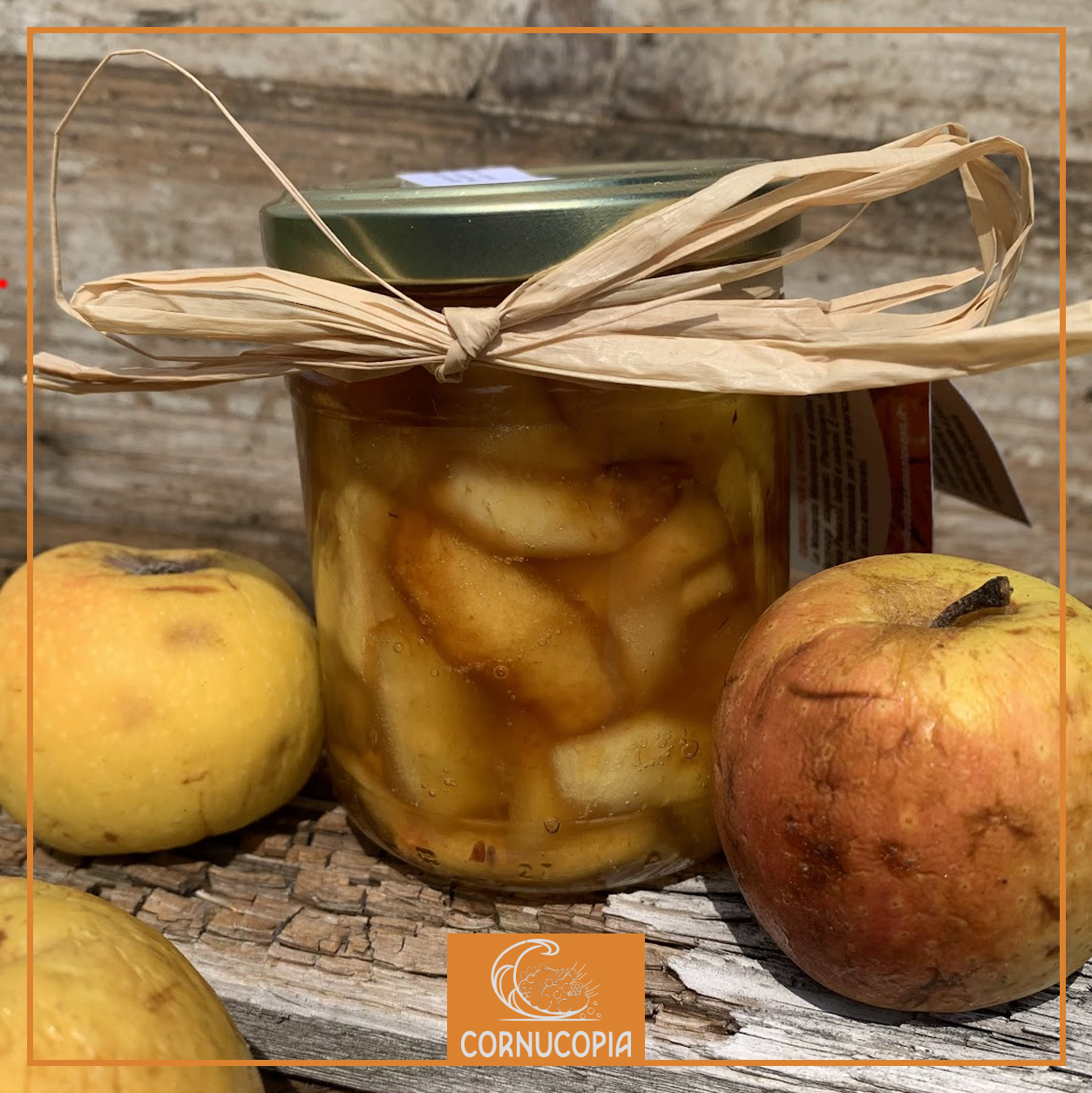
Few traditional food products recall the flavors of the Middle Ages like mustards, with their sweet-spicy contrast to be paired with fatty and savory dishes. That of Campanine apple mostarda is probably the most emblematic representation of this sauce (or preserve), which combines a specific variety with a traditional processing.
A small quantity of organic mostarda, which I have selected for authenticity and research of the product from the field to the laboratory, will soon be available for purchase in the e-commerce section. Products with this adherence to Cornucopia principles have been chosen to experience firsthand the history of our food and wine heritage, the same taste experiences as our ancestors.
Follow the website, page, or channel for updates on a Cornucopia product that I am developing precisely these days, a product that combines the history of mostarda with that of the Campanina variety.
Papal State, 15th century. Banners bearing the ‘green boughs’ of the House of Ordelaffi from Forli waved in the cool breeze blowing through the hills of Romagna. Covered in gleaming steel mesh, the soldiers of the Lordship of Forlì were moving to the border of Ravenna to the north, to scan the horizon for the establishment of their increasingly rich, increasingly powerful new neighbours: the Venetians of the Republic. The House of Da Polenta, who had given birth to the beautiful Francesca of Dantesque memory, was no more. The last descendants exiled across the waters to the east at the behest of the Venetians. On the horizon, the lion of St Mark’s drew its deep breath.
The knights of the Ordelaffi, with their steel armour adorned in green and yellow cloth, led their steeds through rows of yellow and green grapes with the aroma of Muscat pervading the air. From these grapes, a few months later, they would drink a wine that would become famous in the following centuries. Today, this grape, despite some trials of cultivation on the plains, has recaptured the steeper areas of the Romagna countryside and has over 200 hectares of vines.
The coat of arms of the Ordelaffi family and the Republic of Venice in a photo of Sandro Saggioro
In the late Middle Ages, the first traces appear of a grape variety known as Rambella, according to recent research a direct blood heir of the Termarina Nera which we have already discussed in another article. The oldest texts refer to Rambella as a grape used ‘fresh’ at the end of a meal, often even dried, as it cleanses and leaves a fruity aroma in the mouth.
When vinified it is often used to blend more anonymous varieties such as Albana, as is traditional, but it also retains its identity as a still or sparkling single-varietal wine. Although it remains a fresh wine and not as intense as Moscato, it has regained body and identity since it was brought back to the hills, although the real question that arises is why on earth they took it away from there to grow it on the plains Rambella accompanied Romagna’s tables for centuries only to be, as in so many other cases, buried by more widely marketed varieties. In the mouth, the wine obtained from it has scents reminiscent of hawthorn, linden blossom, citrus and sage notes, characteristics that make it a magnificent accompaniment to tortelloni and stuffed pasta.
Attila, king of the Huns, may have been an undisputed symbol of atrocity, ‘earthquake and traccetia‘, but even he had to beat a retreat against the magister militum Aetius, in command of a fierce troop of Goths and Germans, in the mid-fifth century in the bloody battle where Theodoric I, king of the Visigoths, also lost his life. I like to think that in the Roman encampments in Gaul, inside the contuberni (tents) where the milites shared meals and war plans, there were also jars full of Decie apples. red, sour, fragrant, and as hardy as the soldiers of the Imperium. Perhaps they too kept them ripening on straw, in the sun.
The theory that the Decian apple came from this great general (the ‘Aetius’ apple) does not seem to be the most quoted one, however. There are scattered sources documenting the presence of this apple in the Ravenna capital area almost one hundred and fifty years earlier, during the rule of Decius. In any case, we are talking about a variety of fruit that would be at least 1600 years old, although probably many more, and already present on the tables of the Romans before the fall of the Western Empire in the midst of the military anarchy that would later be calmed by Diocletian.
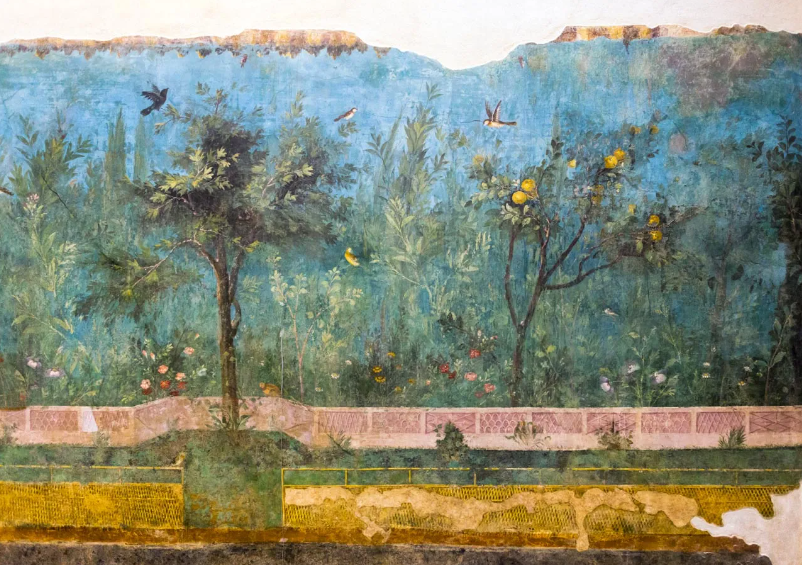
The Villa of Livia, wife of Augustus
Freakishly hardy and resistant to both stress ( we imagine transport) and various pathogens, the Decius has, like many other varieties debased by those of greater commercial value in recent decades, enjoyed great popularity up to the turn of the century. Count Gallesio, which we will certainly discuss in later posts, mentions Decio as one of the most widespread varieties in the House of Este breathing zone north of the Apennines, between Ferrara, Modena and Reggio Emilia. It spread as far as the Veneto region, where it is still considered indigenous and guarded by a group of courageous farmers in the province of Verona. It is not dissimilar in shape and ripening methods to the campanina, with which it also shares the characteristic ‘double’ bell-like fruit (so much so that it is sometimes also called Decio Campanino). Fragrant and excellent when cooked, the next time you taste it, think that it is the same flavour and aroma that the Romans of the Empire also smelled.
Pellegrino Artusi was a wealthy man, born in what would become Romagna in pre-unification Italy in the early 1800s. A man who basically had two lives, split by a violent event that happened on his way out of a theater, not unlike what happened to Batman and his parents, a kind of dark knight of gastronomy in short, with a more disillusioned, sometimes cynical second life, but with a deep sense of ethics and morality.
Artusi was born into a wealthy environment, lacking a thorough education and devoted to the pleasures his station allowed him until he was 30, in the then Church state, at the time when the turmoil of the struggles that followed the chaos of 1848 led to the first of Italy’s three Wars of Independence. In the twilight of the first of these, just before Cavour became prime minister, a young Artusi was walking home after seeing a poem inspired by another battle, a biblical narrative that led to the death of the Canaanite general Sisarah at the hands of a prophetess of Israel. The spiral of violence that the 30-year-old Artusi saw on stage, however, unfortunately, did not end in the theater, as his home was ravaged by brigands, and his sisters were met with a frightening fate.
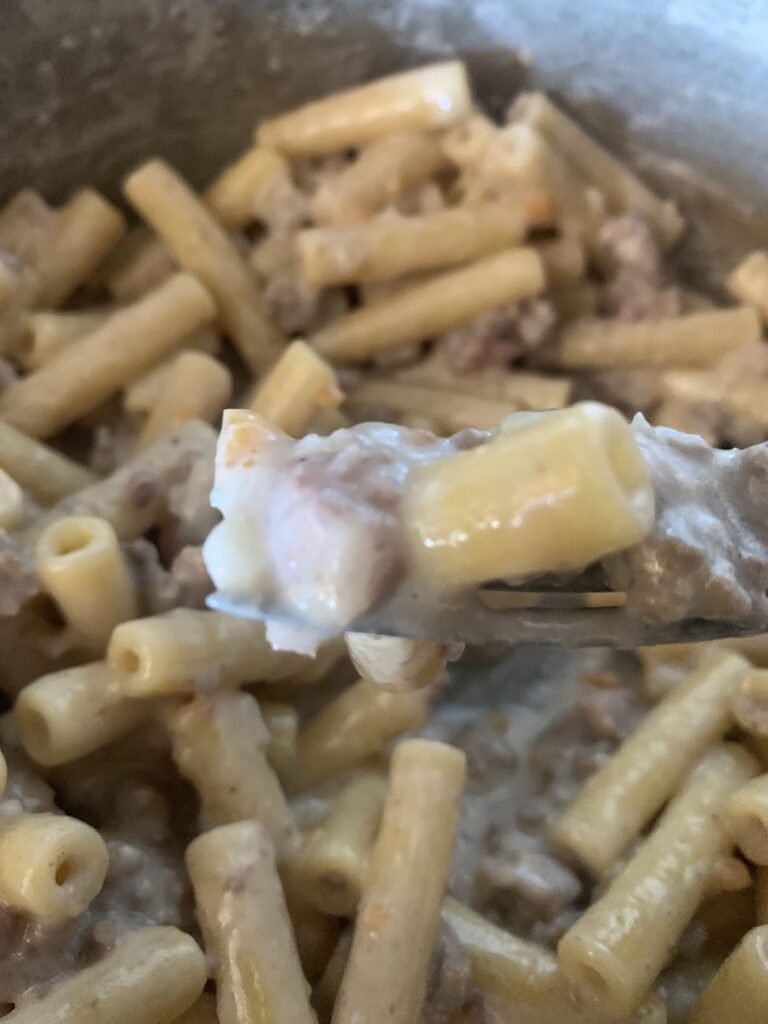
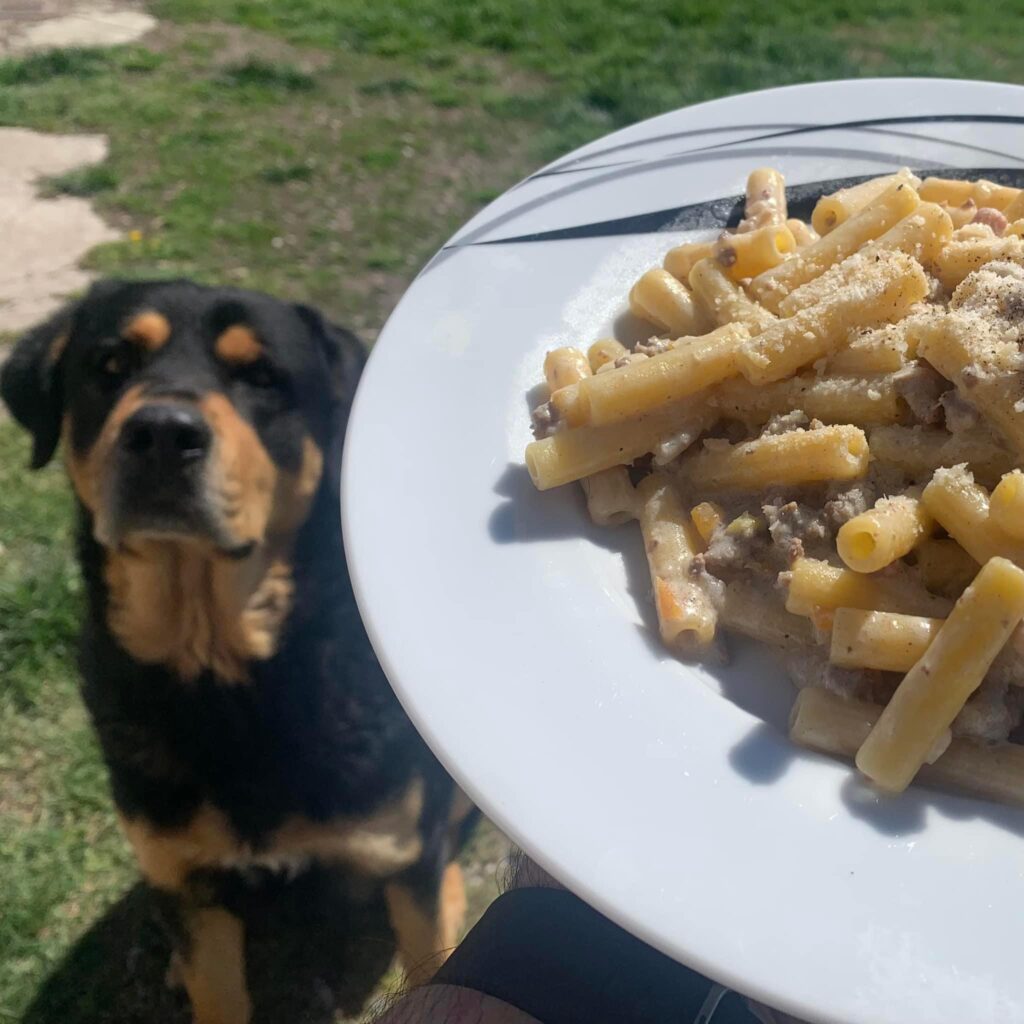
Pellegrino’s character and life took a profound turn that day. He moved to Florence and very soon retired to a life of study in the then Grand Duchy of Tuscany. The other Wars raged and strong cultural currents brought unthinkable revolutions even in academia (his path often intersected with the chair of Agriculture in Florence). He devoted himself to the arts, literature, as well as gastronomy, with a disillusioned and fiercely anticlerical slant. He never hid his aversion to religion, preferring a more secular and universal view of the great principles of progress and coexistence among peoples. One of these was the conscious fusion of cultures, which saw in food a direct expression of their identities. The vicissitudes he faced in publishing his celebrated collection of recipes and scientific reflections on regional Italian cuisine at the dawn of its founding are many and deserve a separate article, but it is interesting to see how the evolution of the manuscript from less than 500 recipes (475) mostly from Northern Italy ended with a version of almost 800, several editions later, all edited by him. Today we will tell about one of them, which Pellegrino brings back from his experience in Bologna not too far from his birthplace, Macaroni Bolognese (Maccheroni alla Bolognese).
A half glass of cream makes it more delicate, says the Pelly
Pellegrino describes his recipes by inserting reflections of a more or less scientific nature. In this case he is not particularly kind to the pasta he met in his Tuscany, where he resided, by the way, until his death. In describing his macaroni, he describes soft wheat pasta as tending to flake. At that time, Strampelli had not yet developed his new varieties; it is presumable that Pellegrino was referring to something like the wheat of plenty, which had been known for centuries (perhaps even since the time of the Roman Empire) and identified by Linnaeus in the late 1700s.
The first striking thing about his macaroni is that it is “in bianco.” Tomatoes had not yet totally entered pasta recipes as we use them today, so it is not surprising that the use of a mixture of lean beef and pork fat, combined with the flour/butter/cream combination is more reminiscent of a lasagna filling than a ragout of today, even if Bolognese.
Even the suggested addition of cream, chicken innards, or truffles is reminiscent of the flavors of a sophisticated baked pasta.
Going to the ingredients I will try to suggest some varieties of Emilia-Romagna’s biodiversity, in conjunction with the Cornucopia idea.
Maccheroni alla Bolognese
Lean veal (preferably in the tenderloin), Romagnola breed gr. 150.
Carnesecca (“pancetta tesa e salata”, Mora Romagnola breed), grams 50
Two palm-long ribs of white celery, or the smell of green celery.
A pinch of flour, but very little (some variety from the Apennines, Mentana for example).
A small pot of broth.
Very little salt or point, on account of the carnesecca and broth being flavorful.
Pepper and, for those who like it, the smell of nutmeg.
Cut the meat into small dice, finely chop with the lunette the carnesecca, onion and herbs, then put everything on the fire together, including the butter, and when the meat has taken on color add the pinch of flour, basting with the broth until cooked through.
Drain the macaroni well from the water and season it with Parmesan cheese and this gravy, which can also be made more grateful either with bits of dried mushrooms or with a few slices of truffles, or with a liver cooked between the meat and cut into small pieces; add, finally, when the gravy is made, if you want to make them even more delicate, half a glass of cream; in any case, it is good that the macaroni come to the table not secco arrabbiato, but diguazzanti in a little sauce.
Pellegrino Artusi, “Science in the kitchen and the art of fine dining”
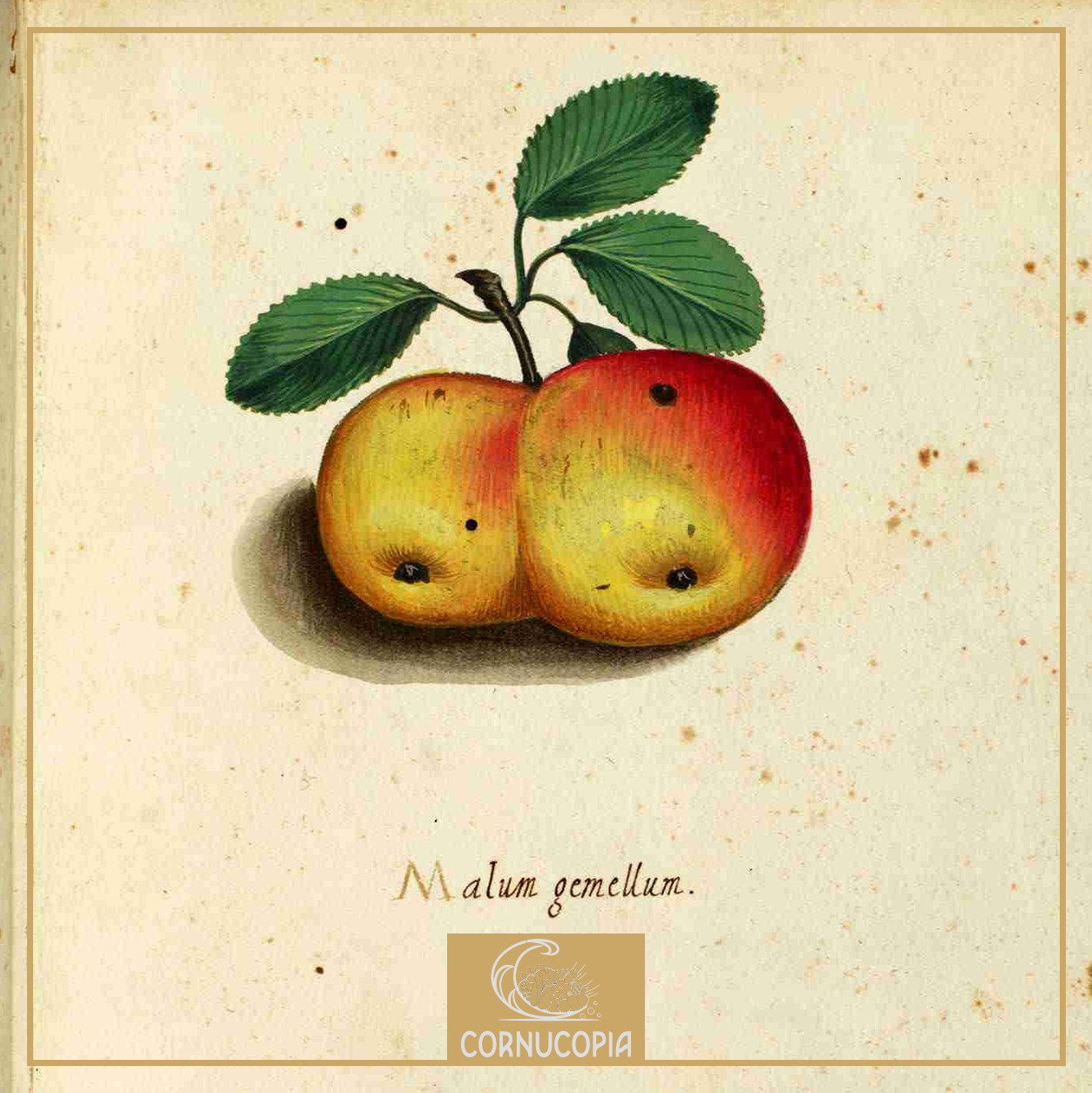
That the Campanino Apple, or Pomo di Modena as it was known at the time, was extremely widespread to the point of becoming proverbial in centuries past, there is no shadow of doubt. Since the Middle Ages the broli (ancient orchard-gardens) of the Estense lands were rich in apple orchards, which in all likelihood included this small and extremely tenacious variety. Giorgio Gallesio, a very important Ligurian botanist famous for his work Pomona Italiana
never saw the unification of Italy or the birth of the conflicts that led to it, but he traveled through its territories and had occasion to mention our bellflower precisely as “Pomo Modenese,” thus present in quantity as early as the 1800s. The count probably saw them lying in the farmyards of the countryside sunbathing, where they turned from dull green to bright red in a few days. Think of the spectacle. Not only did these fragrant melons not hold the frost, but in fact the cold made them tastier. In terms of storage, too, they were perfect. In September-October, they were harvested and remained firm and fragrant for months, without refrigerators or ice.
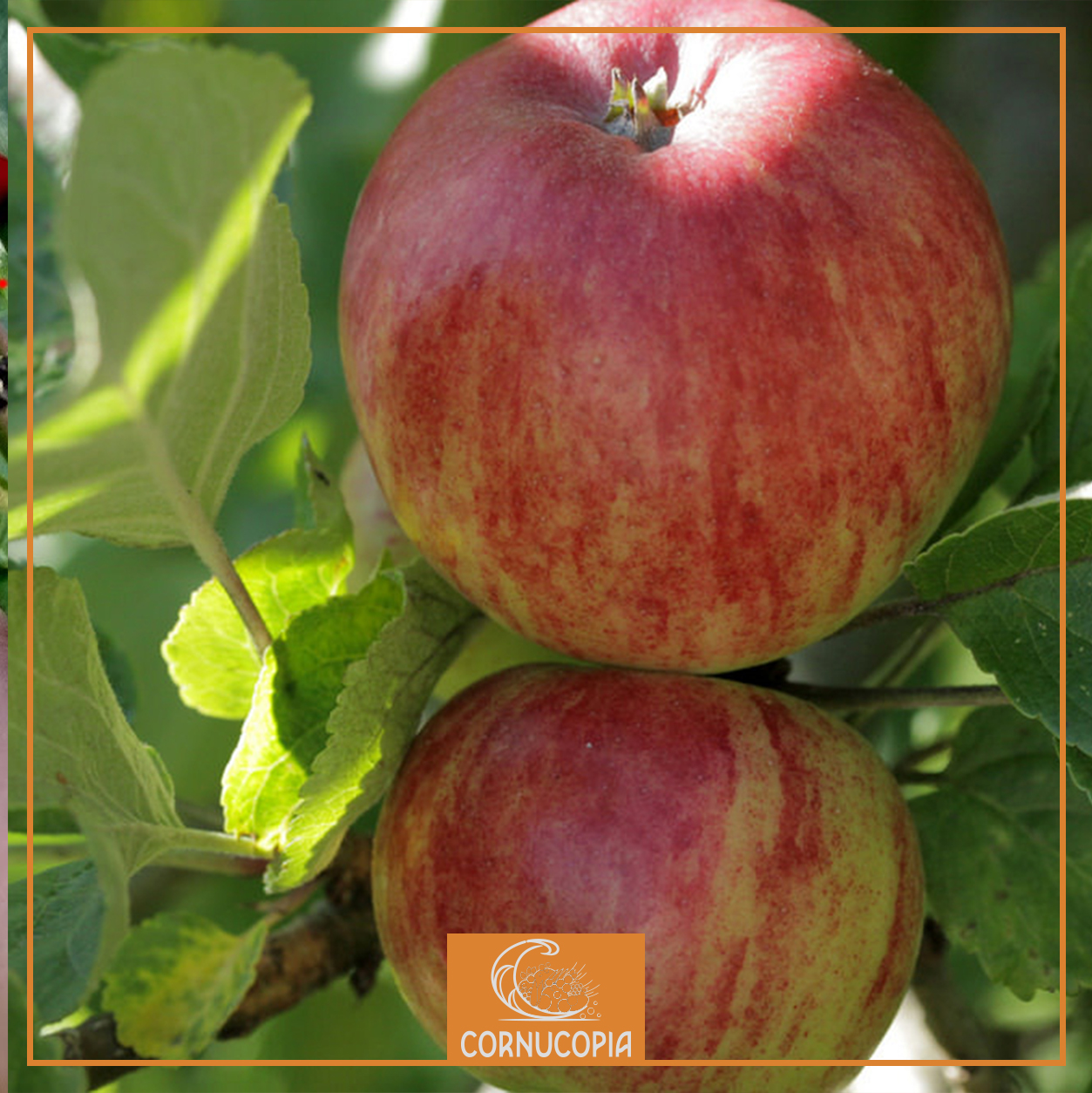
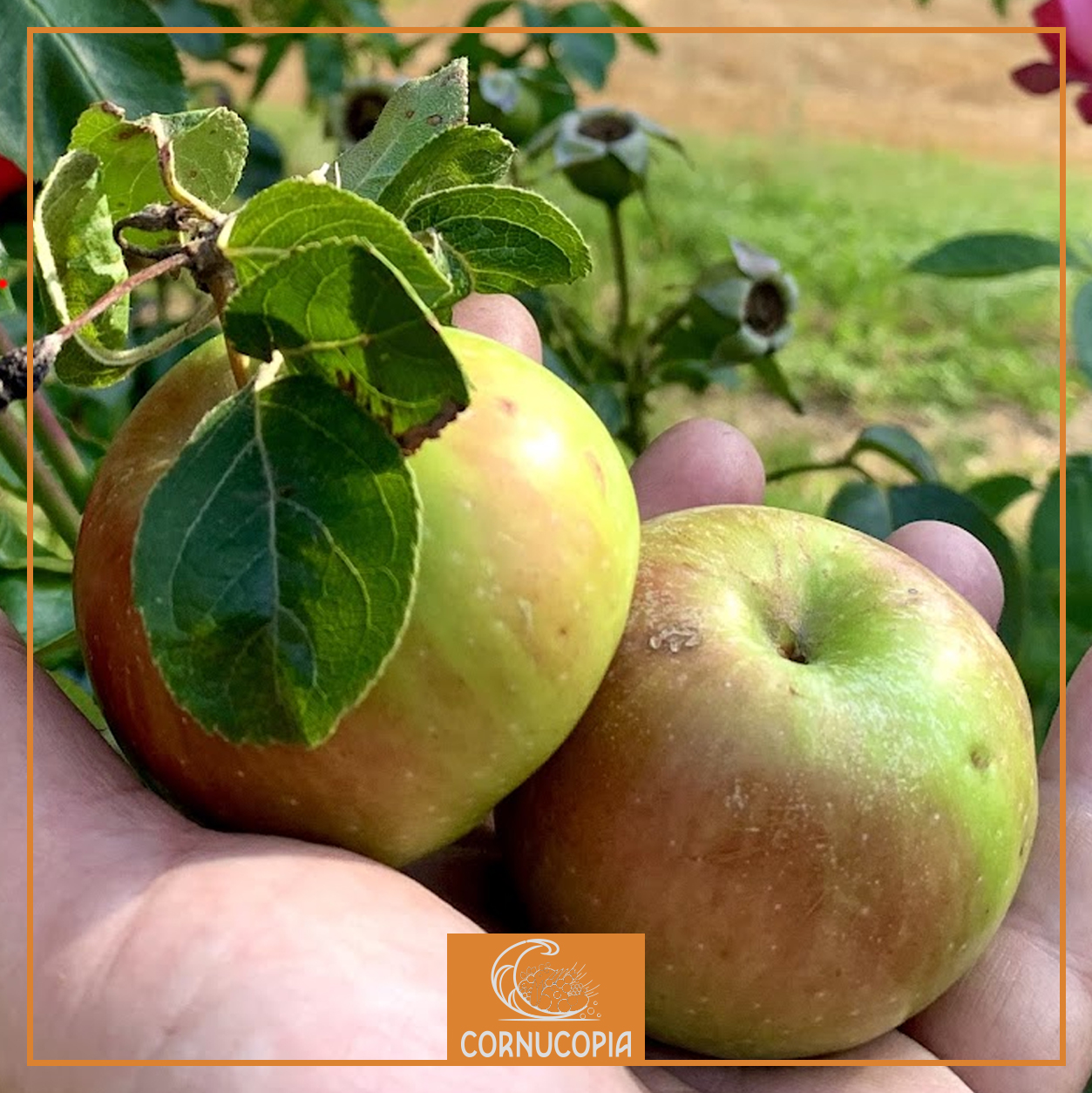
The Campanina represents the Emilian territory (let’s include Mantua since in the 1800s it was cultivated up there more than here) in its most intimate meaning of terroir. It is very rustic, strong, produces wonderful fruits both cooked and raw, in mustards and preserves, even grows in my garden (see photo) without me pouring a drop of water. The campanina apple (thought to owe this more dialectal name because the fruits grow in pairs like two little bells) is in the soul of Modena, Reggio Emilia, Ferrara and Mantua. A little Gonzaga by adoption but very Estense. It has entered rural traditions for centuries, somewhat unripe as a splendid mostarda in Mantua, or more mature as grandmother’s apple with which she used to make fritters in our kitchens.
Apple erosion occurs as early as the late 1900s however, this time we cannot blame the Atlantic. According to Mirandolian Vilmo Cappi it was already disappearing by the 1900s. Its dough “looks like marble,” said ours.
It would now be a foregone conclusion that I am reporting a historic Cornucopia recipe such as Mantuan mustard, but I have decided to reserve an entire article devoted to the wonderful world of mustards and its uses through millennia of history in the coming days.
Instead, I will refer to a recipe from 1864, from the “Encyclopedia of Progress” where it is used for anti-inflammatory purposes. Not surprisingly, scientific research on this apple has shown a huge antioxidant content (four times other commercial varieties); after all, these are defense systems for the plant itself, which did not live pampered in immense, irrigated orchards as it does today.
Ah, the campanina also lots of pectin, use these if you can find them for your homemade jams, you only need a few cloves.
Inflammation of eyes: cut two slices of the center of the Modena apple, ( this is the best ) Then apply one of these to each eye, in the evening at bedtime, rubbing the part well so that it remains during the night, and if the inflammation is obstinate, repeat the procedure again for seven to nine consecutive days. Experience has shown them to have always obtained a happy result with this simple method.
It would be completely foolish and inconsiderate to think of tackling a project dedicated to the historical research of biodiversity and culinary habits without talking about a figure who was born and lived in my neighbouring (and until less than a century ago, also the regional capital) Bologna: Ulisse Aldrovandi. I would therefore like to say a few words about this man, who lived between the 16th and 17th centuries, and inaugurate a series of articles dedicated to naturalists, cooks, stewards and chroniclers who contribute their writings to this research path that is Cornucopia.
Even as a young boy, Ulysses was curious and driven by a desire to learn that made his blood flow and his muscles and bones vibrate with energy. He ran away from home as a little more than a child, just a handful of years after the coronation of Charles V just a stone’s throw from his home, in a city still reeling from the conflicts with France. Still a young boy, and gripped by a desire to learn about the world, he sneaked into Modena where he dressed in pilgrim’s clothes to make a long journey to the burial place of the apostle of Jesus Christ, James, in Spain. A place today famous by the name of Compostela. Perhaps it was that journey that triggered in him the desire to learn and catalogue all the natural beauties of the world
The importance of his works, which are still preserved in Bologna, are such that they influenced even the likes of Linnaeus, who considered him the father of modern Natural History. To get an idea of who Linnaeus is: you know that L. listed next to all the names of plants and animals on Wikipedia? That’s him.
Aldrovandi devoted himself to a life of study, juggling philosophy and jurisprudence that were not those of today but part of a well-rounded cultural baggage of a ‘universal man’ that has been lost over the centuries. His efforts to classify and catalogue everything he could collect and observe occurred during the years of the establishment of the Archiginnasio and the Orto Pubblico, which he managed for decades.
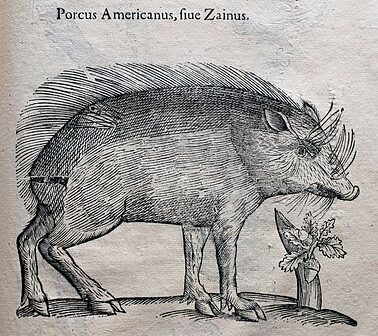
In many respects, Cornucopia represents, in a way, the opposite of Aldrovandi’s work. His efforts were aimed not only at a work of identification circumscribed to a cultural microcosm such as Italy might be, or to the sphere of gastronomy alone, but was projected onto a universal vision. These were the years following the discovery of the Americas and Ulisse’s curiosity was probably particularly stimulated by what we would call ‘allochthonous’ life forms. His thinking was so irrepressible that he went as far as the territories of cryptozoology, into a world of monsters and chimeras. Yet in his plates I lost myself for days imagining what those strange fruits and animals might have looked like four centuries ago.
Porcus Americanus
In addition to admiring him as a person and innovator, and being fascinated by his endless curiosity, I would like to invite everyone today to browse through his plates or visit the Garden and its collection in Palazzo Poggi a Bologna. The splendid plates partly illustrated by himself and partly painted by great contemporary artists, the hundreds of dried leaves and plants (Aldrovandi was a pupil of Luca Ghini, whom we will return to in another post where we will discuss botanical gardens), are also available online.
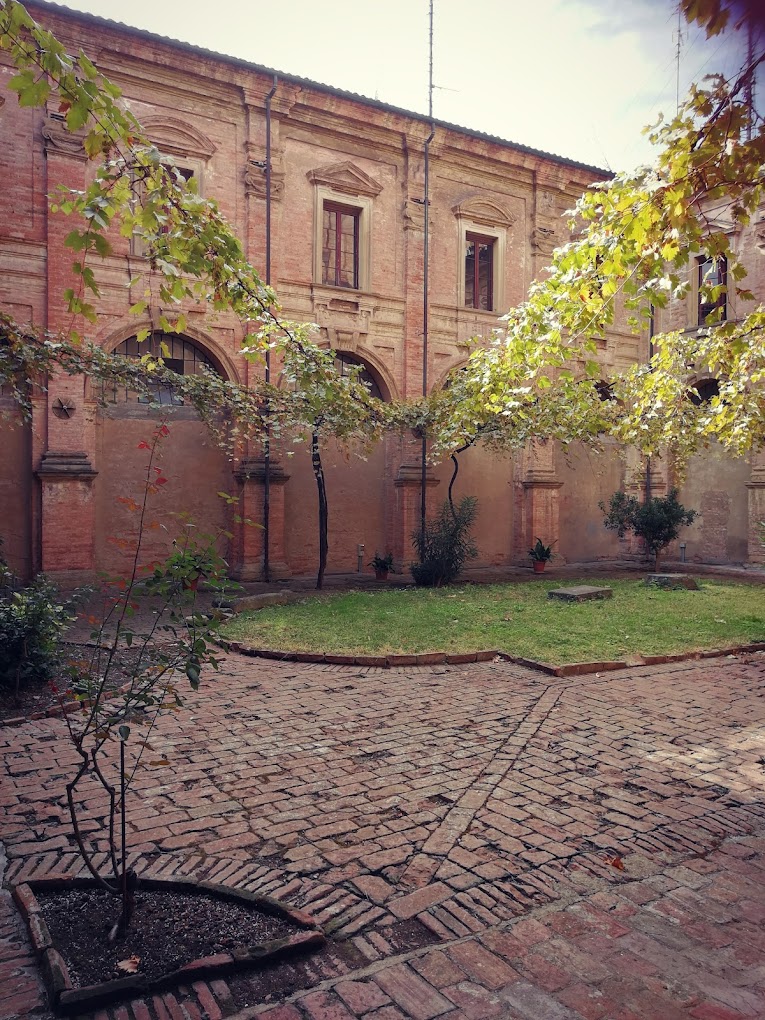
It was the early 1600s when Marquis Vincenzo Tanara in Bologna wrote the splendid L’economia del cittadino in villa (The citizen’s economy in the villa), which we have also mentioned in other articles. Tanara, a magistrate and marquis in the then papal state, leaves us writings rich in detail concerning the administration of a mansion in a Bologna of bygone days, just a few decades after the famous coronation of Charles V at San Petronio. “On my kingdom,” goes the Emperor’s famous phrase, “the sun never sets” (In meinem Reich geht die Sonne niemals unter). And it is good that this is so because a good vineyard requires sun, wind, water and land. It was also during those years that the cloister of a Benedictine monastery was built, which is of interest to us because it houses a very old vine that is still, all things considered, going strong, in the very center of Imola.
Tanara is famous in agrarian and gastronomic historiography for many reasons, but of particular interest to us today is his classification of vines at that time, among which ticks the name of a grape that has held its own in the area for centuries, the vine of that cloister. The Forcella grape (the Fork).
Around the Forcella orbits a confusion that spreads even on today’s ministerial documents, where it is only derubricated as a variant (or “clone”) of Albana di Romagna, so called because of the bifurcation that its long clusters present at their end. Today, however, we are not dealing with Albana Forcella, but with the Forcella that was also cultivated for centuries in the town where I live, Castelfranco Emilia. Or rather, it was even cultivated in the street where I live, although it has obviously been extirpated entirely. Fortunately, a far-sighted person has recovered cuttings so the Forcella of the street where Ser Parsifal lives are still alive, and will give us excellent wines.
Ser Parsifal oversees his estate- on the horizon the land where he grew among other grapes, the Forcella
This vine is becoming less and less widespread, a fate that in this area has also befallen the other great absentee of local wine biodiversity: the Alionza. The only one that still enjoys some health is the equally historic Montuni (with which an honest Bianco di Castelfranco Emilia is produced).
An important 1914 text edited by Cavazza mentions Forcella as being used for the production of table wines, given to the sapling, rustic and expansive, very productive and almost always used in blends. It is a passage that leads to many reflections on the nature of an area everywhere less and less interested in its historic winemaking vocation. Around the home of my lord Ser Parsifal above, the lands now host blanket cultivations of Lambrusco and Pignoletto of not only often terrifying quality but stubbornly condemned to single-varietal, when I wonder if this could still be a land of great whites, in the hands of skilled winemakers.
Patriarch of the fruit in the former Benedictine convent of the Olivetan congregation, Imola
To honor the city of Imola and the Forcella plant above, today’s Cornucopia recipe will be about a typical local dessert, handed down to us thanks to a recipe by the very famous Pellegrino Artusi.
Migliaccio di Romagna con saba di Uva Forcella
Milk, deciliters No. 7.
“Undone” pig’s blood, grams 330.
Forcella grape sapa, grams 200.
Peeled sweet almonds, grams 100.
Sugar, grams 100.
Very fine breadcrumbs, grams 80.
Candied fruit, grams 50.
Butter, grams 50.
Fine spices, two teaspoons.
Chocolate, grams 100.
Nutmeg, one teaspoon.
One strip of lemon peel.
Pound in a mortar the almonds together with the candied fruit, which you will have first cut into small pieces, sprinkle them from time to time with a few teaspoons of milk and pass them through a sieve. Place the milk on the fire with the lemon peel, which must then be removed, and boil it for 10 minutes ; then add to it the grated chocolate, and when this has melted, remove it from the fire and let it cool a little. Then pour into the same pot the blood, already passed through istaccio (sieve), and all the other ingredients, saving for last the breadcrumbs, of which, if it were too much, a part can be left behind. Put the mixture to cook in a bain-marie and remove it often with the ladle so that it does not stick to the pot. The cooking and the degree of right density that is needed can be known from the ladle, which, left in the middle of the mixture, must remain upright. If this does not happen, add the rest of the breadcrumbs, assuming you have not poured it all in. For the remainder, do the same as for the ricotta cake No. 488, that is, pour it into a pan lined with the flat dough No. 118 and, when it is well browned, cut it into almonds. Cook the pasta matta a little so that it can be cut easily, and do not let the migliaccio dry out over the fire, but take it out when it comes out clean a granata twig dipped in it. If you use honey instead of sapa, taste it before adding the sugar so that it does not turn out too sweet, and note that one of the virtues of this dish is that it is mantecato, that is, of very fine composition. The fear of not being understood by everyone, in describing these dishes, often makes me descend to too much minute detail, which I would gladly spare.
Pellegrino Artusi, La scienza in cucina e l’arte di mangiar bene
Digita almeno due lettere per cercare nelle schede dell’enciclopedia.
Gestisci Consenso
Per fornire le migliori esperienze, utilizziamo tecnologie come i cookie per memorizzare e/o accedere alle informazioni del dispositivo. Il consenso a queste tecnologie ci permetterà di elaborare dati come il comportamento di navigazione o ID unici su questo sito. Non acconsentire o ritirare il consenso può influire negativamente su alcune caratteristiche e funzioni.
Funzionale
Sempre attivo
L'archiviazione tecnica o l'accesso sono strettamente necessari al fine legittimo di consentire l'uso di un servizio specifico esplicitamente richiesto dall'abbonato o dall'utente, o al solo scopo di effettuare la trasmissione di una comunicazione su una rete di comunicazione elettronica.
Preferenze
L'archiviazione tecnica o l'accesso sono necessari per lo scopo legittimo di memorizzare le preferenze che non sono richieste dall'abbonato o dall'utente.
Statistiche
L'archiviazione tecnica o l'accesso che viene utilizzato esclusivamente per scopi statistici.L'archiviazione tecnica o l'accesso che viene utilizzato esclusivamente per scopi statistici anonimi. Senza un mandato di comparizione, una conformità volontaria da parte del vostro Fornitore di Servizi Internet, o ulteriori registrazioni da parte di terzi, le informazioni memorizzate o recuperate per questo scopo da sole non possono di solito essere utilizzate per l'identificazione.
Marketing
L'archiviazione tecnica o l'accesso sono necessari per creare profili di utenti per inviare pubblicità, o per tracciare l'utente su un sito web o su diversi siti web per scopi di marketing simili.

 Se volete, durante la prenotazione è possibile anche prenotare un kg di Parmigiano di Vacche Bianche Modenesi, allevate al pascolo secondo la tradizione dei secoli scorsi (la Vacca Bianca è un animale di pianura), con l’aggiunta di € 20 alla donazione (€ 60 totali).