Papal State, 15th century. Banners bearing the ‘green boughs’ of the House of Ordelaffi from Forli waved in the cool breeze blowing through the hills of Romagna. Covered in gleaming steel mesh, the soldiers of the Lordship of Forlì were moving to the border of Ravenna to the north, to scan the horizon for the establishment of their increasingly rich, increasingly powerful new neighbours: the Venetians of the Republic. The House of Da Polenta, who had given birth to the beautiful Francesca of Dantesque memory, was no more. The last descendants exiled across the waters to the east at the behest of the Venetians. On the horizon, the lion of St Mark’s drew its deep breath.
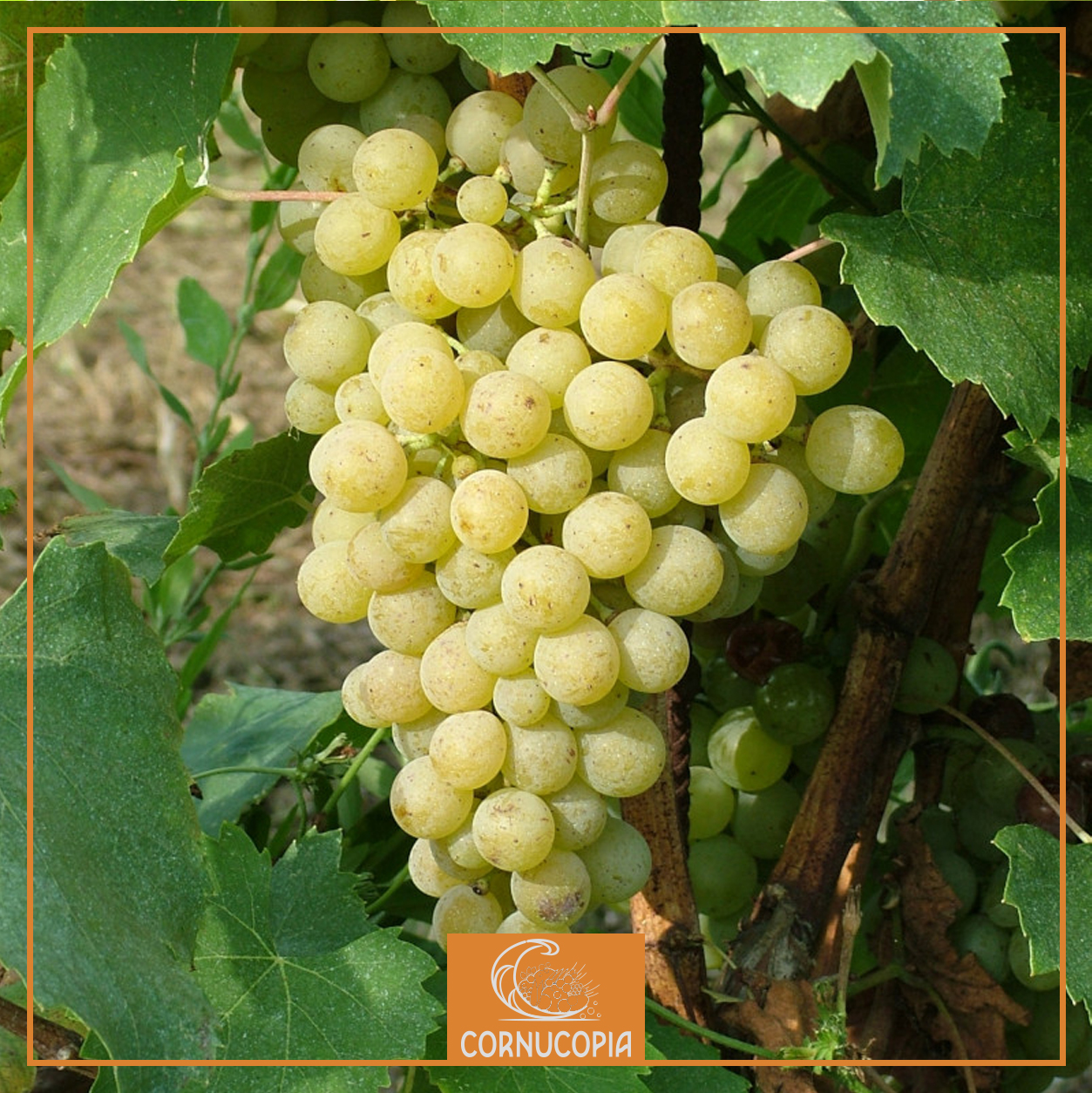
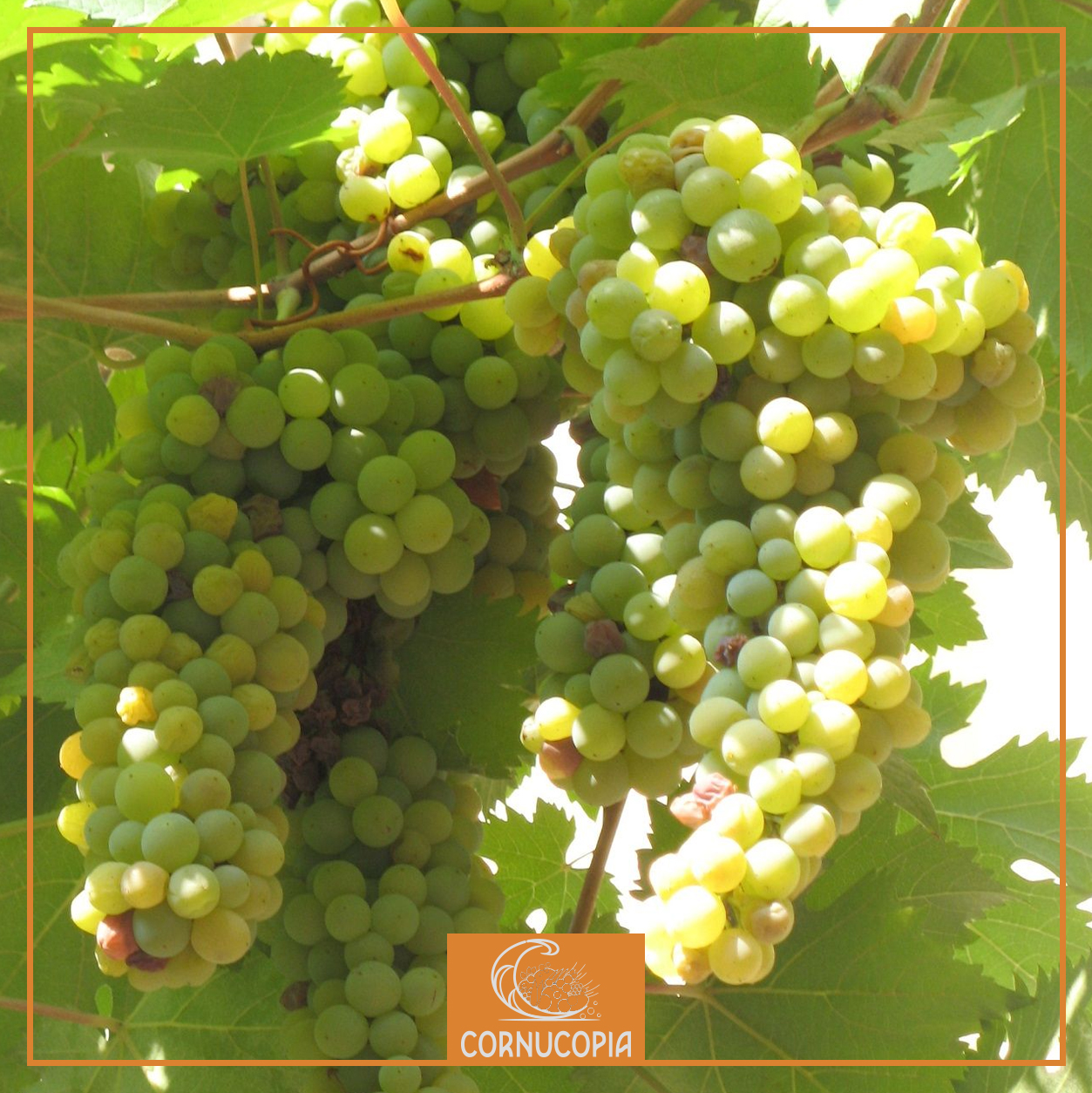
The knights of the Ordelaffi, with their steel armour adorned in green and yellow cloth, led their steeds through rows of yellow and green grapes with the aroma of Muscat pervading the air. From these grapes, a few months later, they would drink a wine that would become famous in the following centuries. Today, this grape, despite some trials of cultivation on the plains, has recaptured the steeper areas of the Romagna countryside and has over 200 hectares of vines.
The coat of arms of the Ordelaffi family and the Republic of Venice in a photo of Sandro Saggioro
In the late Middle Ages, the first traces appear of a grape variety known as Rambella, according to recent research a direct blood heir of the Termarina Nera which we have already discussed in another article. The oldest texts refer to Rambella as a grape used ‘fresh’ at the end of a meal, often even dried, as it cleanses and leaves a fruity aroma in the mouth.
When vinified it is often used to blend more anonymous varieties such as Albana, as is traditional, but it also retains its identity as a still or sparkling single-varietal wine. Although it remains a fresh wine and not as intense as Moscato, it has regained body and identity since it was brought back to the hills, although the real question that arises is why on earth they took it away from there to grow it on the plains Rambella accompanied Romagna’s tables for centuries only to be, as in so many other cases, buried by more widely marketed varieties. In the mouth, the wine obtained from it has scents reminiscent of hawthorn, linden blossom, citrus and sage notes, characteristics that make it a magnificent accompaniment to tortelloni and stuffed pasta.
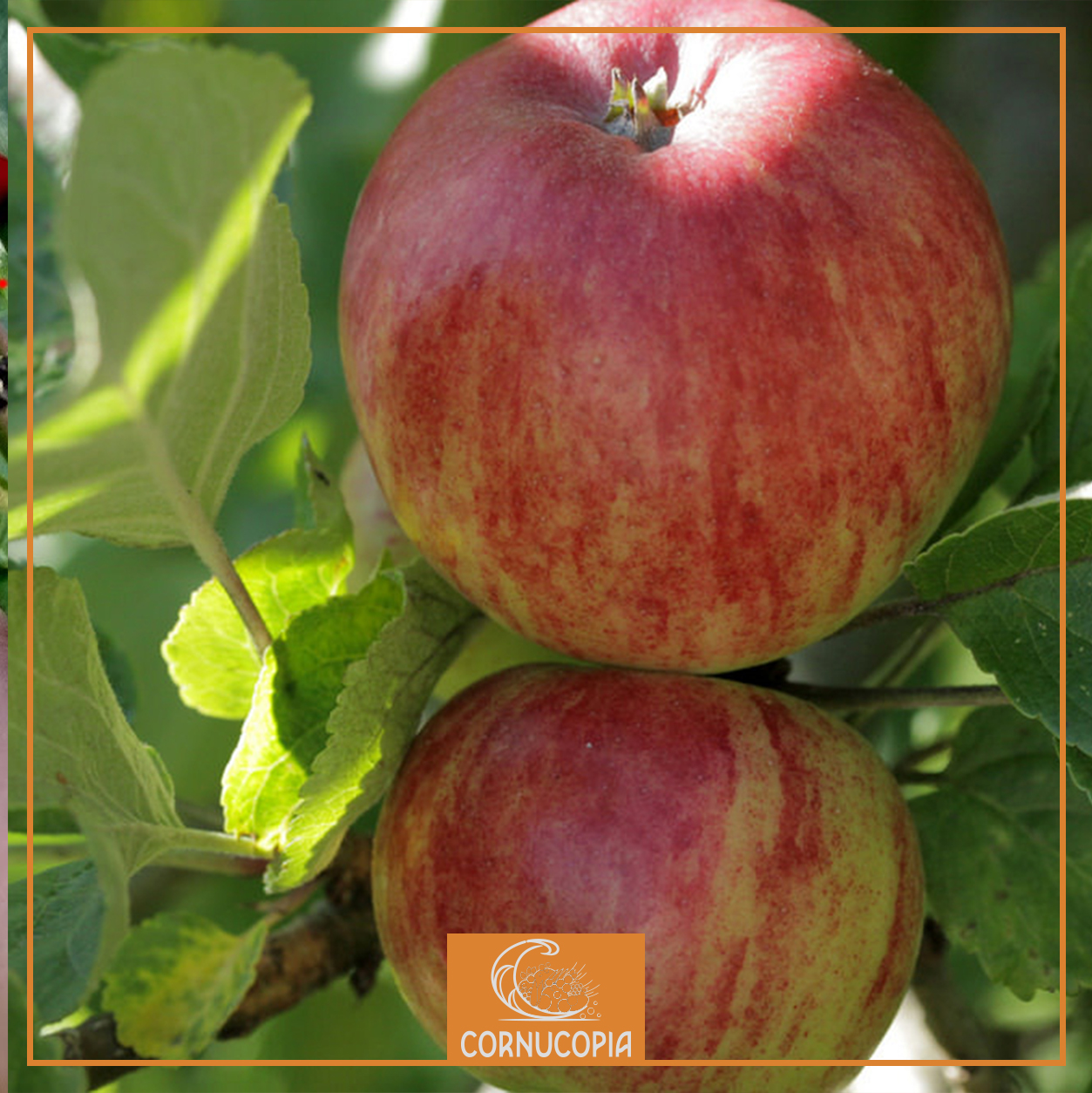
Attila, king of the Huns, may have been an undisputed symbol of atrocity, ‘earthquake and traccetia‘, but even he had to beat a retreat against the magister militum Aetius, in command of a fierce troop of Goths and Germans, in the mid-fifth century in the bloody battle where Theodoric I, king of the Visigoths, also lost his life. I like to think that in the Roman encampments in Gaul, inside the contuberni (tents) where the milites shared meals and war plans, there were also jars full of Decie apples. red, sour, fragrant, and as hardy as the soldiers of the Imperium. Perhaps they too kept them ripening on straw, in the sun.
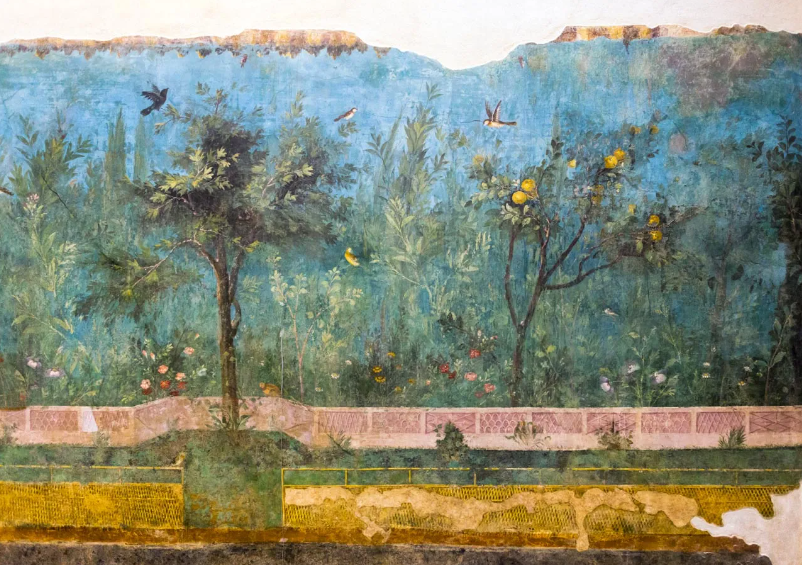
The theory that the Decian apple came from this great general (the ‘Aetius’ apple) does not seem to be the most quoted one, however. There are scattered sources documenting the presence of this apple in the Ravenna capital area almost one hundred and fifty years earlier, during the rule of Decius. In any case, we are talking about a variety of fruit that would be at least 1600 years old, although probably many more, and already present on the tables of the Romans before the fall of the Western Empire in the midst of the military anarchy that would later be calmed by Diocletian.
The Villa of Livia, wife of Augustus
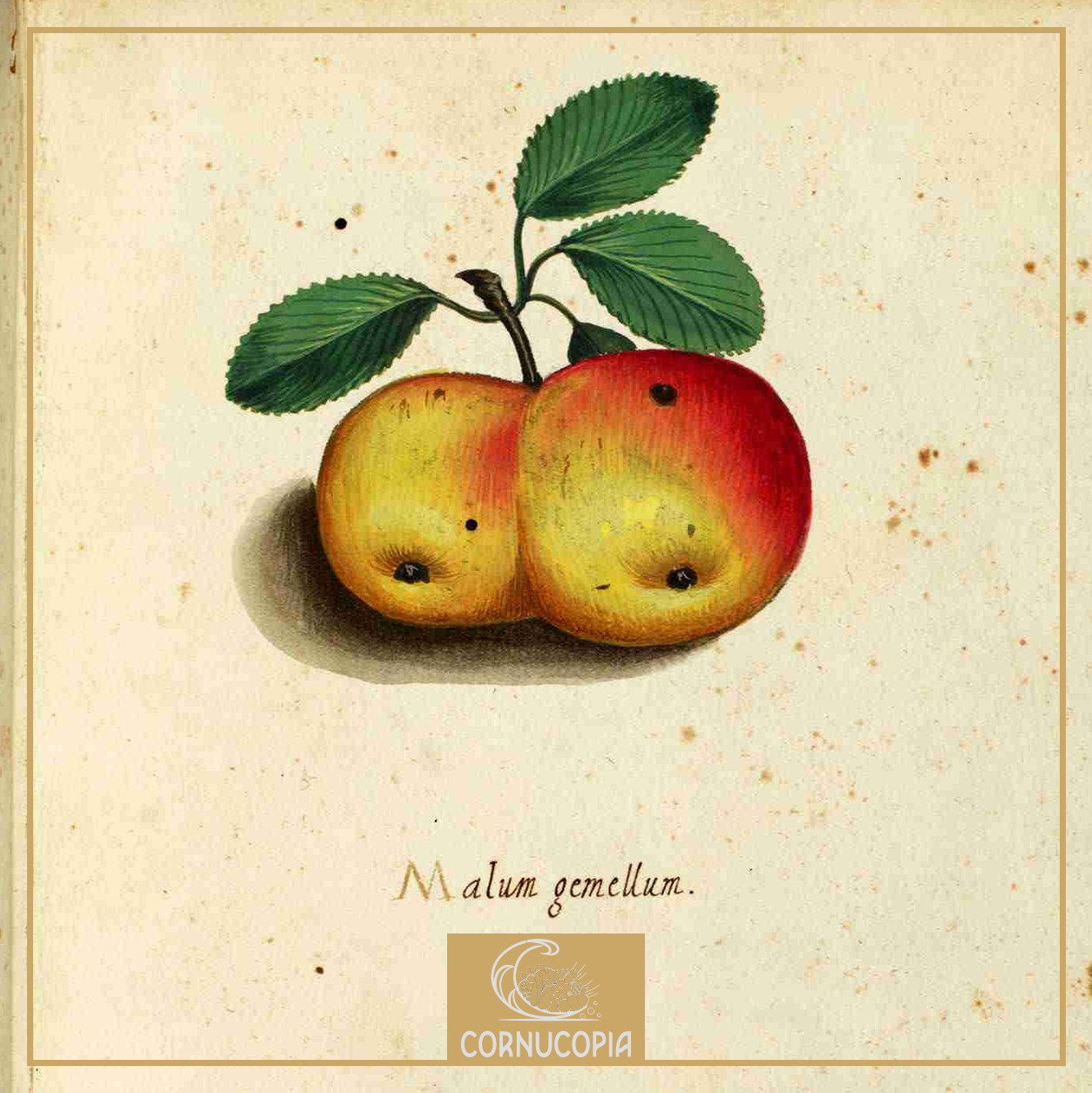
Freakishly hardy and resistant to both stress ( we imagine transport) and various pathogens, the Decius has, like many other varieties debased by those of greater commercial value in recent decades, enjoyed great popularity up to the turn of the century. Count Gallesio, which we will certainly discuss in later posts, mentions Decio as one of the most widespread varieties in the House of Este breathing zone north of the Apennines, between Ferrara, Modena and Reggio Emilia. It spread as far as the Veneto region, where it is still considered indigenous and guarded by a group of courageous farmers in the province of Verona. It is not dissimilar in shape and ripening methods to the campanina, with which it also shares the characteristic ‘double’ bell-like fruit (so much so that it is sometimes also called Decio Campanino). Fragrant and excellent when cooked, the next time you taste it, think that it is the same flavour and aroma that the Romans of the Empire also smelled.
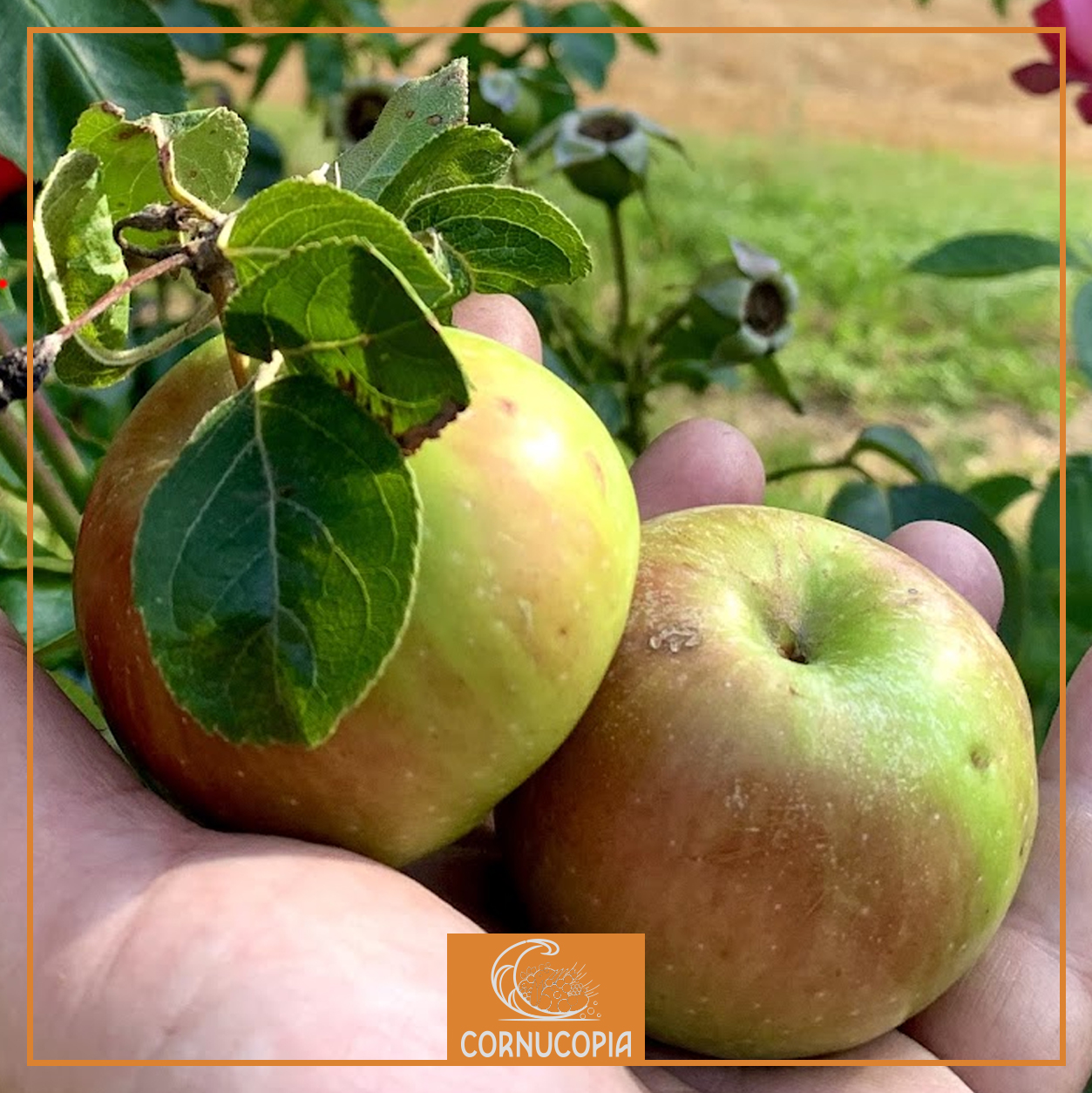
That the Campanino Apple, or Pomo di Modena as it was known at the time, was extremely widespread to the point of becoming proverbial in centuries past, there is no shadow of doubt. Since the Middle Ages the broli (ancient orchard-gardens) of the Estense lands were rich in apple orchards, which in all likelihood included this small and extremely tenacious variety. Giorgio Gallesio, a very important Ligurian botanist famous for his work Pomona Italiana
never saw the unification of Italy or the birth of the conflicts that led to it, but he traveled through its territories and had occasion to mention our bellflower precisely as “Pomo Modenese,” thus present in quantity as early as the 1800s. The count probably saw them lying in the farmyards of the countryside sunbathing, where they turned from dull green to bright red in a few days. Think of the spectacle. Not only did these fragrant melons not hold the frost, but in fact the cold made them tastier. In terms of storage, too, they were perfect. In September-October, they were harvested and remained firm and fragrant for months, without refrigerators or ice.
The Campanina represents the Emilian territory (let’s include Mantua since in the 1800s it was cultivated up there more than here) in its most intimate meaning of terroir. It is very rustic, strong, produces wonderful fruits both cooked and raw, in mustards and preserves, even grows in my garden (see photo) without me pouring a drop of water. The campanina apple (thought to owe this more dialectal name because the fruits grow in pairs like two little bells) is in the soul of Modena, Reggio Emilia, Ferrara and Mantua. A little Gonzaga by adoption but very Estense. It has entered rural traditions for centuries, somewhat unripe as a splendid mostarda in Mantua, or more mature as grandmother’s apple with which she used to make fritters in our kitchens.
Apple erosion occurs as early as the late 1900s however, this time we cannot blame the Atlantic. According to Mirandolian Vilmo Cappi it was already disappearing by the 1900s. Its dough “looks like marble,” said ours.
It would now be a foregone conclusion that I am reporting a historic Cornucopia recipe such as Mantuan mustard, but I have decided to reserve an entire article devoted to the wonderful world of mustards and its uses through millennia of history in the coming days.
Instead, I will refer to a recipe from 1864, from the “Encyclopedia of Progress” where it is used for anti-inflammatory purposes. Not surprisingly, scientific research on this apple has shown a huge antioxidant content (four times other commercial varieties); after all, these are defense systems for the plant itself, which did not live pampered in immense, irrigated orchards as it does today.
Ah, the campanina also lots of pectin, use these if you can find them for your homemade jams, you only need a few cloves.
Inflammation of eyes: cut two slices of the center of the Modena apple, ( this is the best ) Then apply one of these to each eye, in the evening at bedtime, rubbing the part well so that it remains during the night, and if the inflammation is obstinate, repeat the procedure again for seven to nine consecutive days. Experience has shown them to have always obtained a happy result with this simple method.
It would be completely foolish and inconsiderate to think of tackling a project dedicated to the historical research of biodiversity and culinary habits without talking about a figure who was born and lived in my neighbouring (and until less than a century ago, also the regional capital) Bologna: Ulisse Aldrovandi. I would therefore like to say a few words about this man, who lived between the 16th and 17th centuries, and inaugurate a series of articles dedicated to naturalists, cooks, stewards and chroniclers who contribute their writings to this research path that is Cornucopia.
Even as a young boy, Ulysses was curious and driven by a desire to learn that made his blood flow and his muscles and bones vibrate with energy. He ran away from home as a little more than a child, just a handful of years after the coronation of Charles V just a stone’s throw from his home, in a city still reeling from the conflicts with France. Still a young boy, and gripped by a desire to learn about the world, he sneaked into Modena where he dressed in pilgrim’s clothes to make a long journey to the burial place of the apostle of Jesus Christ, James, in Spain. A place today famous by the name of Compostela. Perhaps it was that journey that triggered in him the desire to learn and catalogue all the natural beauties of the world
The importance of his works, which are still preserved in Bologna, are such that they influenced even the likes of Linnaeus, who considered him the father of modern Natural History. To get an idea of who Linnaeus is: you know that L. listed next to all the names of plants and animals on Wikipedia? That’s him.
Aldrovandi devoted himself to a life of study, juggling philosophy and jurisprudence that were not those of today but part of a well-rounded cultural baggage of a ‘universal man’ that has been lost over the centuries. His efforts to classify and catalogue everything he could collect and observe occurred during the years of the establishment of the Archiginnasio and the Orto Pubblico, which he managed for decades.
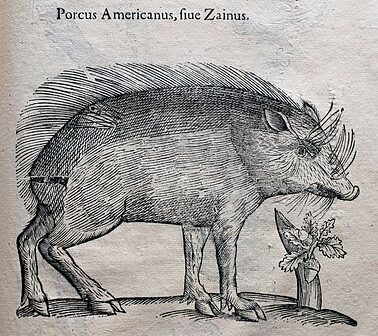
In many respects, Cornucopia represents, in a way, the opposite of Aldrovandi’s work. His efforts were aimed not only at a work of identification circumscribed to a cultural microcosm such as Italy might be, or to the sphere of gastronomy alone, but was projected onto a universal vision. These were the years following the discovery of the Americas and Ulisse’s curiosity was probably particularly stimulated by what we would call ‘allochthonous’ life forms. His thinking was so irrepressible that he went as far as the territories of cryptozoology, into a world of monsters and chimeras. Yet in his plates I lost myself for days imagining what those strange fruits and animals might have looked like four centuries ago.
Porcus Americanus
In addition to admiring him as a person and innovator, and being fascinated by his endless curiosity, I would like to invite everyone today to browse through his plates or visit the Garden and its collection in Palazzo Poggi a Bologna. The splendid plates partly illustrated by himself and partly painted by great contemporary artists, the hundreds of dried leaves and plants (Aldrovandi was a pupil of Luca Ghini, whom we will return to in another post where we will discuss botanical gardens), are also available online.
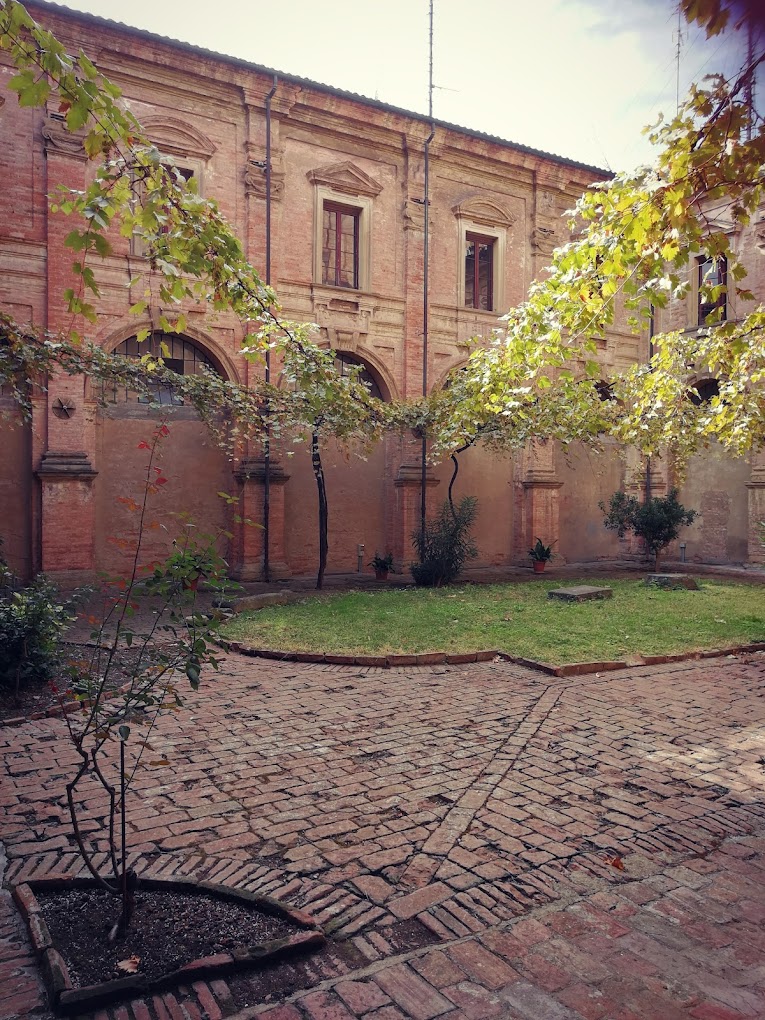
It was the early 1600s when Marquis Vincenzo Tanara in Bologna wrote the splendid L’economia del cittadino in villa (The citizen’s economy in the villa), which we have also mentioned in other articles. Tanara, a magistrate and marquis in the then papal state, leaves us writings rich in detail concerning the administration of a mansion in a Bologna of bygone days, just a few decades after the famous coronation of Charles V at San Petronio. “On my kingdom,” goes the Emperor’s famous phrase, “the sun never sets” (In meinem Reich geht die Sonne niemals unter). And it is good that this is so because a good vineyard requires sun, wind, water and land. It was also during those years that the cloister of a Benedictine monastery was built, which is of interest to us because it houses a very old vine that is still, all things considered, going strong, in the very center of Imola.
Tanara is famous in agrarian and gastronomic historiography for many reasons, but of particular interest to us today is his classification of vines at that time, among which ticks the name of a grape that has held its own in the area for centuries, the vine of that cloister. The Forcella grape (the Fork).
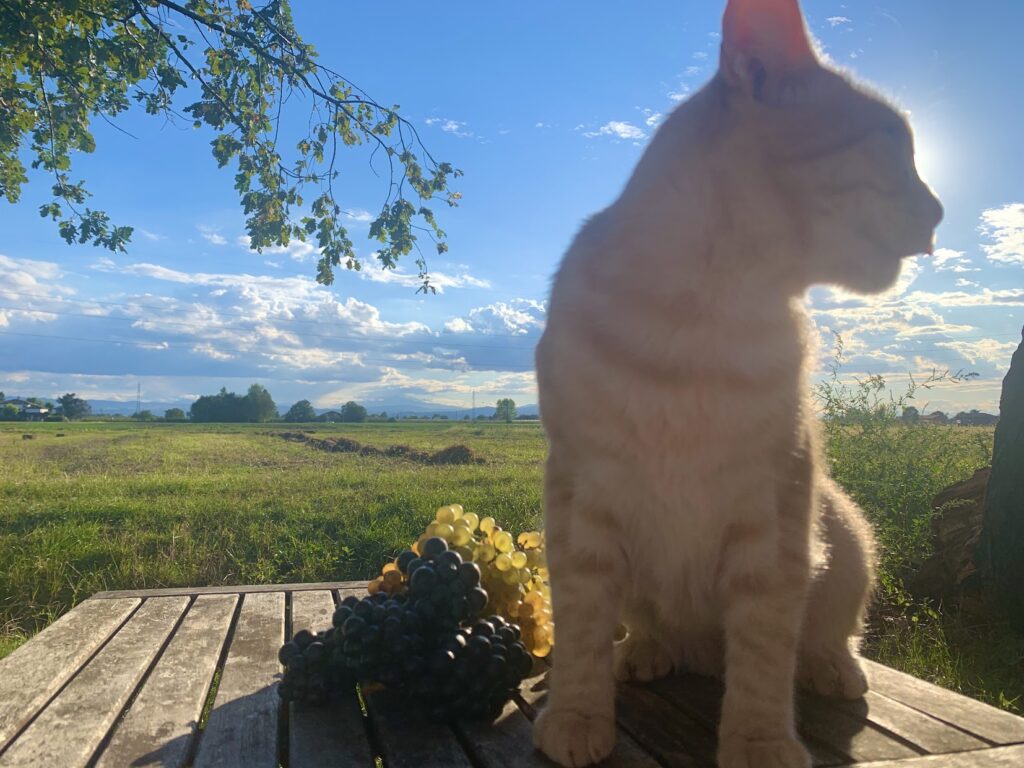
Around the Forcella orbits a confusion that spreads even on today’s ministerial documents, where it is only derubricated as a variant (or “clone”) of Albana di Romagna, so called because of the bifurcation that its long clusters present at their end. Today, however, we are not dealing with Albana Forcella, but with the Forcella that was also cultivated for centuries in the town where I live, Castelfranco Emilia. Or rather, it was even cultivated in the street where I live, although it has obviously been extirpated entirely. Fortunately, a far-sighted person has recovered cuttings so the Forcella of the street where Ser Parsifal lives are still alive, and will give us excellent wines.
Ser Parsifal oversees his estate- on the horizon the land where he grew among other grapes, the Forcella
This vine is becoming less and less widespread, a fate that in this area has also befallen the other great absentee of local wine biodiversity: the Alionza. The only one that still enjoys some health is the equally historic Montuni (with which an honest Bianco di Castelfranco Emilia is produced).
An important 1914 text edited by Cavazza mentions Forcella as being used for the production of table wines, given to the sapling, rustic and expansive, very productive and almost always used in blends. It is a passage that leads to many reflections on the nature of an area everywhere less and less interested in its historic winemaking vocation. Around the home of my lord Ser Parsifal above, the lands now host blanket cultivations of Lambrusco and Pignoletto of not only often terrifying quality but stubbornly condemned to single-varietal, when I wonder if this could still be a land of great whites, in the hands of skilled winemakers.
Patriarch of the fruit in the former Benedictine convent of the Olivetan congregation, Imola
To honor the city of Imola and the Forcella plant above, today’s Cornucopia recipe will be about a typical local dessert, handed down to us thanks to a recipe by the very famous Pellegrino Artusi.
Migliaccio di Romagna con saba di Uva Forcella
Milk, deciliters No. 7.
“Undone” pig’s blood, grams 330.
Forcella grape sapa, grams 200.
Peeled sweet almonds, grams 100.
Sugar, grams 100.
Very fine breadcrumbs, grams 80.
Candied fruit, grams 50.
Butter, grams 50.
Fine spices, two teaspoons.
Chocolate, grams 100.
Nutmeg, one teaspoon.
One strip of lemon peel.
Pound in a mortar the almonds together with the candied fruit, which you will have first cut into small pieces, sprinkle them from time to time with a few teaspoons of milk and pass them through a sieve. Place the milk on the fire with the lemon peel, which must then be removed, and boil it for 10 minutes ; then add to it the grated chocolate, and when this has melted, remove it from the fire and let it cool a little. Then pour into the same pot the blood, already passed through istaccio (sieve), and all the other ingredients, saving for last the breadcrumbs, of which, if it were too much, a part can be left behind. Put the mixture to cook in a bain-marie and remove it often with the ladle so that it does not stick to the pot. The cooking and the degree of right density that is needed can be known from the ladle, which, left in the middle of the mixture, must remain upright. If this does not happen, add the rest of the breadcrumbs, assuming you have not poured it all in. For the remainder, do the same as for the ricotta cake No. 488, that is, pour it into a pan lined with the flat dough No. 118 and, when it is well browned, cut it into almonds. Cook the pasta matta a little so that it can be cut easily, and do not let the migliaccio dry out over the fire, but take it out when it comes out clean a granata twig dipped in it. If you use honey instead of sapa, taste it before adding the sugar so that it does not turn out too sweet, and note that one of the virtues of this dish is that it is mantecato, that is, of very fine composition. The fear of not being understood by everyone, in describing these dishes, often makes me descend to too much minute detail, which I would gladly spare.
Pellegrino Artusi, La scienza in cucina e l’arte di mangiar bene
When in 1900 Gaetano Chierici, the recently elected mayor in the lists of the new socialist party, returned exhausted to his home in Reggio Emilia, he probably allowed himself to sink into the cushion of his soft armchair, observing the paintings hanging on the walls of the house, retracing his long past as a painter in his mind. Drinking a glass of acqua d’orcio (“barley water”), he was perhaps contemplating the evolution of his style, dwelling on the realist and hyperkinetic subjects of his last genre period. Here, amidst leggy kids and amusing moments of rural life immortalized on canvas, the wild golden wheat livery of the Modenese hen stood out.
These paintings allowed the keeper breeders of Modena and neighboring provinces decades later to have a common point of reference to identify the breed par excellence of the chicken of Emilia. These are the same paintings that a few decades later would debunk the thesis that the Modenese hen is actually a new cross between the Padovana and Livorno Bianca e Dorata breeds.
Like all native Mediterranean breeds of that period, the Modenese hen is a hen of Indian origin, with its white earlobes and even whiter eggs. That evolutive trunk of Roman and Phoenician origins from which all native Mediterranean breeds derive.
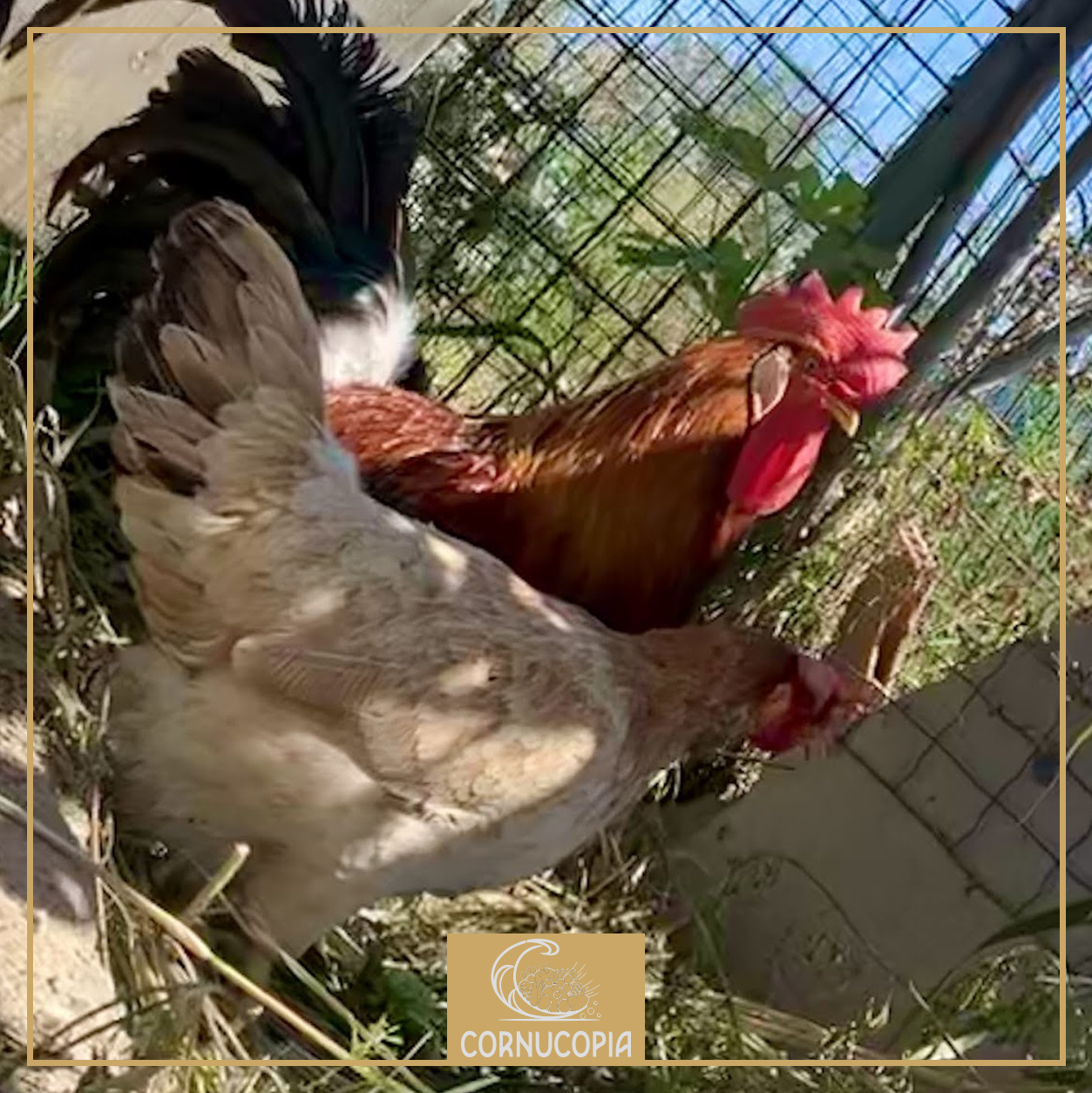
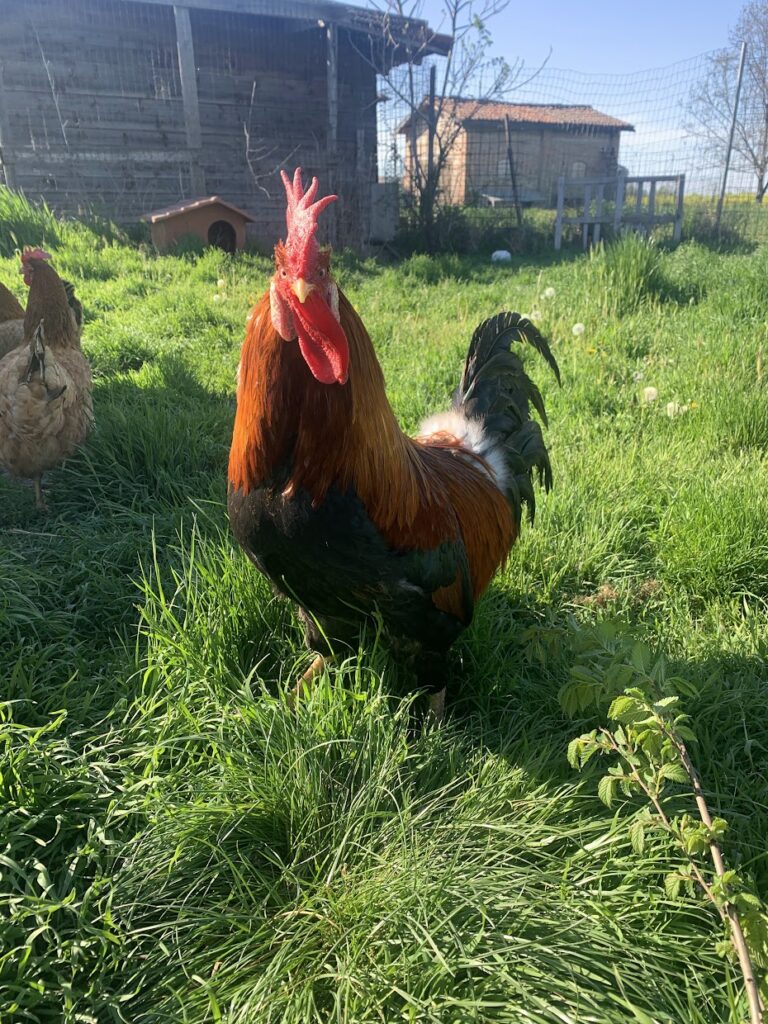
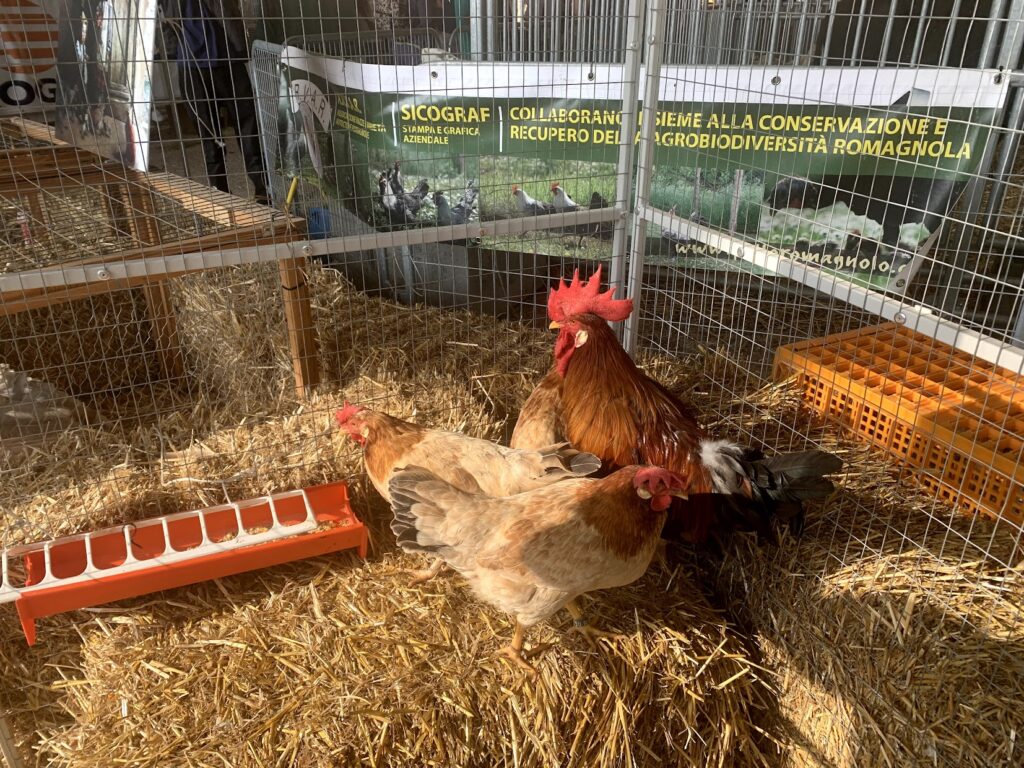
Modenese Hen or Fulva di Modena
With the arrival of the great post-war Atlanticist revolution, native breeds (and not just poultry) began to disappear. The Modenese hen became almost extinct. Almost. In a courtyard in Nonantola, in the province of Modena, the Modenese was alive and well. And she enjoyed excellent company.
Perhaps Giuliano Serafini’s grandmother had never seen Chierici’s paintings. She was in charge of the household, making ends meet, and looking after the family henhouse. Perhaps unwittingly, however, she saved the whole race from oblivion.
What this woman knew was that these were the hens of her land and that it was important to look after them. From this small initial nucleus, year after year, interest in this breed with its old-fashioned characteristics grew. An interest that remains alive due to the tenacity of a few breeders, despite several timid attempts at recovery by associations and institutions that have evidently never really believed in it, or that perhaps have more interest in doing photo shoots when the moment is propitious than in guaranteeing these breeds a sustainable life.
Modeneses, as mentioned, are very rustic, very energic. If you don’t have a strong hand and don’t know how to handle them, you find them on the roof and in the trees, mind the words of the writer who has got to know them first hand. They rage like mad. Independent in character, and frugal, they do not need special feeds or supplements. If you treat them well they live at least ten years. Giuliano brings the testimony of a hen that reached twenty-two years of age.
Modenese eggs are small, white-shelled, all yolk. Their meat is tough and yellow fat, with a very thin skin that makes the cockerels a sight for the palate. And I won’t comment on the capons *drool*.
The Cornucopia recipe for Modenese hen is a homage to the countryside of Reggio Emilia in the 19th century, which inspired the great artist Chierici. I think it is appropriate to talk about a little-known dish from the agricultural table of Reggio Emilia, a little-known dish but still alive and true, like the Modenese hen: al ris cun la tevdura.
Al Ris Cun La Tevdura e i Ov Ed Mudnesa
rice, 250 g
stock, 1 lt
🥚 Gallina Modenese eggs, 3
🧀 Grana Reggiano… (Calm down, that’s what it was called in those days!), 3 spoonfuls
Pepper, a pinch
Salt
Cook the rice in the broth. Beat the egg with the grated Grana Reggiano cheese (possibly from milk of Rossa Reggiana or Bianca Val Padana breeds) and pepper, then quickly add it to the cooked rice so that it becomes a thick, fragrant broth. You have no idea how delicious this dish is…
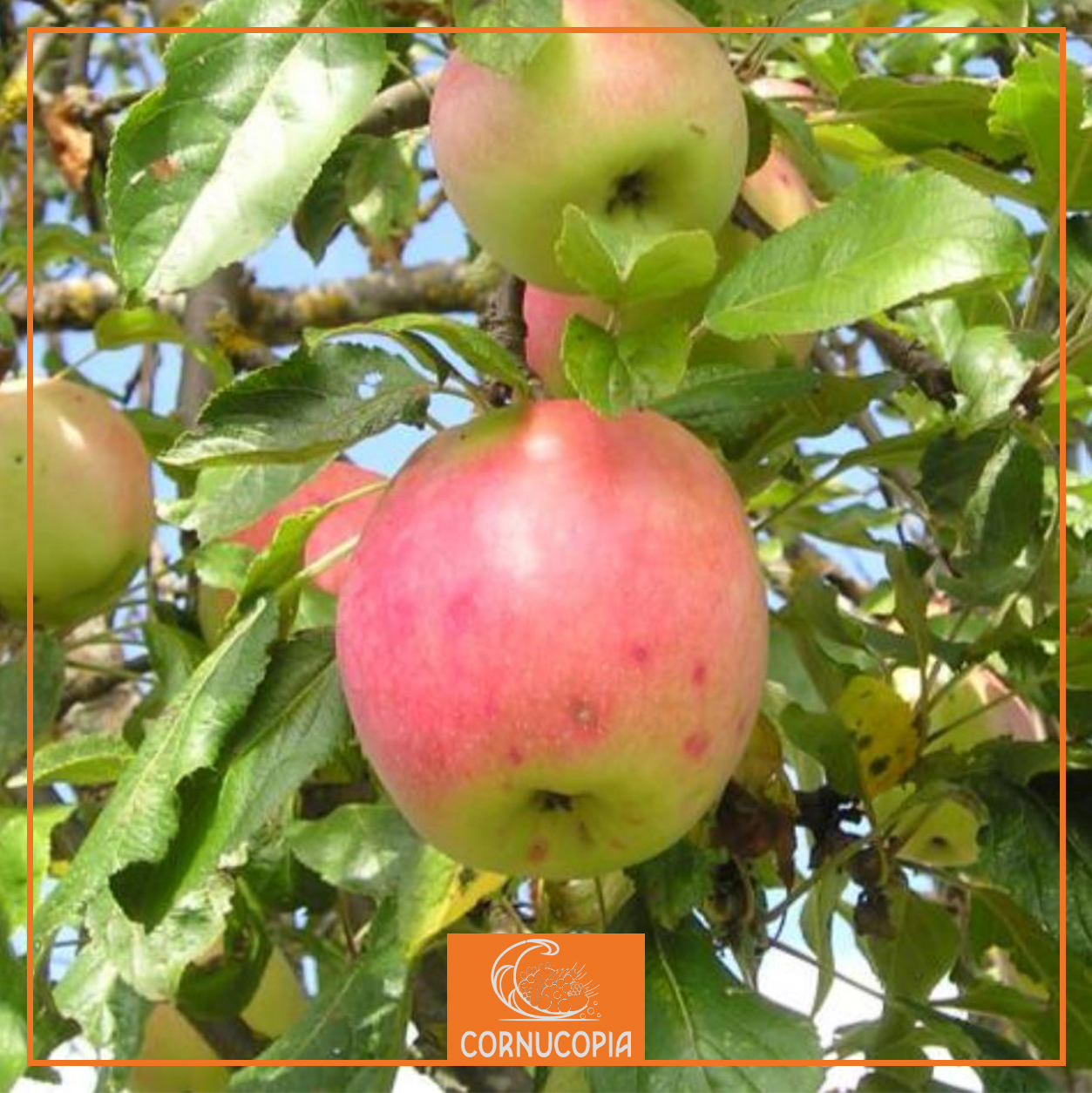
In the cities of Emilia, Romagna and Le Marche, the shouts of the Thirty Years’ War resounded, and the Baroque spread through churches and buildings, while the Este family held court in Modena. It was the 1600s, and far from the din of shouts and cannons in the surrounding countryside and hills, with the arrival of autumn, the ground softened and mists spread silently among the rows of vines. Here, children were able to amuse themselves with what the land offered them, such as the so-called granny apple or ‘rattle apple’ (sunaìa in dialect). This apple, which elsewhere was also called ‘batocchia‘ after the sound of the bell’s clapper, took its name from a particular characteristic: the seeds inside the fruit tended to detach, creating a rattling sound when the apple was shaken. This apple was greenish-yellow in colour, with shades of bright red at sun-exposed spots, creating a wonderful colour effect. Its flesh was sweet and slightly sour, and it had that characteristic smell of apples of yesteryear. That apple is still there, fortunately, although there are no children to shake it.
The sunaia apple shares a peculiar characteristic with one of its sister apples, typical of the Modena area: the cavicchia apple (cavécc in dialect, with the ‘c’ pronounced like the ‘c’ in chocolate and the ‘a’ closed in the Modenese way). Both apples have a particularly large internal cavity, which contains the seeds that break off and dance inside 🍎.
As mentioned above, in addition to the hills of Emilia, the ‘mela sunaia’ was also popular in the Marche region, particularly in the area of the Sibillini and Nera river valleys and then down further to Perugia. In the Marche region, before the 1950s, mela sunaia was used to prepare paccucce, quarters of apples that were left to dry in the sun on trays or willow trellises and baked in the oven to prevent spoilage. Spartecche were often eaten as the main course of the peasant dinner during times of scarcity.
Medicinally, apple parcels were used to treat colds in the form of herbal teas. This ancient apple was thus a valuable resource for rural populations, not only as a source of nourishment, but also for its therapeutic properties.
In Umbria, our beloved apple takes on a wonderful role as a filling for Rocciata Folignate, a dessert made of apples, sultanas and dried fruit that is very popular throughout the region.
Although it indicated this apple as an orange (autumn) fruit, only the harvest took place in October, but then the apple was left to ripen in the fruit cellar until December, when it released its full aroma. So delicious was the aroma that it was even used to deodorise laundry.
The Cornucopia Recipe: Pastry of Stewed Sunaie Apples
With this post I shall venture to inaugurate this section of Cornucopia recipes, or rather, suggestions for historical recipes attributable to the Emilia and Romagna region and to be used to enhance our agricultural biodiversity. Recipe and variety from the same region in short. This is the idea that lies at the heart of the genesis of Cornucopia, namely to create a connection between cuisine and historical varieties. Obviously this project is open to suggestions and advice, especially regarding recipes from the early 1900s countryside that still remain hidden in grandmothers’ drawers and that someone might want to share 🍩. What better legacy for these recipes than to create a direct correlation with the raw materials of our history?
So let’s start with grandma’s apple and a recipe from our Estense steward, Cristoforo Messisbugo, whom I may tell you about one day. He is a very important figure in the history of Renaissance cuisine in my region, but there is so much to say about him that he really deserves a whole article.
Given the fragrance and the vocation of this apple for cooking, and since we have talked about the rocciata, which is a sheet of stuffed pastry, I thought I would propose the following recipe from the 1500s. The recipe for stewed apples (i.e. cut into pieces and cooked in wine) has two versions, one fat and one lean as they used to say in those days: as a thin pie (a ‘batter’) stuffed or as a dish containing only the filling.
Take pears or apples in the necessary quantity to make the pastries or dishes you desire. I think you’ll need six for six pastries and eight for a dish. After giving them a good scorch in the fire, you will wash them and, once cooled, peel them while leaving the stem in the middle. Then, you will put them in a pot to boil in a good black wine with plenty of sugar, a few pieces of whole cinnamon, and a few whole cloves. You will let it cook until the flavor is well blended and it appears like a jelly. If you want to make pastries, you will prepare some crusts and fill them with the fruit mixture, or you will spread it on the dishes and sprinkle candied cinnamon on top. I think you will need six ounces of sugar, half an ounce of cinnamon, and ten cloves to make one of these pastries, while you will also use candied cinnamon to decorate the dishes or pastries.
Sheet of the Sunaia Apple (17th century, Autumn, Winter)
Digita almeno due lettere per cercare nelle schede dell’enciclopedia.
Gestisci Consenso
Per fornire le migliori esperienze, utilizziamo tecnologie come i cookie per memorizzare e/o accedere alle informazioni del dispositivo. Il consenso a queste tecnologie ci permetterà di elaborare dati come il comportamento di navigazione o ID unici su questo sito. Non acconsentire o ritirare il consenso può influire negativamente su alcune caratteristiche e funzioni.
Funzionale
Sempre attivo
L'archiviazione tecnica o l'accesso sono strettamente necessari al fine legittimo di consentire l'uso di un servizio specifico esplicitamente richiesto dall'abbonato o dall'utente, o al solo scopo di effettuare la trasmissione di una comunicazione su una rete di comunicazione elettronica.
Preferenze
L'archiviazione tecnica o l'accesso sono necessari per lo scopo legittimo di memorizzare le preferenze che non sono richieste dall'abbonato o dall'utente.
Statistiche
L'archiviazione tecnica o l'accesso che viene utilizzato esclusivamente per scopi statistici.L'archiviazione tecnica o l'accesso che viene utilizzato esclusivamente per scopi statistici anonimi. Senza un mandato di comparizione, una conformità volontaria da parte del vostro Fornitore di Servizi Internet, o ulteriori registrazioni da parte di terzi, le informazioni memorizzate o recuperate per questo scopo da sole non possono di solito essere utilizzate per l'identificazione.
Marketing
L'archiviazione tecnica o l'accesso sono necessari per creare profili di utenti per inviare pubblicità, o per tracciare l'utente su un sito web o su diversi siti web per scopi di marketing simili.