Categoria: Modena

  • Of Weddings and Vineyards and Rural History in Italy

    Of Weddings and Vineyards and Rural History in Italy

    “And now what do I tell the prior, how do I climb up there?” Arnaldo looked thoughtfully at the vine shoots that grew from the base of the elm, climbing up its trunk to the cut-off top where the crown used to be, several meters higher, and then spreading out in a long vault loaded with grape clusters, stretched up to the next elm. In turn, the elm that was about ten steps to his right was wrapped in a pair of vines that also stretched out to the next one. The same pattern repeated to his left. In front of the perplexed man, a very long row of lovers, powerful, sinewy trees wrapped in the delicate limbs of the vine. The row stretched along the watercourse towards the Duke’s lands. Arnaldo’s feet were sunk in the soft ground, behind him, at a hundred steps, the shadows of another specular row. And then another one, and so on, as if a huge rake had plowed those lands, placing them like pawns on a chessboard, frozen knights and damsels in a synchronized dance, surprised by a magical winter that had turned them into plants. “Breeeee.” Arnaldo turned around, meeting a pair of horizontal pupils and yellow eyes. His musings had been interrupted by a sheep from the flock grazing in the middle of the rows. Around him, a couple of geese were rummaging in the grass around the smaller plants. Even though it was autumn, the field was teeming with life…

    Invented

    The above could be a description of a field from a century ago, as well as a millennium. The live stake cultivation had been a method used to grow vines for centuries. Books from the early 1900s still talk about it as a widely used method. Not a few. Out of four million hectares of vineyards, today only six hundred thousand remain. It is not entirely dedicated to monoculture, of course, the so-called “married” vine was part of a symbiotic system where wheat, legumes, and vegetables, coexisted with the vine and livestock. But let’s take a step at a time.

    The Romans

    Let’s go back a few centuries and make some hypotheses about the spread of these cultivation systems. In Rome, intensive vine cultivation around the capital became unsustainable, and the legionaries were tasked with exporting democ… Oh no, sorry, I meant to bring local culture to all the provinces of the Empire. Just as their bread remains with us in the form of piadine, flatbreads and crescentinas, and the olive has found its peace in the ammoniacal hills of Romagna, even wine cultivation techniques took root, mixing with the cultures of the native populations, as here in Cisalpine Gaul (Emilia-Romagna in my case), where the Romans found this curious system known in the future as the “arbustum gallicum.”

    Columella, an ancient Roman writer and farmer, extols the closeness of two plants in his work. He speaks with great enthusiasm about the combination of a vine with a delicate appearance and juicy fruits, with a robust and austere tree that supports it.

    “Vitibus etiam admodum antiquum genus est, quod non alit se solo, sed adiutore alio vivit, arborum frondibus: et ea vitis adhuc in Italia rarissima est, quae in arboribus nascitur; iam vero in Hispania frequens, nec ulli gentium magis placet. Nomina eius in his locis varia, namque aut platanus est aut populus aut salix aut ulmus aut pinus, etiam ilia quae apud nos vite appellatur, atque haec admodum plurima, quae varie appellantur. In his arboribus educatae vitis et in sola quidem Hispania notissima, adeo ut in hac una regione vitiis ad hoc institutis omnibus aliis locis praestet. Quaedam autem et in Italia nascuntur, sed rarae, etiam in Graecia, ubi in arundinibus educatur, et iam in Asia et Africa. Haec vitis non ita altum scandit, sed tantum quantum sufficit ad fructum ferendum. Nec tamen omnes arbores idoneae sunt, sed eas maxime quae frondibus laxioribus, ut platanus et ulmus, etiam populus, non minus salix; pinus tamen non satis. Arborum autem natura illud maximum tribuit, quod vitis saepe salubritatem afferat. Ad hanc arborum frondem vitis inhaeret, nec multum opus est ad eam sustentandam, nisi ut a radicibus singulis stirpibus adnexam arbori adhaereat. Ita unius arboris adiutorio etiam centum vites coluntur, et singulis annis ex iisdem arboribus vina feruntur, quae sunt maxime laudata.”

    “There is also a very old type of vine that cannot live alone but relies on another, that is, on the leaves of the trees: this vine is still very rare in Italy, while in Spain, it is widespread and appreciated by everyone. In these places, it has various names, for it is called either plane tree, poplar, willow, elm, pine, and even the one called vine among us, and there are many other varieties with different names. The vines grown on these trees are well known only in Spain, to the point that in this region alone they exceed all others in this type of cultivation. Some of these vines also grow in Italy, but they are rare, as well as in Greece, where they are grown on reeds, and now in Asia and Africa. This vine does not climb too high, but only as much as is necessary to produce fruit. Not all trees are suitable for this cultivation, but only those with looser leaves, such as plane trees and elms, and also poplars, not to mention willows; pines, however, are not suitable. The nature of trees gives the greatest advantage, since the vine often brings them health. The vine clings to the leaves of the trees, and it does not take much effort to support it, except that it must be attached to the tree by the roots of the single plant. In this way, even a hundred vines can be cultivated with the help of a single tree, and every year the wines obtained from these same trees are highly praised.”

    Columella

    The Supreme Poet

    Even Virgil, Dante’s guide in the afterlife, hints at the presence of this cultivation in his Georgics, a four-part poem that focuses on the practical aspects of rural life, such as agriculture, animal husbandry, beekeeping, and wine production. Written during the reign of the Roman Emperor Augustus, it was intended to promote the values of agriculture and the Roman way of life.

    Colli bus an plano
    melius sit ponere vitem, quaere
    prius. Si pinguis agros metabere campi,
    densa sere (in denso non segnior ubere Bacchus);
    sin tumulis acclive solum collisque supinos,
    indulge ordinibus.

    Virgil

    Planting a vineyard on a hill
    is best, but first seek out
    the best spot. If you are tilling a rich plain,
    plant densely (for Bacchus does not prefer sparse soil);
    but if on hillsides and sloping ground,
    plant in rows.

    Virgil

    The mentioned lines, part of Book II, describe how to plant vines and where to do it. The passage suggests planting the vines on hilly or flat terrain, depending on the quality of the soil. If the soil is rich, the vines should be planted close together, while in less fertile soil, they should be spaced apart. The lines also suggest that the vines should be arranged in rows on the slopes of hills and on slightly sloping hills. Trees can influence the growth of the vine in various ways: they can protect it from the wind, provide shade during the hottest hours of the day, contribute to maintaining the moisture of the soil, and, above all, provide support to the vines so that they can grow healthily and regularly. In particular, the poet recommends using trees that have a sturdy and straight trunk so that they can support the weight of the vines and grapes without bending or breaking.

    Virgil suggests avoiding trees that release harmful substances to the vines, such as oak, which produces an acid that can damage the plant. This last attention has not been confirmed by modern science but is a symbol of the great attention that the ancients had for agriculture.

    The Middle Ages

    Cultivation, like the lives of many, came to a halt with the arrival of the barbarians and the Middle Ages with the fall of the Western Roman Empire. No one would have wanted to live in the Po Valley during the terrifying period of the Gothic wars, devastated by famines and floods. The vine remained on the hill for centuries until the time of Matilda and the communal age, in the Late Middle Ages when the “arbustum gallicum” returned to the plain, this time together with cereals, in the system that would later be known for centuries as the “piantata padana.” Incidentally, this is the period in which important irrigation works were carried out, and a network of water distribution was dug, which allowed the optimization of the crops, creating a clever system of drains of various functionalities and sizes that brought together the knowledge of the monasteries that led to the famous Grana cheeses, including today’s Parmigiano Reggiano. We will come back to this (I am writing a long article, it takes time 🙂).

    Today

    In the nineteenth century, the “married” vine to the tree was widespread throughout Italy. In central Italy, it was the maple, then the elm in the north, sometimes the mulberry. In the South, it still survives together with the poplar, as in the discipline of Asprinio di Aversa.

    Depending on the location, this cultivation method varied widely. I found documents that speak of an optimal marriage with the field maple because of a less extensive root system and a sparser canopy (the vine climbs the tree seeking warmth and sinks its roots seeking nutrients, a concept at the base of the quality of many fine wines).

    In Marche and Campania (the “alberate” Aversane with its splendid “festoons“), the practice of harvesting on stairs still exists, elsewhere the practice had already been abandoned by the time of our grandparents.

    Each plant had its pros and cons. The mulberry did not give excellent results, but it allowed for the collection of leaves excellent for livestock and silkworms. The walnut was perfect for lumber and dried fruit. The olive was wonderful, but it seems to have been abandoned very early due to complications with parasites. The elm has perhaps the longest and most documented history here in Emilia-Romagna, but the improvement of production techniques in the fields allowed the trees, which were previously cut down to a height of 8-10 meters, to be drastically lowered, while by the end of the 19th century, the trees had already been reduced to 3-4 meters.

    Sometimes, some remnants of “planted” are still present near the homes of some old farmers who still recognize their merits today.

    Emilia-Romagna

    Traveling along the Via Emilia from Piacenza to Rimini in the early 1900s must have been enlightening. Each (current) province had its interpretation of the “piantata padana.” In my area, it was the elm that married the vine. I say “elm” (masculine) and not “elma” because in our parts, there is a feminine and a masculine for this plant. For “elm,” annual pruning was intended to form the rows in the countryside on which to grow the vine, crudely cut into the shape of a rudimentary sling, in jargon “capitozzati.” Even the trees changed, in Reggio Emilia, for example, the vine could also be seen married to the plum. In Bologna, they changed the number and position of the plants at the base of the support. At first, the elms were still very tall, but as I mentioned before, over time they were reduced in size. The reduced height still protected against frost, hail, flooding, and frost, even on these elms (which resisted capitozzatura or clipping very well) of medium height, certainly not 20 meters.

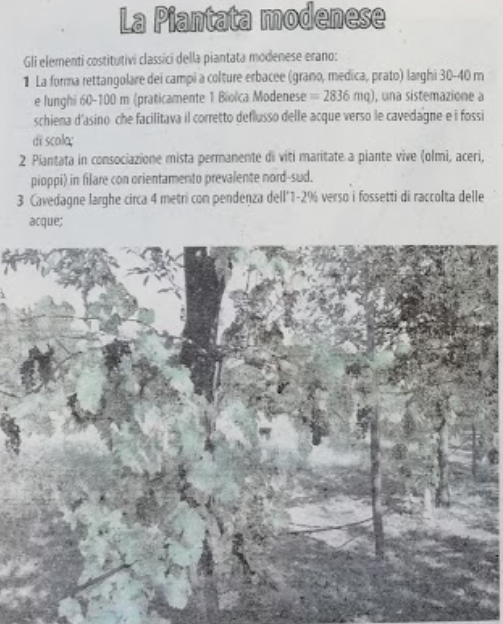
    This system sees the vines married with their festoons as dividing the rectangular hills studied to drain the soil into drainage channels.
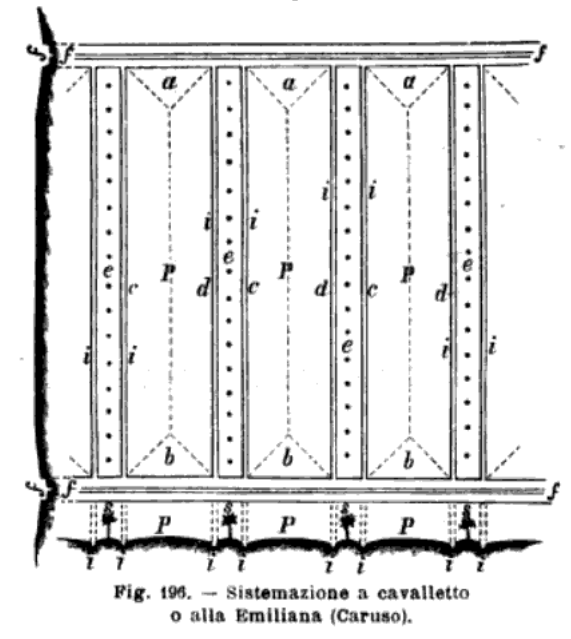
    This system sees the vines married with their festoons as dividing rectangular mounds designed to let the soil drain into drainage channels.

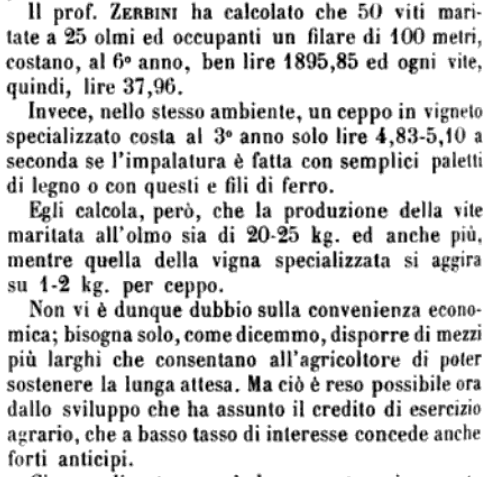
    A text from the early 1900s mentions the wedded vine not only as present but as an excellent investment that can largely pay back what is spent, even if the vine takes six years to harvest and not two. Kind of reminds one of the story of the Friesian/Holstein and the Reggiana red cow, eh?

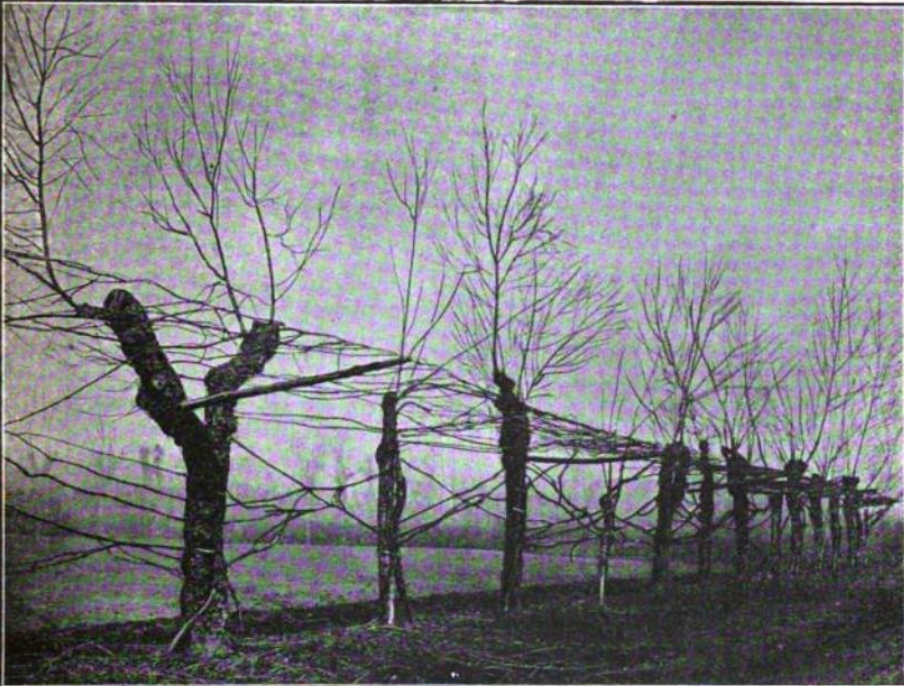
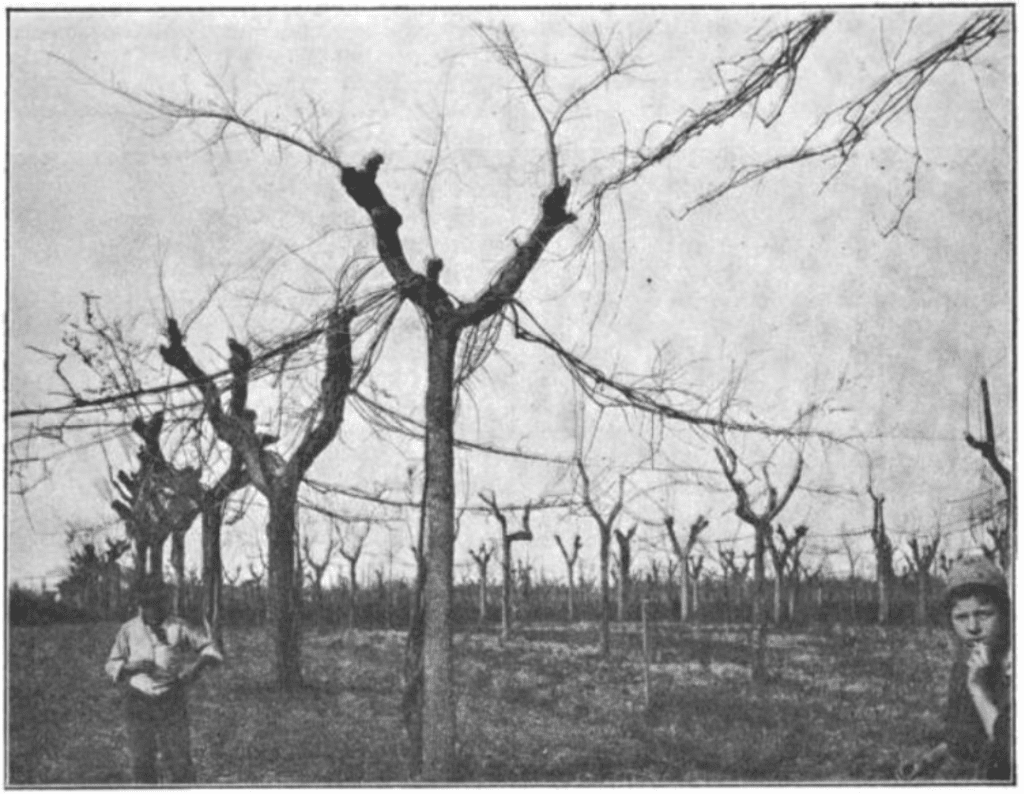
    Between Modena and Reggio, the practice of pergolas on the vine rows lasted for a while, as can be seen below in an old photo of the Reggio countryside. In practice, the festoons were not only spread lengthwise, but also over the cultivated fields, on different rows, creating a large chessboard.

    Between one row and the next, the fields were cultivated with turnips, oats, clover, but also horticultural crops with the rooted cuttings that were fertilised by the droppings of perches and cattle. There are texts that speak of an increase in grape production of almost 100%.

    It should be noted that even dead posts, i.e. the wooden poles that replace trees (being rootless, they can be placed close together; an example of this practice is the mulberry tree, a plant with thick roots), were still 3-4 metres high until the early 1900s. Vines, in any case, were harvested high up here in the Po Valley, except in those places where they were cultivated in the field, as is done today: a practice that was once rare and called ‘low vine’.
    1926

    It is interesting to see how, over the centuries, dozens of planting evolutions have developed, including this interesting model that saw a pergola going out sideways on the sunniest side of the plant.
    Modena

    Going into more detail, let’s look at the city of Modena, where the vineyard was cultivated using the so-called “a cavalletto” system – that strip of land where vines and trees are planted, and which at that time constituted about one-fifth of the average arable surface. Once, in the Modena area, it was a “a gronda” strip, it is said, with dimensions of 20-30-35 meters by 80-100.

    Until the 19th century, two cultivation methods were widespread in Modena, the other being the Mantuan method called “a piramide”, known as the Marchi system. At that time, the vine was still married to the poplar tree, as in the South, but it quickly disappeared to make way for the more profitable elm.
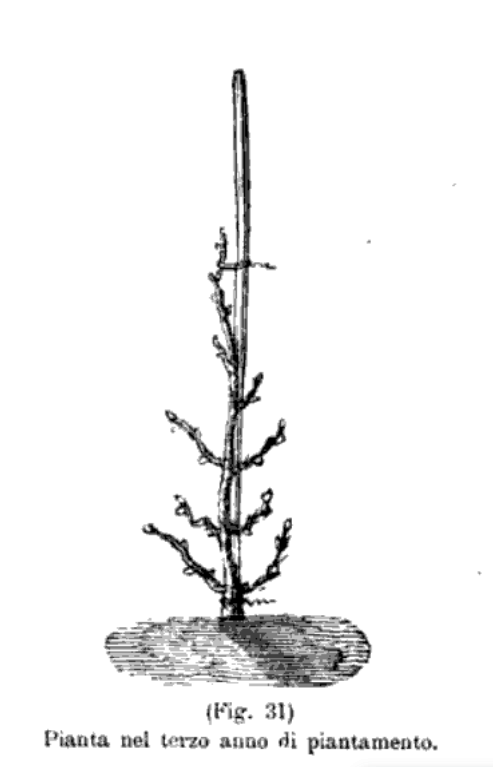
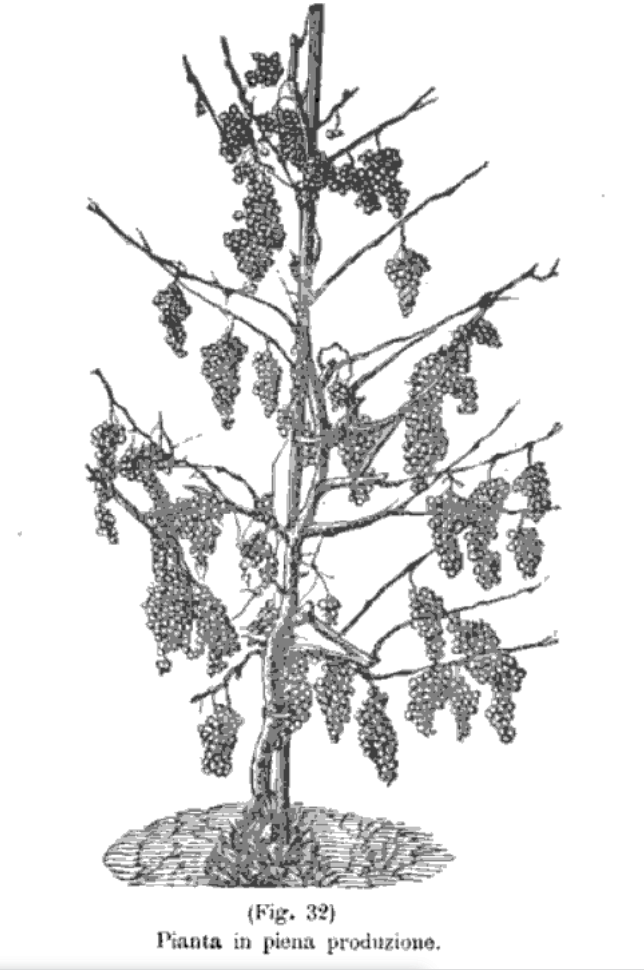
    Between Modena and Reggio, the use of wire (after its introduction in vineyards in the 1820s in Lombardy) had created a spectacular effect of lattice-like festoons laden with hanging grapes over the cultivated fields, as can be seen in the photo below.

    The once huge elms were pruned lower and lower until they were replaced by field maple (opium) following the decline in the importance of leaves in cattle feeding.
    Francesco Aggazzotti, the first mayor of Formigine after the unification of Italy and the one I call without hesitation the Pellegrino Artusi of wine, gathered dozens of vine varieties in his vineyard, almost all of them marinated in elm. These include several lambrusco wines (full-bodied wines of a good 8 degrees, 8 and a half degrees :-)), including that of Sorbara and that of Tiepido, also known as the red graspa (Graspa Rossa). But let’s keep this name in mind because we will come back to it often in the future when talking about old local varieties.

    Theoretically speaking, there is still a planting in Modena in Via Marconi at a nature reserve. I personally have never managed to find it open.
    A short dissertation

    The aim of Cornucopia is to provide reliable historical documentation by being as objective and open-minded as possible, objectively considering the reasons behind the abandonment of certain sometimes anachronistic production methods.

    However, it is necessary to honestly examine all ethical, sustainable, and economic variables of the subject. The advantages of these cultivation methods are still objectively present and are suitable for high-quality production where wine is respected from its conception.

    No one excludes the possibility of producing honest, qualitatively flawless, and harmless products even with advanced industrial methods. Research laboratories and control bodies prevent poison from ending up on our tables, which is still possible for small producers to bypass these screenings.

    It must be said, however, that the same grip that cuts the “low” part of production is the same that cuts the high part. In other words, you lose the neighbor’s grape marc that crackles with sulfur dioxide added without any criteria in the unlabelled wine that is sold on the black market, as well as the carefully curated product, grape by grape, day by day, perhaps from an unregistered variety of vine entwined with the fig tree next to the chicken coop.

    This flattening of quality towards a weighted average hammered by decrees mostly written by scientists and regulators whose natural habitat is a white formica desk covered with folders is quickly leading to the disappearance of all production that is no longer sustainable in a modern production perspective. Let’s be clear, doing business has never been an exclusively ethical process, selection was brutal even a thousand years ago, much biodiversity has been lost also thanks to a selection that led to the creation of most vegetables as we know them today, to name one. But selection took place on the objective peculiarities of the product, not on its yield on a large scale or its adaptability to production systems that clash with sustainability simply by knocking it down with increasingly sophisticated preservation techniques.

    The concepts of shelf life are ancient, they are the basis for the birth of cured meats and cheeses, fruit preserves, fermentations. But how far can we go in this direction at the expense of the harmony between man and nature? Here, it is not a matter of starting to pick berries in the woods again, but of finding a balance, especially in production systems that allow small businesses to survive by giving them a chance. I would add that I am not sure that the production guidelines of most products in supermarkets will not have long-term repercussions, by milking the cow (strictly a beautiful black and white hyperthyroid Friesian, mind you, the one loved by the “consortia for the protection”) what we find on our tables are foods that are increasingly poor in nutrients.

    But for that, I refer those who wish to read some scientific reviews that deal with the subject with numbers and considerations of competent personnel. The argument here could be “but the EU has already made it impossible to use various types of treatments, everything is converging towards the world of organic agriculture” etc. etc. True, absolutely. But I am not talking about soil exploitation, water resources, sustainability. Cornucopia is not an ecological project, but a project of tradition. Let’s be careful not to throw away historical cultivation methods like this.

    Let’s think about the cattle farming hypothesized by André Voisin in the 1800s, now in 2023 the subject of study, or the real “piantate padane” (Padana plantations) in Germany where they are called by another name, but they are still plantations. In short, I hope that culture will not be lost, these systems, these plants, these jobs are part of our living identity and history that we can still keep alive. They are scents and flavors that we can still keep with us together with amphorae, palaces, and monuments.

    If you feel like sharing photos, recipes, stories that speak of our past identity, I invite you to the Facebook group and the Telegram channel.
  • Di Matrimoni e di Vigne e di storia rurale

    Di Matrimoni e di Vigne e di storia rurale

    “E adesso che gli dico al priore, come ci salgo li sopra?”.

    Arnaldo guardava con espressione pensierosa i tralci di vite che crescevano partendo dalla base dell’olmo, risalendone il tronco fino alla sommita recisa dove doveva essere un tempo la chioma, diversi metri più in alto, per poi stedersi in una lunga volta carica di grappoli d’uva, tesa fino all’olmo successivo. A sua volta anche l’olmo che si trovava a una decina di passi alla sua destra era avvolto da una coppia di viti che si stendeva a sua volta su quello successivo. Quella formula si ripeteva alla sua destra ed alla sua sinistra. Davanti all’uomo perplesso una lunghissima fila di amanti, possenti alberi nerboruti avvolti dalle delicate membra della vite. Il filare si stendeva lungo il corso d’acqua fino ai terreni del Duca. Arnaldo aveva i piedi affondati nel terreno morbido, dietro di lui ad un centinaio di passi le ombre di un altro filare speculare. E poi un altro e così via, come se un enorme rastrello avesse solcato quei terreni piazzandovi come pedine su una scacchiera dame e cavalieri congelati in una danza sincronizzata, sorpresi da un inverno magico che li aveva mutati in piante.

    “Breeeee”.

    Arnaldo si votò incontrando un paio di pupille orizzontali ed occhi gialli. Le sue elucubrazioni erano state interrotte da una pecora del gregge che stava pascolando in mezzo ai filari. Attorno a lui, un paio di oche frugavano nell’erba attorno alle piante più piccole. Anche se era autunno, il campo era fervente di vita…

    Inventato

    Quella qui sopra potrebbe essere la descrizione di un campo di un secolo fa, come di un milllennio. La coltivazione a tutore vivo era stato un metodo usato per coltivare la vite da secoli. Libri dei primi del Novecento ancora ne parlano come un metodo ampiamente utilizzato. Non di poco. Su quattro milioni di ettari di superfici dove era presente la vite, oggi ne sono rimasti seicentomila. Non si tratta di superficie completamente dedicata alla monocoltura, ovviamente, la vite cosiddetta maritata era parte di un sistema simbiotico dove grano, legumi, orti, convivevano con la vite e con il bestiame. Ma andiamo con ordine.

    Il sistema a tutore vivo, la cosiddetta vite maritata, era nato giusto qualche tempo prima, ai tempi degli Etruschi e dei Celti. Con il tempo queste viti selvaiche che gli antichi trovavano nei boschi sarebbero diventate parte integrante di un paesaggio agricolo che vedeva fila ordinate di queste viti/alberi disposte in lunghe file ordinate, dette piantate, che avrebbero suddiviso i campi coltivati in settori ordinati.

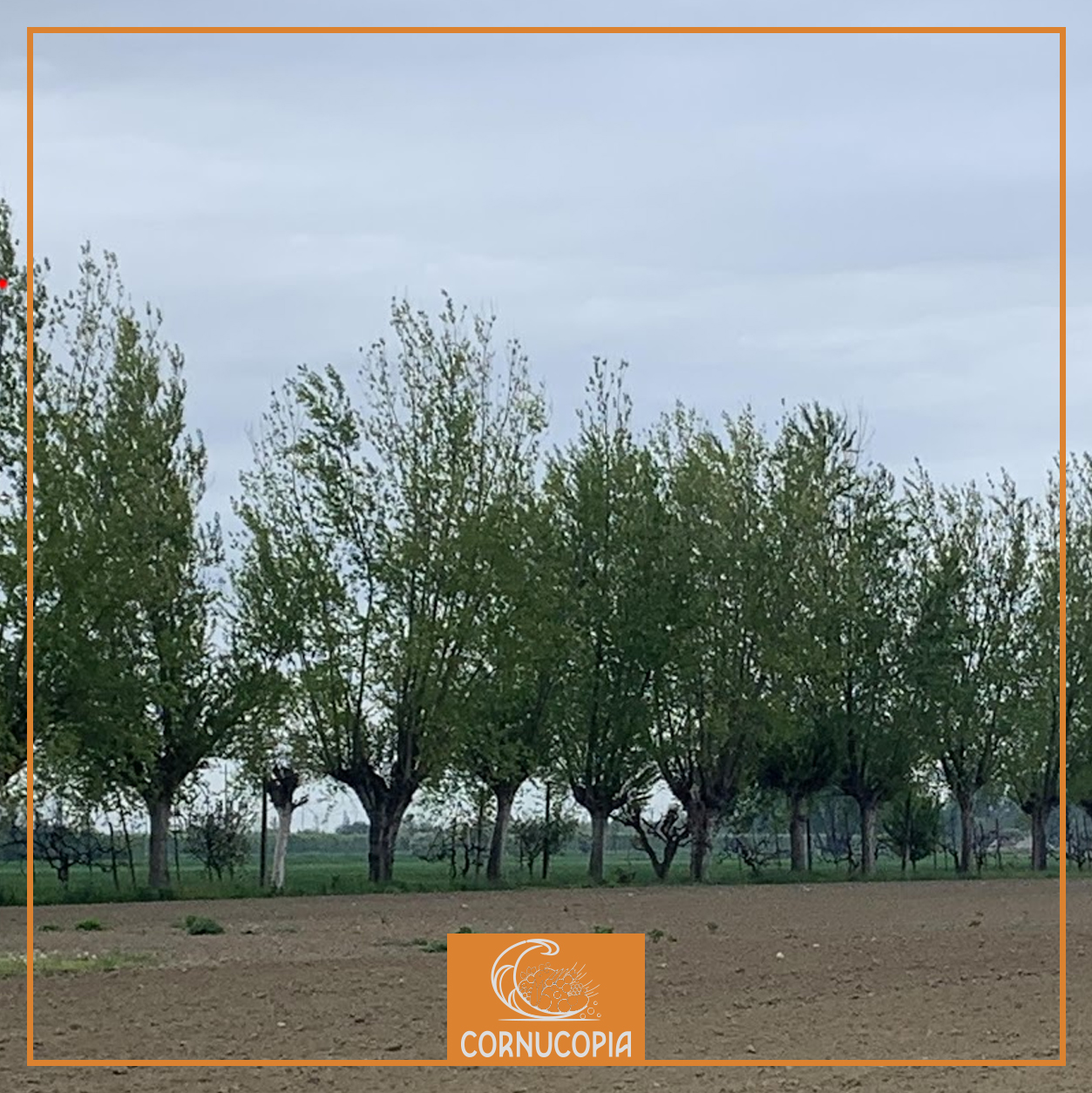
    La foto in alto nel post l’ho fatta io a San Felice sul Panaro pochi giorni fa, si tratta di una piantata abbandnata i cui alberi sono cresciuti abnormemente rispetto alle viti che vi erano state piantate sotto.

    I Romani

    Torniamo indetro di qualche secolo e facciamo un po’ di ipotesi sulla diffusione di questi sistemi di coltivazione. A Roma, la coltivazione intensiva della vite attorno alla capitale divenne presso insostenibile e ai legionari fu affidato l’incarico di esportare democ… Ah no, scusate, intendevo portare cultura locale in tutte le province dell’Impero. Così come il loro pane è rimasto a noi sotto forma di piadine, torte al testo e crescentine e l’ulivo ha trovato la sua pace negli amoniosi colli romagnoli, anche le tecniche di coltivazione vinicola sono attecchite, mescolandosi con le culture delle popolazioni autoctone, come qui nella Gallia Cisalpina (Emilia-Romagna nel mio caso) dove i Romani trovarono questo curioso sistema conosciuto in futuro come arbustum gallicum.

    Columella, antico scrittore e agricoltore romano, esalta la vicinanza di due piante nel suo lavoro. Parla con grande entusiasmo della combinazione di una vite dall’aspetto delicato e dai frutti succosi, con un robusto albero austero che la sostiene.

    “Vitibus etiam admodum antiquum genus est, quod non alit se solo, sed adiutore alio vivit, arborum frondibus: et ea vitis adhuc in Italia rarissima est, quae in arboribus nascitur; iam vero in Hispania frequens, nec ulli gentium magis placet. Nomina eius in his locis varia, namque aut platanus est aut populus aut salix aut ulmus aut pinus, etiam ilia quae apud nos vite appellatur, atque haec admodum plurima, quae varie appellantur. In his arboribus educatae vitis et in sola quidem Hispania notissima, adeo ut in hac una regione vitiis ad hoc institutis omnibus aliis locis praestet. Quaedam autem et in Italia nascuntur, sed rarae, etiam in Graecia, ubi in arundinibus educatur, et iam in Asia et Africa. Haec vitis non ita altum scandit, sed tantum quantum sufficit ad fructum ferendum. Nec tamen omnes arbores idoneae sunt, sed eas maxime quae frondibus laxioribus, ut platanus et ulmus, etiam populus, non minus salix; pinus tamen non satis. Arborum autem natura illud maximum tribuit, quod vitis saepe salubritatem afferat. Ad hanc arborum frondem vitis inhaeret, nec multum opus est ad eam sustentandam, nisi ut a radicibus singulis stirpibus adnexam arbori adhaereat. Ita unius arboris adiutorio etiam centum vites coluntur, et singulis annis ex iisdem arboribus vina feruntur, quae sunt maxime laudata.”

    “Vi è una specie di vite molto antica che non può vivere da sola, ma si appoggia ad altro, cioè alle fronde degli alberi: questa vite è ancora molto rara in Italia, mentre in Spagna è molto diffusa e apprezzata da tutte le genti. In questi luoghi, essa ha diversi nomi: chiamata platano, pioppo, salice, olmo, pino, e anche col nome di vite, e ci sono molte altre varietà con nomi diversi. Le viti allevate su questi alberi sono molto conosciute solo in Spagna, al punto che in questa sola regione superano tutte le altre in questo tipo di allevamento. Alcune di queste si trovano anche in Italia, ma sono rare, così come in Grecia, dove si coltivano su canne; le si trovano anche in Asia e in Africa. Questa vite non si arrampica troppo in alto, ma solo quanto basta per produrre frutti. Non tutte le alberi sono adatti a questa coltivazione, ma solo quelli con foglie più larghe, come il l’olmo e il pioppo, così come il salice. Il pino, tuttavia, non è adatto. La natura degli alberi fornisce il maggiore vantaggio, poiché la vite spesso apporta loro benefici. La vite si attacca alle fronde degli alberi e non richiede molta attenzione per essere sostenuta, a parte il fatto che deve essere attaccata all’albero tramite le radici della singola pianta. In questo modo, anche cento viti possono essere coltivate con l’aiuto di un singolo albero e ogni anno si ottengono vini molto apprezzati dalle stesse piante.”

    Columella

    Il Sommo Poeta

    Persino Virgilio, guida di Dante nell’aldilà, accenna alla presenza di questa coltivazione nelle sue Georgiche, un poema in quattro parti che si concentra sugli aspetti pratici della vita rurale, come l’agricoltura, l’allevamento degli animali, l’apicoltura e la produzione di vino. Scritto durante il regno dell’imperatore romano Augusto, era destinato a promuovere i valori dell’agricoltura e del modo di vita romano.

    Colli bus an plano
    melius sit ponere vitem, quaere
    prius. Si pinguis agros metabere campi,
    densa sere (in denso non segnior ubere Bacchus);
    sin tumulis acclive solum collisque supinos,
    indulge ordinibus.

    Virgilio

    Le righe menzionate, parte del Libro II, descrivono come piantare viti e dove farlo. Il passaggio consiglia di piantare le viti su terreno collinare o pianeggiante, a seconda della qualità del suolo. Se il terreno è ricco, le viti dovrebbero essere piantate vicine tra loro, mentre in suolo meno fertile, dovrebbero essere distanziate. Le righe suggeriscono anche che le viti dovrebbero essere disposte in file sulle pendici delle colline e sulle colline lievemente inclinate. Gli alberi possono influire sulla crescita della vite in vari modi: possono proteggerla dal vento, fornire ombra durante le ore più calde del giorno, contribuire al mantenimento dell’umidità del terreno e, soprattutto, fornire sostegno alle viti in modo che esse possano crescere in modo sano e regolare. In particolare, il poeta consiglia di utilizzare alberi che abbiano un tronco robusto e dritto, in modo che possano sostenere il peso delle viti e delle uve senza piegarsi o rompersi.

    Virgilio suggerisce di evitare alberi che rilasciano sostanze nocive alle viti, come la quercia, che produce un acido che può danneggiare la pianta. Quest’ultima attenzioe non è stata covaliata dalla scienza moderna, ma è simbolo della grande attenzione che gli antichi avevano per l’agricoltura.

    Il Medioevo

    La coltivazione, come anche la vita di molti, subì un arresto con l’arrivo dei barbari e del Medioevo con la caduta dell’Impero Romano d’Occidente. Nessuno avrebbe voluto vivere nella pianura padana nel terrificante periodo delle guerre greco gotiche, devastato per anche da carestie ed inondazioni. La vite rimane in collina per secoli fino ai tempi di Matilde e dell’età comunale, nel Basso Medioevo quando l’arbustum gallicum torna in pianura questa volta assieme ai cereali, in quel sistema che sarebbe poi conosciuto per secoli come piantata padana. Per inciso questo è il periodo in cui si fanno importanti opere di irrigazione e si scava una rete di distribuzione delle acque che permette di ottimizzare le coltivazioni, si crea un ingegnoso sistema di scoli di varie funzionalità e dimensioni che portetà a coagulare la conoscenza dei monasteri che porterà al celeberrimo formaggio di grana tra cui l’odierno Parmigiano Reggiano. Ci torneremo (sto scrivendo un lungo articolo, serve tempo 🙂).

    Oggi

    Nell’Ottocento, la vite maritata all’albero era diffusa in tutta Italia. L’acero, nell’italia centrale, poi l’olmo, a nord, talvolta il gelso. A Sud, tutt’oggi sopravvive assieme al pioppo come nel disciplinare dell’Asprinio di Aversa.

    A seconda dei luoghi questo metodo di coltivazione variava ampiamente, ho trovato documenti che parlano di un matrimonio ottimale con l’acero campestre per via di un apparato radicale meno esteso e per via di una chioma più rada (la vite risale l’albero ricercando calore e affonda le radici cercando nutrimento, concetto alla base della qualità di molti vini di pregio).

    Nelle Marche e in Campania (le alberate Aversane con i suoi splendidi festoni) ancora si vendemmia sulle scale, altrove la pratica era stata già abbandonata ai tempi dei nostri nonni.

    Ogni pianta aveva i suoi pro ed i suoi contro. Il gelso pare non desse ottimi risultati ma permetteva di raccogliere foglie ottime per il bestiame e per i bachi da seta. Il noce era perfetto per il legname e per per la frutta secca. L’ulivo era meravigioso, ma pare fosse stato abbandonato molto presto per complicazioni con i parassiti. L’olmo ha forse qui in Emilia-Romagna la storia più lunga e documentata, ma il miglioramento delle tecniche produttive nei campi hanno permesso prima di abbassare drastcamente le piante che venivano prima capitozzate anche a 8-10 metri di altezza, mentre a fine Ottocento si erano gà ridotte le piante a 3-4 metri.

    Talvolta, qualche residuo di piantata è ancora presente vicino le case di qualche vecchio agricoltore che ne riconosce i pregi ancora oggi.

    Emilia-Romagna

    Percorrere la via Emilia da Piacenza a Rimini nei primi del Novecento deve essere stato decisamente illuminante. Ogni (attuale) provincia aveva un proprio modo di interpretate la piantata padana. Nella mia zona era l’olmo a sposare la vite. Dico “olmo” e non “olma” perché dalle nostre parti esiste un femminile e un maschile per questa pianta. Per “olmo” si intendevano le piante sottoposte a potatura annua che formavano i filari in campagna su cui far crescere la vite, tagliati brutalmente a forma di fionda rudimentale, in gergo “capitozzati”. Anche gli alberi cambiavano, a Reggio Emilia per esempio la vite si poteva vedere anche maritata al susino. A Bologna, cambiavano il numero e la posa delle piante alla base del tutore. Gli olmi in un primo momento erano ancora altissimi ma come accennavo prima, nel tempo si sono andati a ridurre in dimensione. L’altezza ridotta proteggeva comunque da brina, grandine, inondazioni e gelo, anche su questi olmi (che resistoo molt bene alla capitozzatura) di media altezza non certo di 20 metri.

    Questo sistema vede le viti maritate con i loro festoni come divisorie di collinette rettangolari studiate per far drenare il terreno all’interno di canali di scolo.

    Un testo di primi ‘900 cita la vite maritata non solo come presente ma come ottimo investimento in grado di resituire ampiamente quanto speso, seppur la vite richiede sei anni per la raccolta e non due. Ricorda un po’ la storia della Frisona / Holstein e della vacca Rossa Reggiana, eh?

    Tra Modena e Reggio durò per un certo periodo la pratica di pergolare i filari delle viti, come si vede qui sotto in una vecchia foto della campagna reggiana. In pratica i festoni non si stendono solo in lunghezza, ma anche sopra i campi coltivati, su filari diversi, creando una grande scacchiera.

    Tra un filare e l’altro i campi erano coltivati con rape, avena, trifoglio ma anche orticole con le barbatelle che venivano concimate dalle deiezioni di percore e bovini. Ci sono testi che parlano di un aumento di produzione di uva di quasi il 100%

    È da notare che anche i tutori morti, ovvero i pali di legno che sostituiscono gli alberi (essendo privi di radici, possono essere posizionati vicini tra loro; un esempio di questa pratica è la maritatura al gelso, una pianta dalle radici fitte), erano comunque alti 3-4 metri fino ai primi del ‘900. Le viti, in ogni caso, erano raccolte in alto qui in pianura padana, salvo in quei luoghi dove venivano coltivate in campo, come si fa oggi: una pratica un tempo rara e chiamata “a vite bassa”.

    1926

    E’ interessante vedere come nei secoli si siano sviluppati decine di evoluzioni della piantata, tra cui questo interessante modello che vedeva una pergola uscire lateralmente slul lato più soleggiato la pianta.

    Modena

    Andando ancora più nel dettaglio, guardiamo la città di Modena, dove la piantata era coltivata sul sistema cosiddetto “a cavalletto” – quella striscia di terra dove sono piantate viti e alberi, e che ai tempi costituiva circa un quinto della superficie arabile intermedia. Un tempo, in territorio modenese, si trattava di una striscia “a gronda”, si dice così, di dimensioni 20-30-35 metri per 80-100.

    Fino all’Ottocento, a Modena erano però diffusi due metodi di coltivazione, l’altro era il metodo mantovano detto “a piramide”, detto sistema Marchi. A quei tempi la vite era ancora maritata al pioppo, come in meridione, ma scomparve presto per lasciar spazio al più proficuo olmo.

    Tra Modena e Reggio, l’uso del fil di ferro (dopo la sua introduzione in vigna negli anni ’20 dell’Ottocento in Lombardia) aveva creato un effetto spettacolare di reticolato di festoni carichi d’uva pendenti sopra i campi coltivati, come si può vedere nella foto qui sotto.

    Gli olmi, un tempo enormi, sono stati potati sempre più bassi fino a essere sostituiti dall’acero campestre (oppio) a seguito del calo dell’importanza delle foglie nell’alimentazione del bestiame.

    Francesco Aggazzotti, primo sindaco di Formigine dopo l’unità ‘Italia e quello che io chiamo senza remore il Pellegrino Artusi del vino, raccogie nella sua vigna decine di varietà di vite, quasi tutte maritate all’olmo. Tra questi spuntano diversi lambruschi (vini di corpo da ben 8 gradi, 8 gradi e mezzo :-)), tra cui quello di Sorbara e quello del Tiepido, detto anche dalla graspa rossa. Ma teniamo in mente questo nome perché ci torneremo spesso in futuro quando parleremo delle vecchie varietà locali.

    In via del tutto teorica, a Modena in via Marconi esiste ancora una piantata presso un’oasi naturalistica. Io personalmente non sono mai riuscito a trovarla aperta.

    Una breve dissertazione

    L’intento di Cornucopia è di riportare documentazione storica attendibile cercando di essere il più possibile oggettivi e di mente aperta, cercando di vedere oggettivamente le motivazione dell’abbandono di certi metodi di produzione talvolta anacronistici.

    Tuttavia, è necessario fare un esame onesto di tutte le variabili etiche, sostenibili, economiche dell’argomento. I vantaggi di questi metodi di coltivazione sono ancora oggettivamente presenti, e sono adatti ad un tipo di produzione di alta qualità dove il vino viene rispettato sia dal suo concepimento.

    Nessuno esclude che si possano fare prodotti onesti, qualitativamente privi di difetti e privi di sostanze nocive anche con metodi industriali spinti, laboratori di ricerca e organi di controllo impediscono che sulle nostre tavole finisca del veleno, cosa per altro ancora possibile proprio bypassando questi screening da parte dei piccolissimi produttori.

    Va però detto che la morsa che taglia la parte “bassa” della produzione è la stessa che taglia la parte alta. In altre parole, perdi il vinaccio del vicino che sfrigola di anidride solforosa addizionata senza criterio nel vino senza etichetta che ti allunga sottobanco, quanto il prodotto curato acino per acino, giorno per giorno, magari da una varietà di vite non registrata avvinghiata al fico affianco al pollaio.

    Questo appiattimento della qualità verso una media ponderata martellata a colpi di decreti per lo più scritti da scienziati e normatori il cui habitat naturale è una scrivania di formica bianca coperta di faldoni sta velocemente portando alla scomparsa di tutte le produzione non più sostenibili in un’ottica produttiva moderna. Sia chiaro, fare impresa non è mai stato un processo esclusiamente etico, la selezione era brutale anche mille anni fa, molta biodiversità si è persa anche grazie a una selezione che ha portato alla creazione della maggior parte delle orticole come le conosciamo oggi, per dirne una. Ma la selezione avveniva sulle oggettive peculiarità del prodotto, non della sua resa su grande scala o alla sua adattabilità a sistemi produttivi che si scontrano con la sostenibilità semplicemente abbattendola a colpi di tecniche di conservazione sempre più sofisticate.

    I concetti di shelf life sono antichi, sono alla base della nascita dei salumi e dei formaggi, delle conserve di frutta, delle fermentazioni. Ma quanto ci si può spingere in questa direzione a scapito dell’armonia uomo-natura? Qui non si tratta di ricominciare a raccogliere bacche nel bosco, ma di trovare un equilibrio soprattutto nei sistemi produttivi che permettano alle piccole attività di sopravvivere dandogli una chance. Aggiungerei che non sono sicuro che le linee guida di produzione di gran parte dei prodotti in GDO non avranno ripercussioni nel lungo termine, a forza di mungere la vacca (rigorosamente una bella frisona ipertiroidea nera e bianca, mi raccomando, quella amata dai consorzi “di tutela”) quello che ci troviamo sui tavoli sono alimenti sempre più poveri di nutrienti.

    Ma per quello rimando chi vorrà a leggere qualche review scientifica che tratta l’argomento con numeri e considerazioni di personale competente. L’argomentazione qui potrebbe essere “ma già l’UE ha reso impossibile utilizzare trattamenti di vario tipo, sta convergendo tutto sul mondo dell’agricoltura biologica” ecc. ecc. Vero, assolutamente. Ma io non parlo di sfruttamento del suolo, delle risorse idriche, di sostenibilità. Cornucopia non è un progetto ecologista, ma di tradizione. Stiamo attenti a buttare nello scarico metodi di coltivazione storici come questo.

    Pensiamo all’allevamento bovino ipotizzato da André Voisin nell’800 oggi nel 2023 oggetto di studio, o all’impianto di vere e proprie piantate padane in Germania dove vengono chiamate con altro nome, ma sempre piantate sono. Insomma io mi auspico che la cultura non si perda, questi sistemi, queste piante, questi lavori sono parte della nostra identità e storia viva che possiamo tenere ancora in piedi. Sono profumi e sapori che possiamo ancora tenere con noi assieme alle anfore, ai palazzi ed ai monumenti.

    Se avete voglia di condividere foto, ricette, storie che parlano della nostra identità passata, vi invito al gruppo Facebook e al canale Telegram.

  • Italy’s ancient fruit preserves: the history of mostarda 🏺

    Italy’s ancient fruit preserves: the history of mostarda 🏺

    Pliny the Elder’s bones were tested by a youth spent in war among the Germanic peoples, his skin mottled with scars and signs of military life. He found relief when he walked thoughtfully and meditatively among the cultivated fields in the Roman countryside. Pliny stopped near a tree around which a vine filled with large sweet berries had grown. A vine grown in the Etruscan way. The sun was high on that autumn afternoon, Pliny picked a few grapes, held them up to the light, ate them, and noted the shape and characteristics of each berry. In the midst of the fields there were men gathering clusters in large containers. The scents of fruit and cooked must soon mingled together. This year Pliny turns 2000 years old, but the tradition of cooking grape juice to reduce it to syrup is much older.

    In Pliny’s time, the countryside was cultivated orderly close to the large urban centers. Despite the hard work in the fields and legions, these men followed a predominantly vegetable-based diet, even the richest patricians and emperors. Eating little and in a controlled manner was an important cultural tradition for them, but they were also able to enjoy a rich and complex cuisine where sweets were mostly made of fruit, a delightful symbol of prestige.

    The farmers of the ager cultivated the vine according to techniques learned from the Etruscans and Greeks. In addition to wine, which as one can imagine required complex processing for the time and various corrective interventions, grapes were also used as a sweetener, alongside honey, a tradition that has been passed down to this day, although not always in an obvious way (I will talk about this later). One of the most popular uses of grape must, to prolong its preservation, was in fact to cook it.

    Even today, cooked must is the basis, for example, of Traditional Balsamic Vinegar of Modena, in some remote farmhouses in Modena and Reggio Emilia, some enthusiasts still cook must in large cauldrons inherited from their grandparents. Even then, 2000 years ago, the must collected from these vines twisted around the trees (an article on the so called married vines will arrive shortly) was boiled, spreading the scent carried by the autumnal breezes in the air. This must was then used, among other things, to preserve fruit. During this period, cooked must coexisted with mostarda, the latter being an appreciated ingredient in spelt sausages and some vegetables, while the syrup obtained from reducing grape juice already had multiple purposes, such as a preservative for fruit.

    Under the banner of the Visconti’s blue dragon over a millennium later, in the medieval period, cooked must reappears once again used as a condiment and preservative, this time enriched by apothecaries with ground and boiled mustard seeds, another ingredient of ancient origin that made it an appetizing spicy condiment to use on meats (no, not yet paired with cheese, “It is ideal for marinated pork and tench” cites the Liber de Coquina, which also suggests enriching the must with cloves, ginger, cinnamon). It was a spicy must, in short, “mustum ardens”, present at that time in the kitchens of House Gonzaga in Mantua in northern Italy and then spread throughout the known world. Let us not forget the commercial power of these two ancient Lombard families.

    It is in this late medieval period that mostarda appears as we know it today. The term will re-emerge in French and English attributed only to the element that enriches the must, the “mustard” seeds. Up there this term would then become forever identified with mustard (which, in Italy is called senape), also worked as it was in that period, boiled (in vinegar) for days to remove the bitter tones. It is interesting to note a note dating back to the Venice of the 14th century, where the fat that dripped from the roasts was added to this sauce.

    De musto et mustarda: sic para mustum pro mustarda conficienda: accipe mustum nouum, fac eum bullire quod quarta pars solum remaneat uela. Et caue a fumo et spumetur bene. Deinde, semen senapi cum predicto musto distemperando tere fortissime. Postea, pone in barillo, et poterit conseruari per 4 menses. Et ualet pro carnibus porcinis uel tincis salsatis. Mustum poteris seruare pro aliis ferculis. Liber de Coquina, XIV sec.

    In the 15th century, Maestro Martino mentions a white mostarda made with almond paste, mustard, agresto (sour grape juice) or vinegar and breadcrumbs, and a red mustard that contained raisins. Interesting is the reference to a third dry mustard, “da cavalcata” (“suitable for riding”), to be kept in saddlebags during journeys and then revived when necessary.

    A few centuries pass and Christopher Columbus sets foot in the future Americas. The Middle Ages academically ends here and scattered mentions of mostarda appear, but it is still difficult to understand exactly what is meant by this term, apart from the name, there are no references to the processing.

    Persutti accedant primo, bagnentur aceto,Apponatur apri lumbus, cui salsa maridet,Tripparumque buseccarumque adsit mihi conca,Rognones vituli lessi sapor albus odoret,Insurgant speto quaiae, mustarda sequatur!Sic vivenda vita haec: veteres migrate fasoli!Teofilo Folengo, XVI sec.

    L’assenza vostra ci corrompe ogni piacere, et non sinit esse integrimi; però tornate ed arete mustarda, e ogni bene che con voi ne portaste.Francesco Berni, XVI sec.

    We finally arrive in Carpi in the Renaissance period where grape must and mostarda are finally united in marriage (the famous “mostarda fina” on which I absolutely want to write an article in the future, but the documentation is scattered and difficult to find). Mustard begins to detach from the saba and will still appear with more or less shaded differences with the term “savor” (from saba, precisely, the cooked must) in the Bolognese and throughout Italy south of Lombardy, think of Sicilian mostarda, thickened with flour. Remaining in Emilia-Romagna, at the end of the 19th century Artusi mentions it as an excellent product of Savignano on Rubicone, for example, but the popularity of this condiment will remain linked to Lombardy and the territories of House Visconti and House Gonzaga influence as candied fruit immersed in a sugar and mustard syrup. It becomes, in effect, a “conserva”.

    It is worth making a quick note at this point about the city of Modena and its “mele campanine” (Campanine apples). The characteristic Campanino becomes the most distinctive element of Mantuan mostarda. Let us not be surprised, Modena had a brief period of Mantuan domination and anyway the relations between House Este (let us think of Isabella d’Este) and Gonzaga have always been very close. At an enogastronomic level, Modena is closer to Mantua than it is to Rimini or Cesena.

    We have as we have already said arrived at the 1800s, the century of Pellegrino Artusi. In an early 20th century text, the mustard of Cento is mentioned… I have found nothing about it, but if anyone has any information, please write me an email or share the research on the Facebook group of historical gastronomy enthusiasts or on the Telegram group.

    In this period, the documentation is richer and more generous. The mustard contained in the “mostarda”, it is said, was used to cover some defects of meats and preparations, it is not difficult to think that this has always been one of its main uses.

    Essentially, there are three different types of varying quality, also derived from the increasingly abundant presence of sugar that replaces the cooked grape must and honey: those based on reduced wine or cooked must are the cheapest and can be clarified with egg white (we remember the controversy over “vegan” wines), in the middle range are those based on honey (“mele” in old italian), and finally the best, based on sugar. With the spread of sugar beet in the Napoleonic period, these too will become a popular product, detached from court gastronomy. The historian Marc Bloch, as we all know today, wrote a seminal text on the production of jams (and yes, the differentiation of citrus-based marmalade is recent history).

    Two centuries ago, the production of these motarde, apart from the sugary base, was nevertheless similar. There are fascinating descriptions of early 20th-century procedures that describe fruits dried in the sun instead of candied. The mostarda was cooked on the edges of large cast-iron stoves where it had to simmer gently and be frequently stirred and skimmed so that the juice would not stick to the bottom. Interesting are the packaging techniques of our fathers, who filled the jars starting from the fruit that remained on the surface and therefore less cooked, adding that from the bottom on top, techniques of peasant wisdom that are still repeated today in large kitchens.

    The Cornucopia Experience

    Few traditional food products recall the flavors of the Middle Ages like mustards, with their sweet-spicy contrast to be paired with fatty and savory dishes. That of Campanine apple mostarda is probably the most emblematic representation of this sauce (or preserve), which combines a specific variety with a traditional processing.

    A small quantity of organic mostarda, which I have selected for authenticity and research of the product from the field to the laboratory, will soon be available for purchase in the e-commerce section. Products with this adherence to Cornucopia principles have been chosen to experience firsthand the history of our food and wine heritage, the same taste experiences as our ancestors.

    Follow the website, page, or channel for updates on a Cornucopia product that I am developing precisely these days, a product that combines the history of mostarda with that of the Campanina variety.

  • The Traianus Decius apple of Modena 🍎

    The Traianus Decius apple of Modena 🍎

    Attila, king of the Huns, may have been an undisputed symbol of atrocity, ‘earthquake and traccetia‘, but even he had to beat a retreat against the magister militum Aetius, in command of a fierce troop of Goths and Germans, in the mid-fifth century in the bloody battle where Theodoric I, king of the Visigoths, also lost his life. I like to think that in the Roman encampments in Gaul, inside the contuberni (tents) where the milites shared meals and war plans, there were also jars full of Decie apples. red, sour, fragrant, and as hardy as the soldiers of the Imperium. Perhaps they too kept them ripening on straw, in the sun.

    The theory that the Decian apple came from this great general (the ‘Aetius’ apple) does not seem to be the most quoted one, however. There are scattered sources documenting the presence of this apple in the Ravenna capital area almost one hundred and fifty years earlier, during the rule of Decius. In any case, we are talking about a variety of fruit that would be at least 1600 years old, although probably many more, and already present on the tables of the Romans before the fall of the Western Empire in the midst of the military anarchy that would later be calmed by Diocletian.

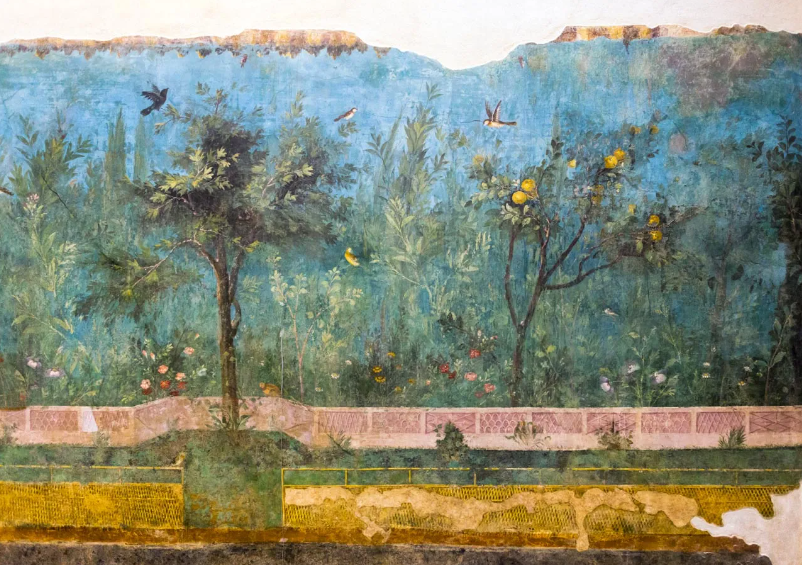
    The Villa of Livia, wife of Augustus

    Freakishly hardy and resistant to both stress ( we imagine transport) and various pathogens, the Decius has, like many other varieties debased by those of greater commercial value in recent decades, enjoyed great popularity up to the turn of the century. Count Gallesio, which we will certainly discuss in later posts, mentions Decio as one of the most widespread varieties in the House of Este breathing zone north of the Apennines, between Ferrara, Modena and Reggio Emilia. It spread as far as the Veneto region, where it is still considered indigenous and guarded by a group of courageous farmers in the province of Verona. It is not dissimilar in shape and ripening methods to the campanina, with which it also shares the characteristic ‘double’ bell-like fruit (so much so that it is sometimes also called Decio Campanino). Fragrant and excellent when cooked, the next time you taste it, think that it is the same flavour and aroma that the Romans of the Empire also smelled.

  • Il Melo Decio di Modena 🍎

    Il Melo Decio di Modena 🍎

    Attila, re degli Unni, sarà stato anche simbolo indiscusso di atrocità, “terremoto e traccetia“, ma persino lui dovette battere in ritirata contro il magister militum Aezio, al comando di un agguerrito stuolo di Goti e Germani, a metàdel V sec. nella cruenta battaglia dove perse la vita anche Teodorico I, re dei Visigoti. A me piace pensare che negli accampamenti romani in Gallia, all’interno dei contuberni (tende) dove i milites condividevano pasti e piani di guerra, ci fossero anche vasi colmi di mele Decie. rosse, acide, profumate, e resistenti come i soldati dell’Imperium. Magari anche loro le tenevano a maturare sulla paglia, al sole.

    La teoria che la mela Decia provenga da questo grande generale (mela “d’Ezio”) non parrebbe purtroppo essere la più quotata però. Ci sono fonti sparse che documentano la presenza di questa mela nella zona di Ravenna capitale quasi centocinquant’anni prima, durante il governo di Decio. In ogni caso, parliamo di una varietà di frutto che avrebbe almeno 1600 anni, anche se probabilmente molti di più, e già presente sulle tavole dei Romani prima della caduta dell’Impero d’Occidente in pieno periodo di quell’anarchia militare che sarbbe poi stata calmierata da Diocleziano.

    La Villa di Livia, moglie di Augusto

    Mostruosamente rustica e resistente sia a sollecitazioni (immaginiamo il trasporto) che a diversi patogeni, il Decio ha, come tante altre varietà svilite da quelle dal maggior valore commerciale negli ultimi decenni, goduto di grande popolarità fino ad inizio secolo. Gallesio, di cui parleremo sicuramente più avanti, cita il Decio tra le varietà più diffuse nella zona di respiro Estense a nord dell’Appennino, tra Ferrara, Modena e Reggio Emilia. La sua diffusione arrivò fino al Veneto, dove è tutt’oggi considerata autoctona e custodita da un gruppo di coraggiosi agricoltori custodi in provincia di Verona. Non è dissimile per forma e metodi di maturazione dalla campanina, con la quale condivide anche il caratteristico frutto “doppio” come le campane (tant’è che è talvolta chiamato anche Decio Campanino). Profumata ed ottima se cotta, la prossima volta che la asseggerete pensate che èlo stesso sapore e lo stesso profumo che sentivano anche i Romani dell’Impero.

  • On the Pàm Campanéin or the Chime Apple

    On the Pàm Campanéin or the Chime Apple

    That the Campanino Apple, or Pomo di Modena as it was known at the time, was extremely widespread to the point of becoming proverbial in centuries past, there is no shadow of doubt. Since the Middle Ages the broli (ancient orchard-gardens) of the Estense lands were rich in apple orchards, which in all likelihood included this small and extremely tenacious variety. Giorgio Gallesio, a very important Ligurian botanist famous for his work Pomona Italiana

    never saw the unification of Italy or the birth of the conflicts that led to it, but he traveled through its territories and had occasion to mention our bellflower precisely as “Pomo Modenese,” thus present in quantity as early as the 1800s. The count probably saw them lying in the farmyards of the countryside sunbathing, where they turned from dull green to bright red in a few days. Think of the spectacle. Not only did these fragrant melons not hold the frost, but in fact the cold made them tastier. In terms of storage, too, they were perfect. In September-October, they were harvested and remained firm and fragrant for months, without refrigerators or ice.

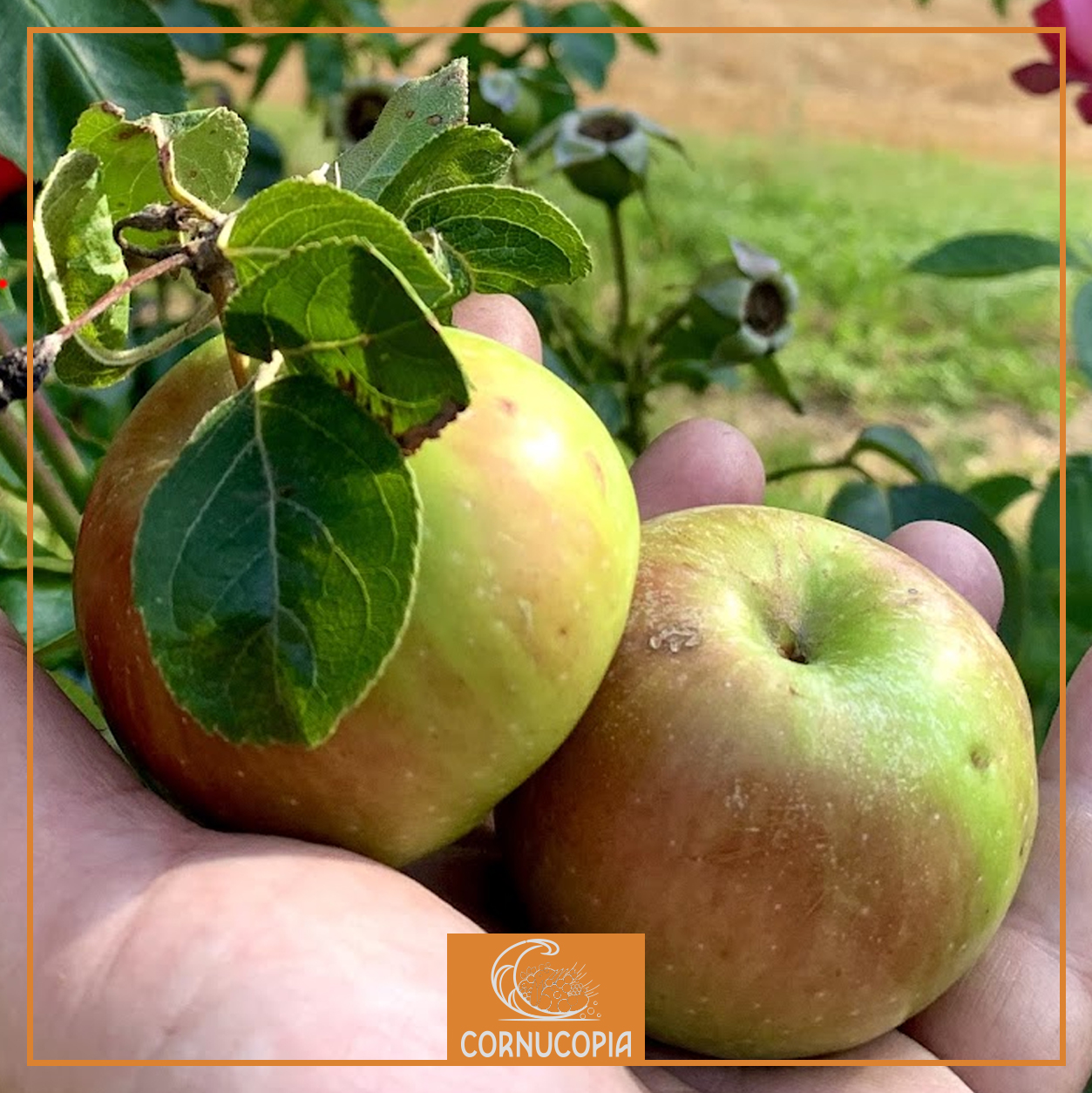
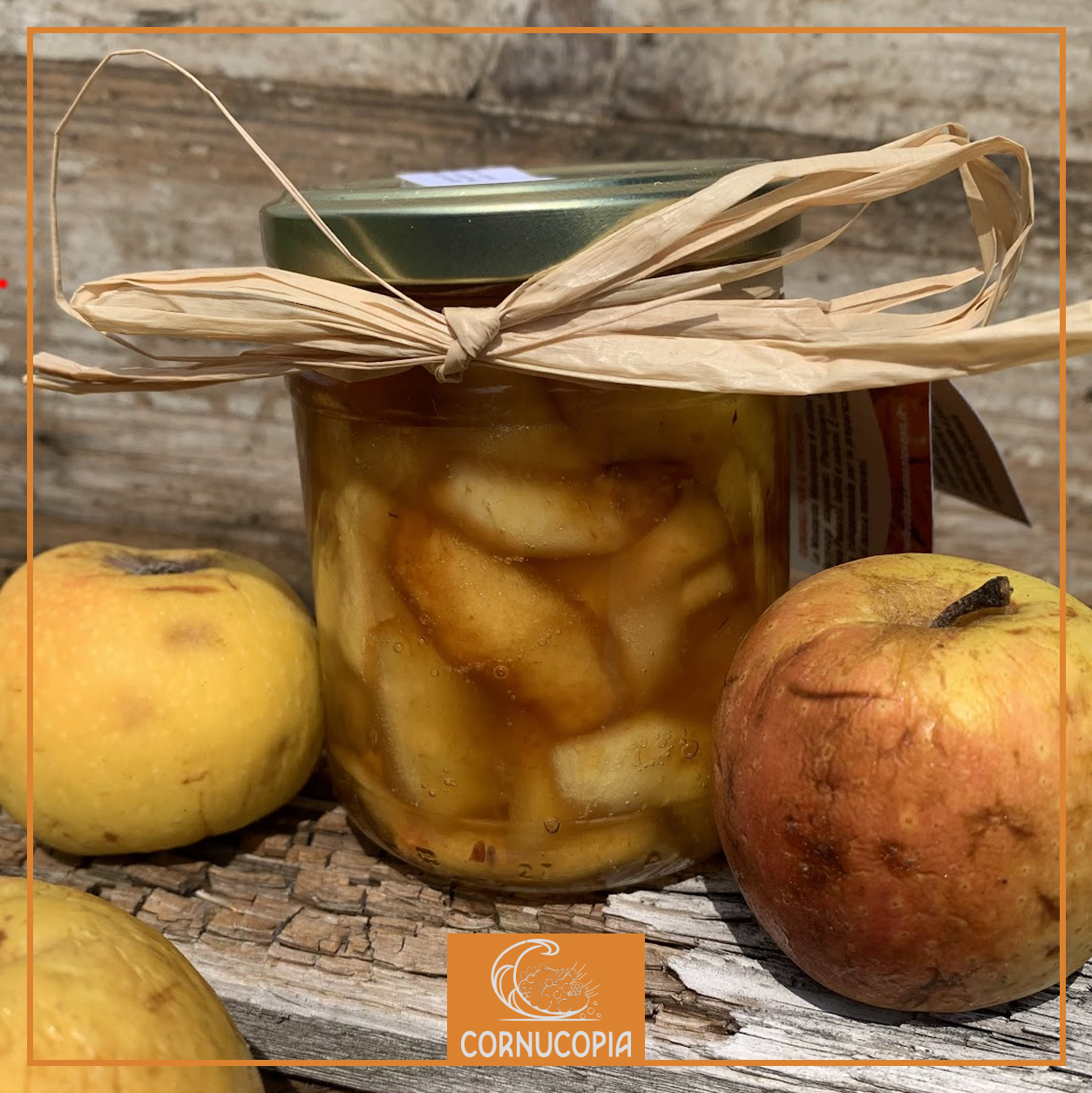
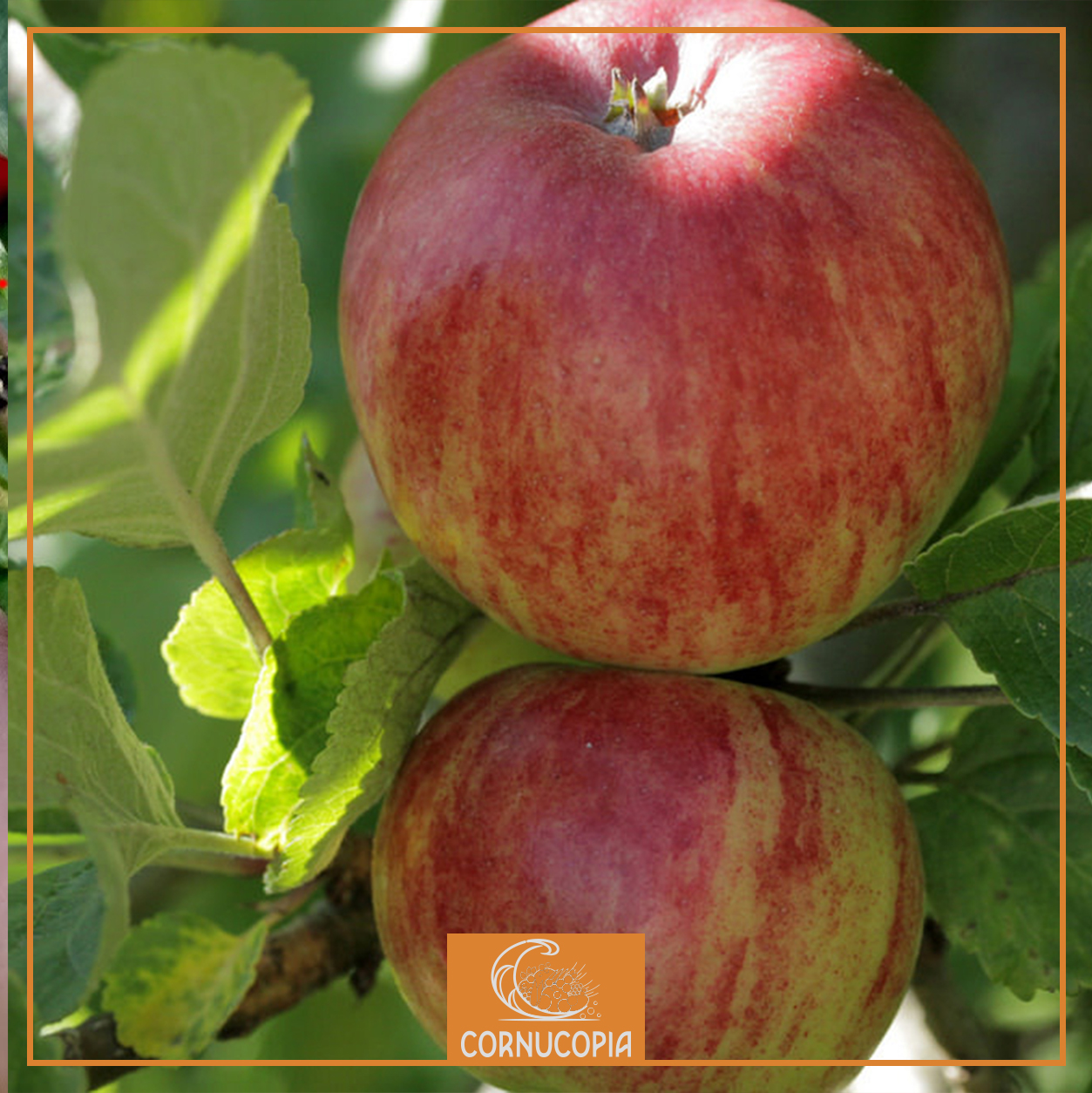
    The Campanina represents the Emilian territory (let’s include Mantua since in the 1800s it was cultivated up there more than here) in its most intimate meaning of terroir. It is very rustic, strong, produces wonderful fruits both cooked and raw, in mustards and preserves, even grows in my garden (see photo) without me pouring a drop of water. The campanina apple (thought to owe this more dialectal name because the fruits grow in pairs like two little bells) is in the soul of Modena, Reggio Emilia, Ferrara and Mantua. A little Gonzaga by adoption but very Estense. It has entered rural traditions for centuries, somewhat unripe as a splendid mostarda in Mantua, or more mature as grandmother’s apple with which she used to make fritters in our kitchens.

    Apple erosion occurs as early as the late 1900s however, this time we cannot blame the Atlantic. According to Mirandolian Vilmo Cappi it was already disappearing by the 1900s. Its dough “looks like marble,” said ours.

    It would now be a foregone conclusion that I am reporting a historic Cornucopia recipe such as Mantuan mustard, but I have decided to reserve an entire article devoted to the wonderful world of mustards and its uses through millennia of history in the coming days.

    Instead, I will refer to a recipe from 1864, from the “Encyclopedia of Progress” where it is used for anti-inflammatory purposes. Not surprisingly, scientific research on this apple has shown a huge antioxidant content (four times other commercial varieties); after all, these are defense systems for the plant itself, which did not live pampered in immense, irrigated orchards as it does today.

    Ah, the campanina also lots of pectin, use these if you can find them for your homemade jams, you only need a few cloves.

    Inflammation of eyes: cut two slices of the center of the Modena apple, ( this is the
    best ) Then apply one of these to each eye, in the evening at bedtime, rubbing the part well so that it remains during the night, and if the inflammation is obstinate, repeat the procedure again for seven to nine consecutive days.
    Experience has shown them to have always obtained a happy result with this simple method.

    From the ‘”Enciclopedia del progresso”, 1864

  • Del Pàm Campanéin ovvero Mela Campanina

    Del Pàm Campanéin ovvero Mela Campanina

    Che la Mela Campanino, o Pomo di Modena com’era conosciuta al tempo, fosse estremamente diffusa al punto da diventare proverbiale nei secoli passati, non v’è ombra di dubbio. Sin dal medioevo i broli delle terre Estensi erano ricchi di meleti, che con ogni probabilità comprendevano anche questa varietà piccola ed estremamente tenace. Giorgio Gallesio, importantissimo botanico ligure celebre per l’opera Pomona Italiana non vide mai l’unità d’Italia o la nascita dei conflitti che portarono ad essa, ma viaggiò per i suoi territori ed ebbe modo di accennare alla nostra campanina appunto come “Pomo Modenese”, presente quindi in quantità già nell’800. Probabilmente il conte la vide stesa nelle aie delle campagne a prendere il sole, dove da verde opaco diventavano in pochi giorni di un rosso brillante. Pensate lo spettacolo. Non solo queste meline profumate non tenevano il gelo, ma anzi il freddo le rendeva più saporite. Anche a livello di conservazione, erano perfette. A settembre-ottobre si raccoglievano e rimanevano sode e profumate per mesi, senza frigoriferi o ghiaccio.

    La Campanina rappresenta il territorio Emiliano (includiamoci anche Mantova visto che nell’800 era coltiovata più lassù che qui) nel suo significato più intimo di terroir. E’ rusticissima, forte, produce frutti meravigliosi sia cotti che crudi, in mostarde e conserve, cresce persino nel mio giardino (vedi foto) senza che io versi un goccio d’acqua. La mela campanina (si pensa debba questo nome più dialettale perchè i frutti screscono in coppia come due campanelle) è nell’anima di Modena, Reggio Emilia, Ferrara e Mantova. Un po’ Gonzaga d’adozione ma molto Estense. E’ entrata per secoli nelle tradizioni rurali, un po’ acerba come splendida mostarda a Mantova, o più matura come mela della nonna con cui preparava le frittelle nelle nostre cucine.

    L’erosione della mela avviene già a tardo ‘900 però, questa volta non possiamo dar colpa all’Atlantico. Secondo il mirandolese Vilmo Cappi stava scomperendo già nel 1900. La sua pasta “sembra marmo”, diceva il nostro.

    Sarebbe adesso scontato che riportassi una ricetta Cornucopia storica come quella della mostarda Mantovana, ma ho deciso di riserbarmi un articolo intero dedicato al meraviglioso mondo delle mostarde e dei suoi utilizzi attraverso millenni di storia nei prossimi giorni.

    Mi rifarò invece a una ricetta del 1864, da l’”Enciclopedia del progresso” dove viene utilizzata per scopi antiinfiammatori. Non sorprende che le ricerche scientifiche su questa mela abbiano evidenziato un contenuto di antiossidanti enorme (quattro volte altre varietà commerciali), d’altronde sono sistemi di difesa per la pianta stessa, che non viveva coccolata in frutteti immensi ed irrigati come oggi.

    Ah, la campanina anche tantissima pectina, usate queste se le trovate per le vostre confetture fatte in casa, ne bastano pochi spicchi.

    Infiammazione d’occhi: tagliansi due fettine del centro del pomo di Modena, ( questo è il
    migliore ) , levandone i granelli , poscia applicando una di queste sopra cadaun occhio, alla sera nell’andar a letto infasciando bene la parte in modo che rimanga durante la notte, e se l’infiammazione sarà ostinata si ripete di bel nuovo l’operato da sette a nove giorni consecutivi.
    L’esperienze ne hanno fatto vedere d’aver ottenuto sempre un felice risultato con questo semplice metodo.

    Da l’”Enciclopedia del progresso”, 1864