
Tag: Imola

  • The Forked Grapes

    The Forked Grapes

    It was the early 1600s when Marquis Vincenzo Tanara in Bologna wrote the splendid L’economia del cittadino in villa (The citizen’s economy in the villa), which we have also mentioned in other articles. Tanara, a magistrate and marquis in the then papal state, leaves us writings rich in detail concerning the administration of a mansion in a Bologna of bygone days, just a few decades after the famous coronation of Charles V at San Petronio. “On my kingdom,” goes the Emperor’s famous phrase, “the sun never sets” (In meinem Reich geht die Sonne niemals unter). And it is good that this is so because a good vineyard requires sun, wind, water and land. It was also during those years that the cloister of a Benedictine monastery was built, which is of interest to us because it houses a very old vine that is still, all things considered, going strong, in the very center of Imola.

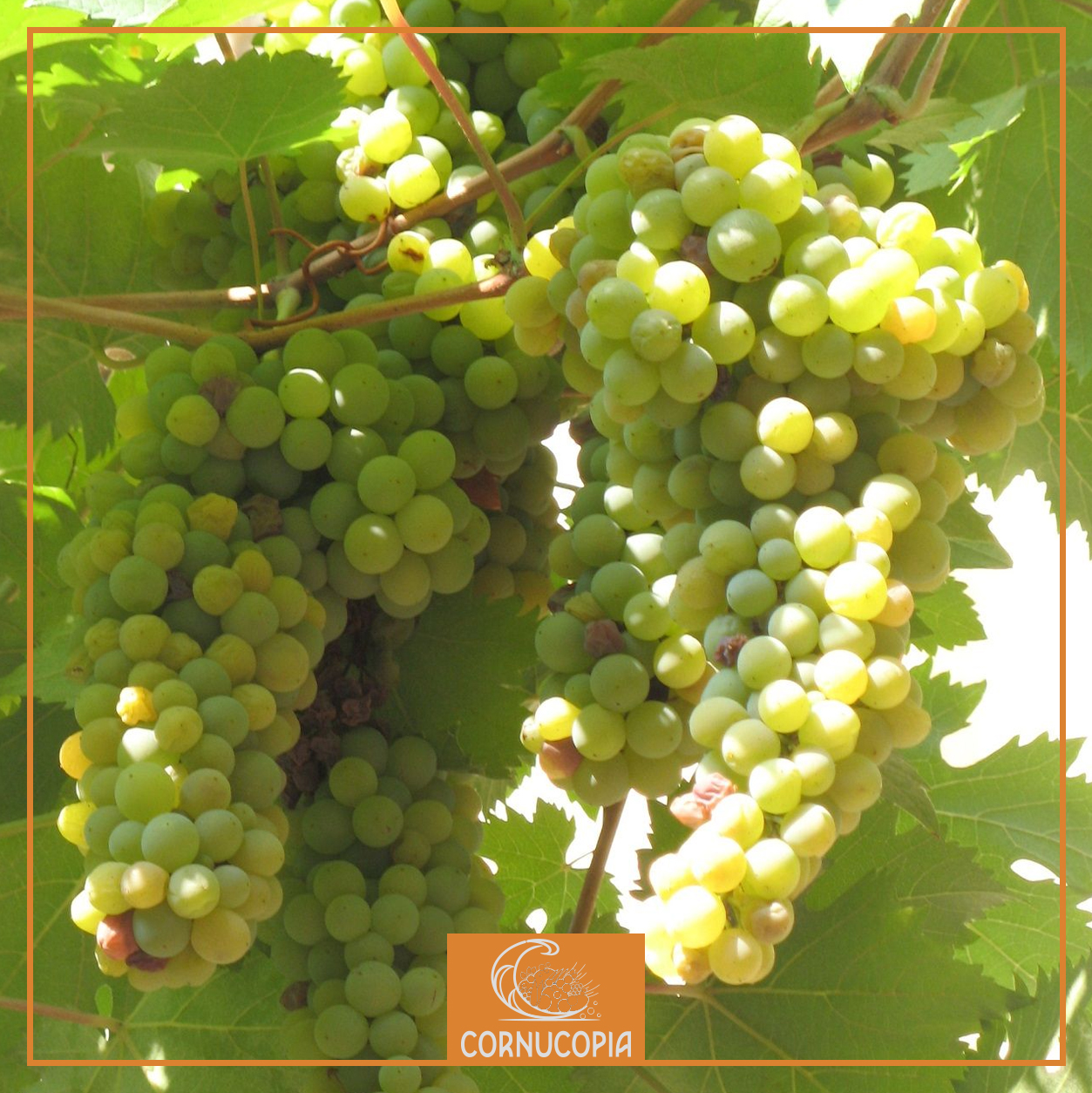
    Tanara is famous in agrarian and gastronomic historiography for many reasons, but of particular interest to us today is his classification of vines at that time, among which ticks the name of a grape that has held its own in the area for centuries, the vine of that cloister. The Forcella grape (the Fork).

    Around the Forcella orbits a confusion that spreads even on today’s ministerial documents, where it is only derubricated as a variant (or “clone”) of Albana di Romagna, so called because of the bifurcation that its long clusters present at their end. Today, however, we are not dealing with Albana Forcella, but with the Forcella that was also cultivated for centuries in the town where I live, Castelfranco Emilia. Or rather, it was even cultivated in the street where I live, although it has obviously been extirpated entirely. Fortunately, a far-sighted person has recovered cuttings so the Forcella of the street where Ser Parsifal lives are still alive, and will give us excellent wines.
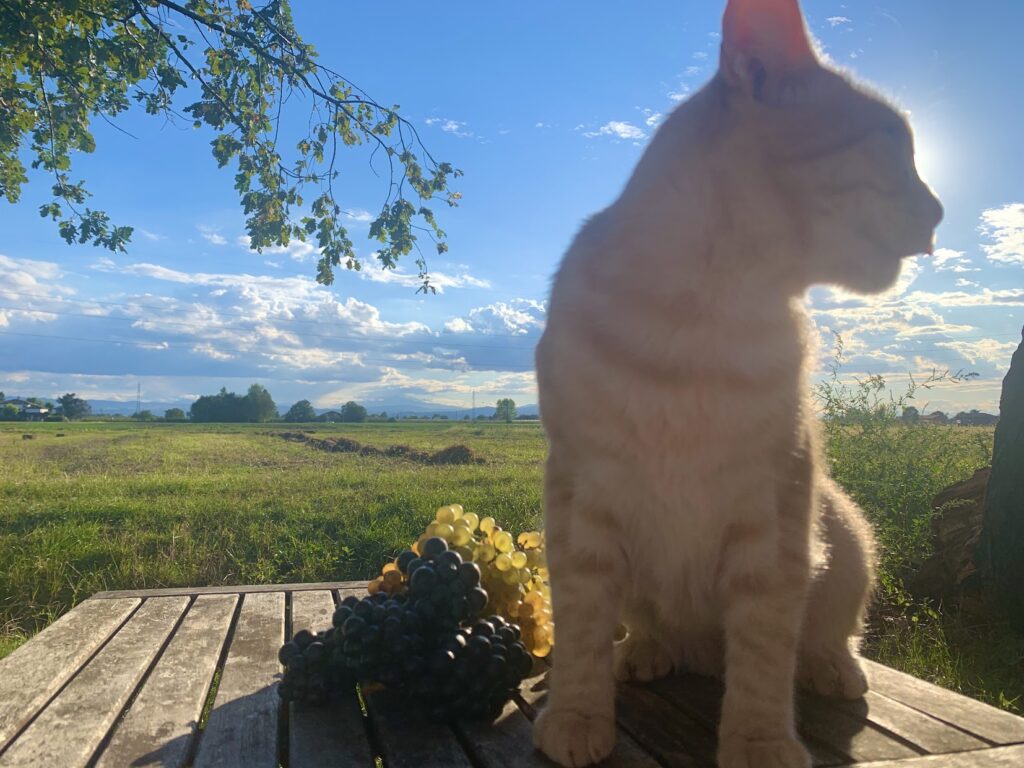
    Ser Parsifal oversees his estate- on the horizon the land where he grew among other grapes, the Forcella

    This vine is becoming less and less widespread, a fate that in this area has also befallen the other great absentee of local wine biodiversity: the Alionza. The only one that still enjoys some health is the equally historic Montuni (with which an honest Bianco di Castelfranco Emilia is produced).

    An important 1914 text edited by Cavazza mentions Forcella as being used for the production of table wines, given to the sapling, rustic and expansive, very productive and almost always used in blends. It is a passage that leads to many reflections on the nature of an area everywhere less and less interested in its historic winemaking vocation. Around the home of my lord Ser Parsifal above, the lands now host blanket cultivations of Lambrusco and Pignoletto of not only often terrifying quality but stubbornly condemned to single-varietal, when I wonder if this could still be a land of great whites, in the hands of skilled winemakers.
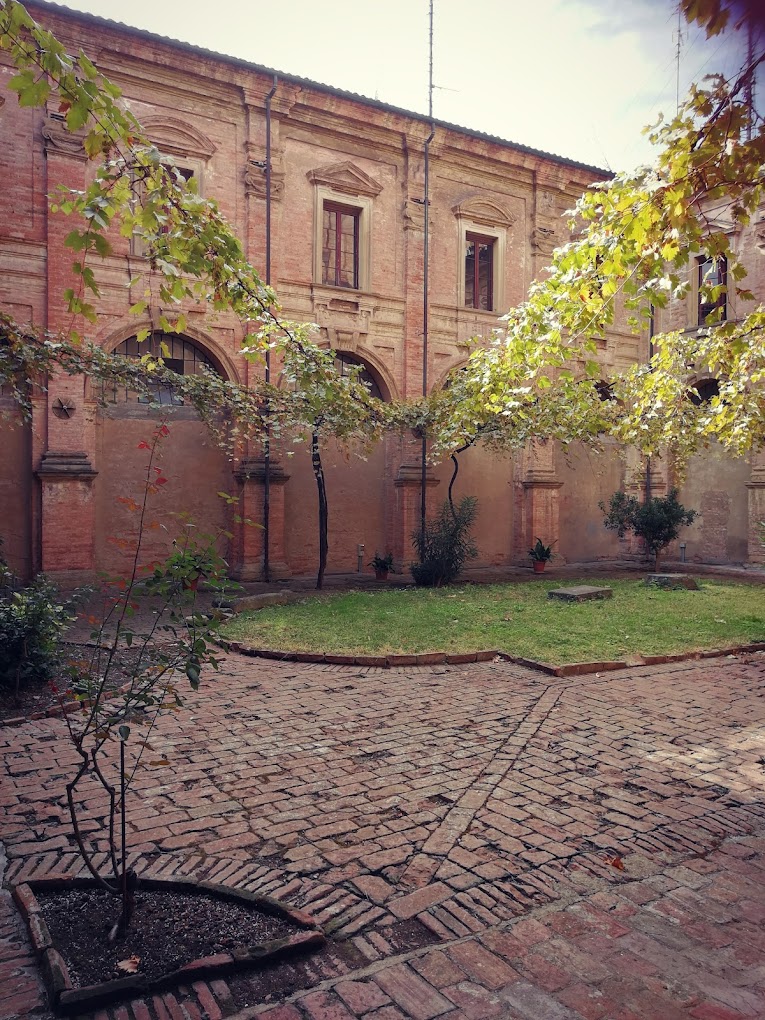
    Vite  secolare nei pressi di Santa Maria in Regola
    Patriarch of the fruit in the former Benedictine convent of the Olivetan congregation, Imola

    To honor the city of Imola and the Forcella plant above, today’s Cornucopia recipe will be about a typical local dessert, handed down to us thanks to a recipe by the very famous Pellegrino Artusi.

    Migliaccio di Romagna con saba di Uva Forcella

    • Milk, deciliters No. 7.
    • “Undone” pig’s blood, grams 330.
    • Forcella grape sapa, grams 200.
    • Peeled sweet almonds, grams 100.
    • Sugar, grams 100.
    • Very fine breadcrumbs, grams 80.
    • Candied fruit, grams 50.
    • Butter, grams 50.
    • Fine spices, two teaspoons.
    • Chocolate, grams 100.
    • Nutmeg, one teaspoon.
    • One strip of lemon peel.

    Pound in a mortar the almonds together with the candied fruit, which you will have first cut into small pieces, sprinkle them from time to time with a few teaspoons of milk and pass them through a sieve. Place the milk on the fire with the lemon peel, which must then be removed, and boil it for 10 minutes ; then add to it the grated chocolate, and when this has melted, remove it from the fire and let it cool a little. Then pour into the same pot the blood, already passed through istaccio (sieve), and all the other ingredients, saving for last the breadcrumbs, of which, if it were too much, a part can be left behind. Put the mixture to cook in a bain-marie and remove it often with the ladle so that it does not stick to the pot. The cooking and the degree of right density that is needed can be known from the ladle, which, left in the middle of the mixture, must remain upright. If this does not happen, add the rest of the breadcrumbs, assuming you have not poured it all in. For the remainder, do the same as for the ricotta cake No. 488, that is, pour it into a pan lined with the flat dough No. 118 and, when it is well browned, cut it into almonds. Cook the pasta matta a little so that it can be cut easily, and do not let the migliaccio dry out over the fire, but take it out when it comes out clean a granata twig dipped in it. If you use honey instead of sapa, taste it before adding the sugar so that it does not turn out too sweet, and note that one of the virtues of this dish is that it is mantecato, that is, of very fine composition. The fear of not being understood by everyone, in describing these dishes, often makes me descend to too much minute detail, which I would gladly spare.

    Pellegrino Artusi, La scienza in cucina e l’arte di mangiar bene
  • Una forcella per i capelli

    Una forcella per i capelli

    Erano i primi anni del 1600 quando a Bologna il marchese Vincenzo Tanara scriveva lo splendido L’economia del cittadino in villa, del quale abbiamo accennato anche in altri articoli. Il Tanara, magistrato e marchese nell’allora stato pontificio ci lascia scritti ricchi di dettagli relativi l’amministrazione della una villa di una Bologna di altri tempi, a pochi decenni dalla celebre incoronazione di Carlo V a San Petronio. “Sul mio regno”, recita la celebre frase dell’Imperatore, “non tramonta mai il sole” (In meinem Reich geht die Sonne niemals unter). Ed è un bene che sia così perché una buona vigna richiede sole, vento, acqua e terra. Fu proprio in quegli anni che venne costruito anche il chiostro di un monastero benedettino che ci interessa, perché ospita una antichissima vite ancora, tutto sommato, in forze, nel centro stesso di Imola.

    Tanara è famoso nell’ambito della storiografia agraria e gastronomica per tanti motivi ma di particolare interesse per noi oggi è la sua classificazione dei vitigni a quell’epoca, tra e quali spunta il nome di un’uva che ha retto per secoli nel territorio, la vite di quel chiostro. La Forcella.

    Attorno alla Forcella orbita una confusione che si propaga persino su documenti ministeriali odierni, dove viene derubricata solo come una variante (o “clone”) dell’albana di Romagna, chiamata così per la biforcazione che presentano i suoi lunghi grappoli al loro termine. Oggi però non trattiamo l’Albana Forcella, ma quella Forcella che si coltivava da secoli anche nel paese in cui vivo, Castelfranco Emilia. O meglio, si coltivava addirittura nella via dove abito, anche se è stata ovviamente espiantata interamente. Fortunatamente una perona lungimirante ha recuperato delle talee per cui la Forcella della via dove abita Ser Parsifal è ancora in vita, e ci donerà ottimi vini.

    Ser Parsifal supervisiona il suo fondo – all’orizzonte i terreni dove cresceva tra le altre uve, anche la Forcella

    Questo vitigno è sempre meno diffuso, sorte che in questa zona è toccata anche all’altro grande assente della biodiversità vinicola locale: l’Alionza. L’unico che gode ancora di una certa salute è l’altrettanto storico Montuni (con il quale si produce un onesto Bianco di Castelfranco Emilia).

    Un importante testo del 1914 curato da Cavazza, cita la Forcella come impiegata per la produzione di vini da pasto, datto all’alberello, rustica ed espansiva, molto produttiva e quasi sempre usata in uvaggi. Un passaggio che porta a molte riflessioni sulla natura di un territorio ovunque sempre meno interessato alla sua vocazione vinifera storica. Attorno a casa del mio signore Ser Parsifal qui sopra, i terreni ospitano oggi coltivazioni a tappeto di Lambruschi e Pignoletto di qualità non solo spesso terrificante, ma ostinatamente condannati al monovitigno, quando mi chiedo se questa potrebbe essere ancora terra di grandi bianchi, nelle mani di enologi esperti.

    Vite  secolare nei pressi di Santa Maria in Regola
    Patriarca del frutto nell’ex-Convento benedettino della congregazione degli Olivetani, Imola

    Per far onore alla città di Imola e alla pianta di Forcella qui sopra, la ricetta Cornucopia di oggi riguarderà un dolce tipico della zona, tramandato a noi grazie ad una ricetta del celeberrimo Pellegrino Artusi.

    Migliaccio di Romagna con saba di Uva Forcella

    • Latte, decilitri N. 7.
    • Sangue di maiale disfatto, grammi 330.
    • Sapa di uva Forcella, grammi 200.
    • Mandorle dolci sbucciate, grammi 100.
    • Zucchero, grammi 100.
    • Pangrattato finissimo, grammi 80.
    • Candito, grammi 50.
    • Burro, grammi 50.
    • Spezie fini, due cucchiaini.
    • Cioccolata, grammi 100.
    • Noce moscata, un cucchiaino.
    • Una striscia di scorza di limone.

    Pestate in un mortaio le mandorle insieme col candito, che avrete prima tagliato a pezzetti, bagnatele di tanto in tanto con qualche cucchiaino di latte e passatele per istaccio. Ponete il latte al fuoco con la buccia di limone, che poi va levata, e fatelo bollire per 10 minuti ; unite quindi al medesimo la cioccolata grattata, e quando questa sarà sciolta, levatelo dal fuoco e lasciatelo freddare un poco. Poi versate nello stesso vaso il sangue, già passato per istaccio, e tutti gli altri ingredienti serbando per ultimo il pangrattato, del quale, se fosse troppo, si può lasciare addietro una parte. Mettete il composto a cuocere a bagnomaria e rimuovetelo spesso col mestolo onde non si attacchi al vaso. La cottura e il grado di giusta densità che fa d’uopo, si conoscono dal mestolo che, lasciato in mezzo al composto, deve rimanere ritto. Se ciò non avviene, aggiungete il resto del pangrattato, supposto non l’abbiate versato tutto. Pel rimanente regolatevi come alla torta di ricotta N. 488, cioè versatelo in una teglia foderata colla pasta matta N. 118 e, quando sarà ben diaccio, tagliatelo a mandorle. Cuocete poco la pasta matta per poterla tagliar facilmente e non lasciate risecchire il migliaccio al fuoco, ma levatelo quando si estrae pulito un fuscello di granata immersovi. Se vi servite del miele invece della sapa, assaggiate avanti di aggiunger lo zucchero onde non riesca troppo dolce, e notate che uno de’pregi di questo piatto è che sia mantecato, cioè di composizione ben fine. Il timore di non essere inteso da tutti, nella descrizione di queste pietanze, mi fa scendere spesso a troppo minuti particolari, che risparmierei volentieri.

    Pellegrino Artusi, La scienza in cucina e l’arte di mangiar bene