
Tag: Broli

  • On the Pàm Campanéin or the Chime Apple

    On the Pàm Campanéin or the Chime Apple

    That the Campanino Apple, or Pomo di Modena as it was known at the time, was extremely widespread to the point of becoming proverbial in centuries past, there is no shadow of doubt. Since the Middle Ages the broli (ancient orchard-gardens) of the Estense lands were rich in apple orchards, which in all likelihood included this small and extremely tenacious variety. Giorgio Gallesio, a very important Ligurian botanist famous for his work Pomona Italiana

    never saw the unification of Italy or the birth of the conflicts that led to it, but he traveled through its territories and had occasion to mention our bellflower precisely as “Pomo Modenese,” thus present in quantity as early as the 1800s. The count probably saw them lying in the farmyards of the countryside sunbathing, where they turned from dull green to bright red in a few days. Think of the spectacle. Not only did these fragrant melons not hold the frost, but in fact the cold made them tastier. In terms of storage, too, they were perfect. In September-October, they were harvested and remained firm and fragrant for months, without refrigerators or ice.

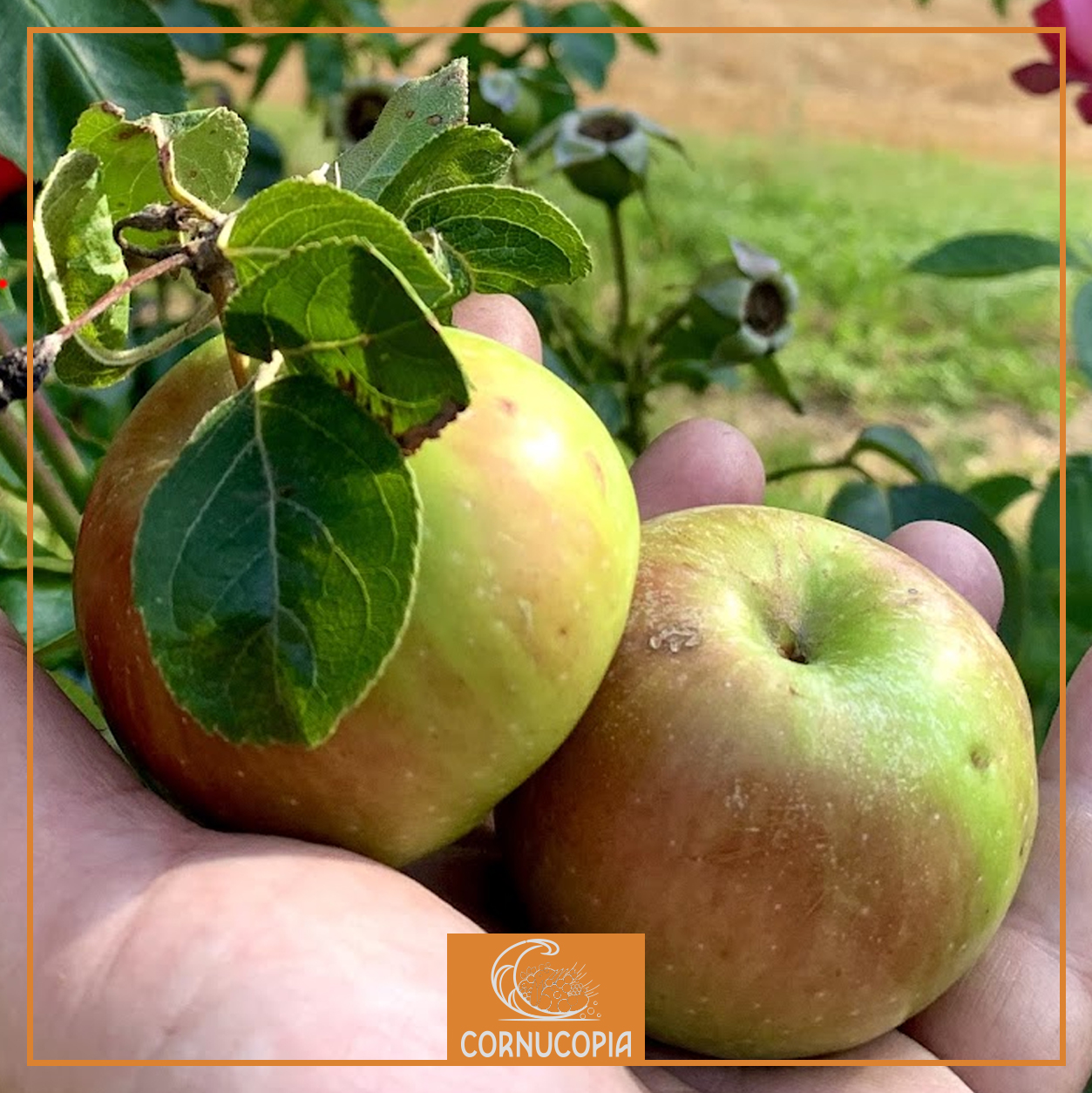
    The Campanina represents the Emilian territory (let’s include Mantua since in the 1800s it was cultivated up there more than here) in its most intimate meaning of terroir. It is very rustic, strong, produces wonderful fruits both cooked and raw, in mustards and preserves, even grows in my garden (see photo) without me pouring a drop of water. The campanina apple (thought to owe this more dialectal name because the fruits grow in pairs like two little bells) is in the soul of Modena, Reggio Emilia, Ferrara and Mantua. A little Gonzaga by adoption but very Estense. It has entered rural traditions for centuries, somewhat unripe as a splendid mostarda in Mantua, or more mature as grandmother’s apple with which she used to make fritters in our kitchens.

    Apple erosion occurs as early as the late 1900s however, this time we cannot blame the Atlantic. According to Mirandolian Vilmo Cappi it was already disappearing by the 1900s. Its dough “looks like marble,” said ours.

    It would now be a foregone conclusion that I am reporting a historic Cornucopia recipe such as Mantuan mustard, but I have decided to reserve an entire article devoted to the wonderful world of mustards and its uses through millennia of history in the coming days.

    Instead, I will refer to a recipe from 1864, from the “Encyclopedia of Progress” where it is used for anti-inflammatory purposes. Not surprisingly, scientific research on this apple has shown a huge antioxidant content (four times other commercial varieties); after all, these are defense systems for the plant itself, which did not live pampered in immense, irrigated orchards as it does today.

    Ah, the campanina also lots of pectin, use these if you can find them for your homemade jams, you only need a few cloves.

    Inflammation of eyes: cut two slices of the center of the Modena apple, ( this is the
    best ) Then apply one of these to each eye, in the evening at bedtime, rubbing the part well so that it remains during the night, and if the inflammation is obstinate, repeat the procedure again for seven to nine consecutive days.
    Experience has shown them to have always obtained a happy result with this simple method.

    From the ‘”Enciclopedia del progresso”, 1864

  • Del Pàm Campanéin ovvero Mela Campanina

    Del Pàm Campanéin ovvero Mela Campanina

    Che la Mela Campanino, o Pomo di Modena com’era conosciuta al tempo, fosse estremamente diffusa al punto da diventare proverbiale nei secoli passati, non v’è ombra di dubbio. Sin dal medioevo i broli delle terre Estensi erano ricchi di meleti, che con ogni probabilità comprendevano anche questa varietà piccola ed estremamente tenace. Giorgio Gallesio, importantissimo botanico ligure celebre per l’opera Pomona Italiana non vide mai l’unità d’Italia o la nascita dei conflitti che portarono ad essa, ma viaggiò per i suoi territori ed ebbe modo di accennare alla nostra campanina appunto come “Pomo Modenese”, presente quindi in quantità già nell’800. Probabilmente il conte la vide stesa nelle aie delle campagne a prendere il sole, dove da verde opaco diventavano in pochi giorni di un rosso brillante. Pensate lo spettacolo. Non solo queste meline profumate non tenevano il gelo, ma anzi il freddo le rendeva più saporite. Anche a livello di conservazione, erano perfette. A settembre-ottobre si raccoglievano e rimanevano sode e profumate per mesi, senza frigoriferi o ghiaccio.

    La Campanina rappresenta il territorio Emiliano (includiamoci anche Mantova visto che nell’800 era coltiovata più lassù che qui) nel suo significato più intimo di terroir. E’ rusticissima, forte, produce frutti meravigliosi sia cotti che crudi, in mostarde e conserve, cresce persino nel mio giardino (vedi foto) senza che io versi un goccio d’acqua. La mela campanina (si pensa debba questo nome più dialettale perchè i frutti screscono in coppia come due campanelle) è nell’anima di Modena, Reggio Emilia, Ferrara e Mantova. Un po’ Gonzaga d’adozione ma molto Estense. E’ entrata per secoli nelle tradizioni rurali, un po’ acerba come splendida mostarda a Mantova, o più matura come mela della nonna con cui preparava le frittelle nelle nostre cucine.

    L’erosione della mela avviene già a tardo ‘900 però, questa volta non possiamo dar colpa all’Atlantico. Secondo il mirandolese Vilmo Cappi stava scomperendo già nel 1900. La sua pasta “sembra marmo”, diceva il nostro.

    Sarebbe adesso scontato che riportassi una ricetta Cornucopia storica come quella della mostarda Mantovana, ma ho deciso di riserbarmi un articolo intero dedicato al meraviglioso mondo delle mostarde e dei suoi utilizzi attraverso millenni di storia nei prossimi giorni.

    Mi rifarò invece a una ricetta del 1864, da l’”Enciclopedia del progresso” dove viene utilizzata per scopi antiinfiammatori. Non sorprende che le ricerche scientifiche su questa mela abbiano evidenziato un contenuto di antiossidanti enorme (quattro volte altre varietà commerciali), d’altronde sono sistemi di difesa per la pianta stessa, che non viveva coccolata in frutteti immensi ed irrigati come oggi.

    Ah, la campanina anche tantissima pectina, usate queste se le trovate per le vostre confetture fatte in casa, ne bastano pochi spicchi.

    Infiammazione d’occhi: tagliansi due fettine del centro del pomo di Modena, ( questo è il
    migliore ) , levandone i granelli , poscia applicando una di queste sopra cadaun occhio, alla sera nell’andar a letto infasciando bene la parte in modo che rimanga durante la notte, e se l’infiammazione sarà ostinata si ripete di bel nuovo l’operato da sette a nove giorni consecutivi.
    L’esperienze ne hanno fatto vedere d’aver ottenuto sempre un felice risultato con questo semplice metodo.

    Da l’”Enciclopedia del progresso”, 1864