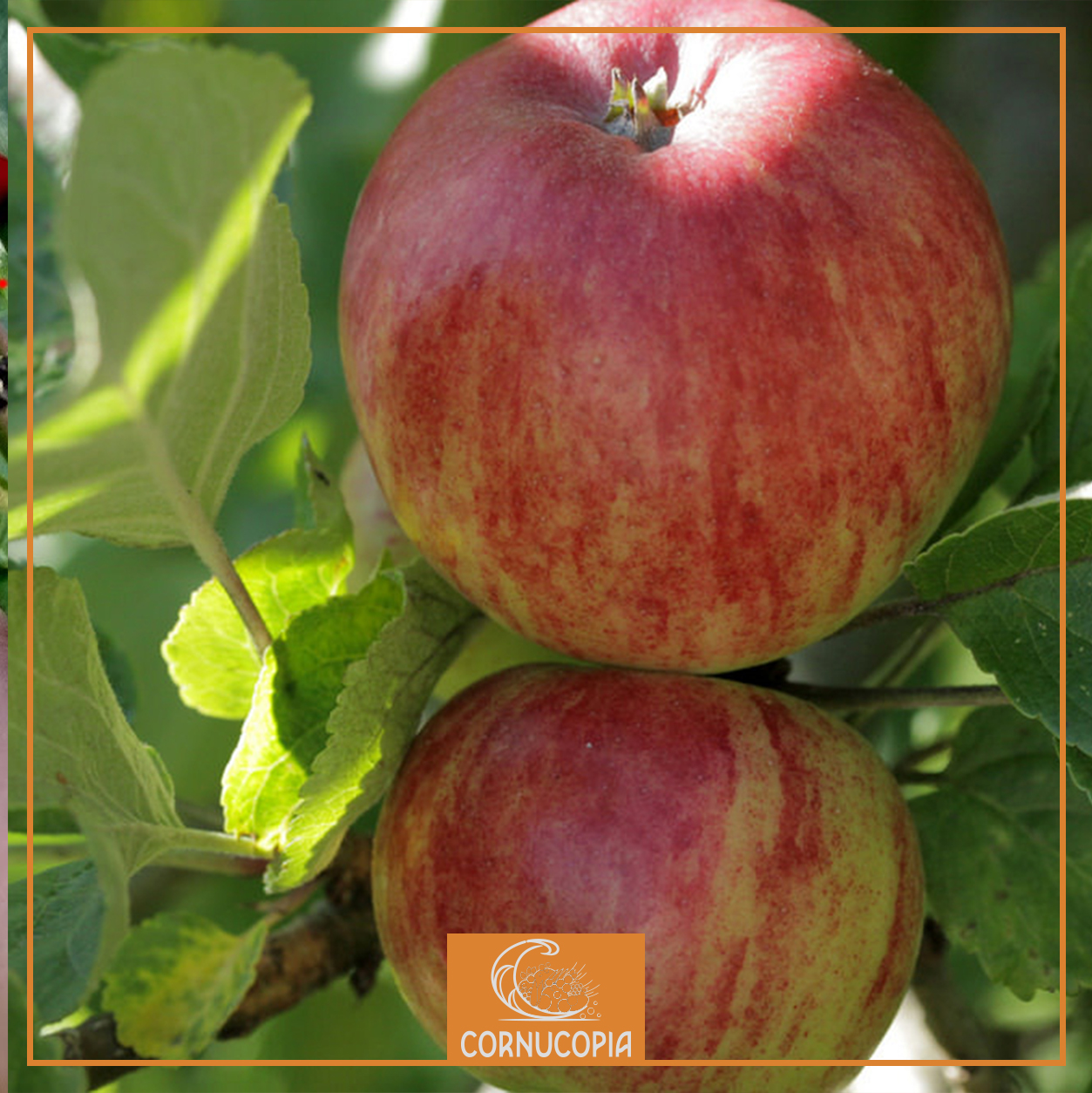
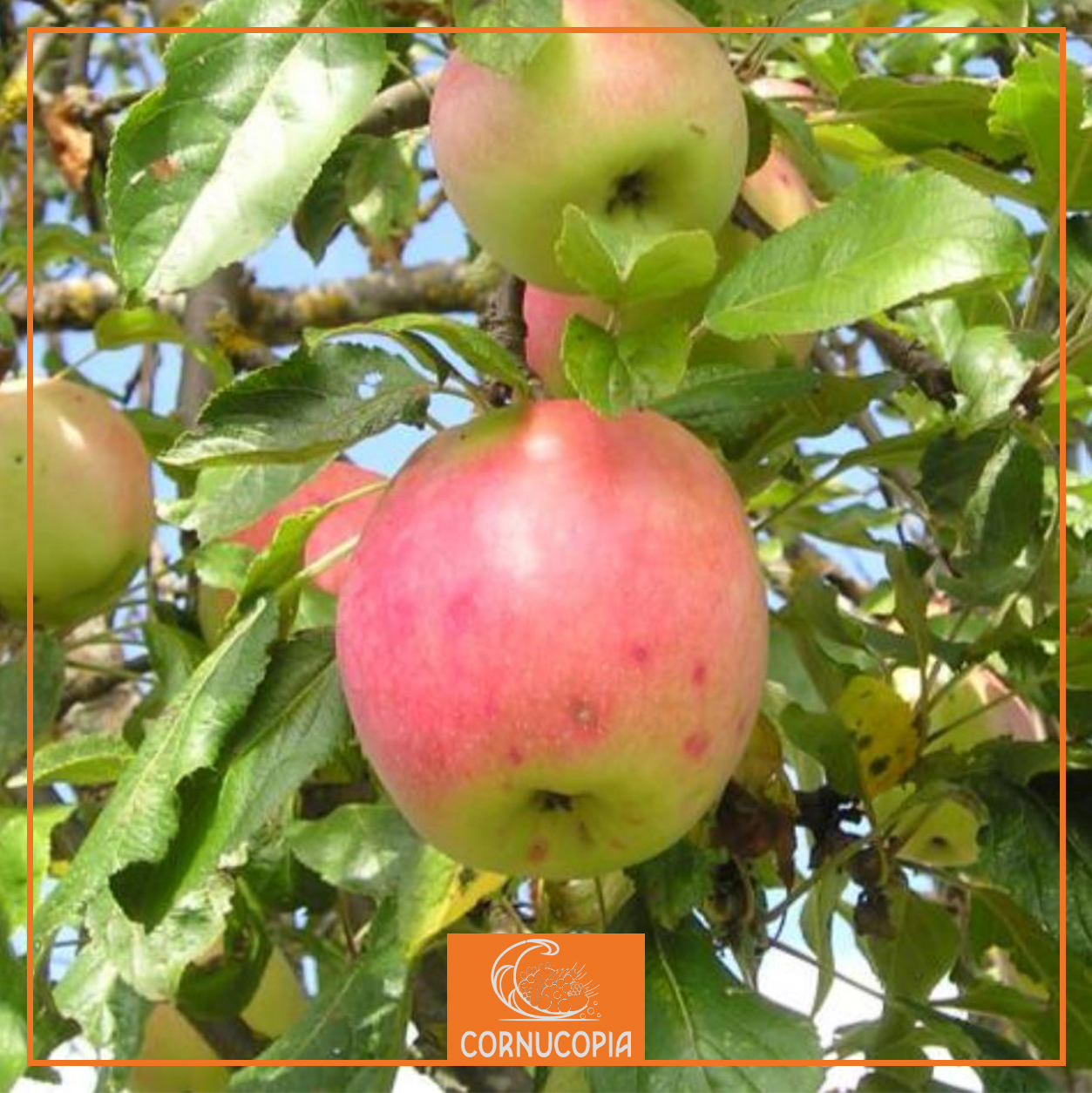
Attila, king of the Huns, may have been an undisputed symbol of atrocity, ‘earthquake and traccetia‘, but even he had to beat a retreat against the magister militum Aetius, in command of a fierce troop of Goths and Germans, in the mid-fifth century in the bloody battle where Theodoric I, king of the Visigoths, also lost his life. I like to think that in the Roman encampments in Gaul, inside the contuberni (tents) where the milites shared meals and war plans, there were also jars full of Decie apples. red, sour, fragrant, and as hardy as the soldiers of the Imperium. Perhaps they too kept them ripening on straw, in the sun.
The theory that the Decian apple came from this great general (the ‘Aetius’ apple) does not seem to be the most quoted one, however. There are scattered sources documenting the presence of this apple in the Ravenna capital area almost one hundred and fifty years earlier, during the rule of Decius. In any case, we are talking about a variety of fruit that would be at least 1600 years old, although probably many more, and already present on the tables of the Romans before the fall of the Western Empire in the midst of the military anarchy that would later be calmed by Diocletian.
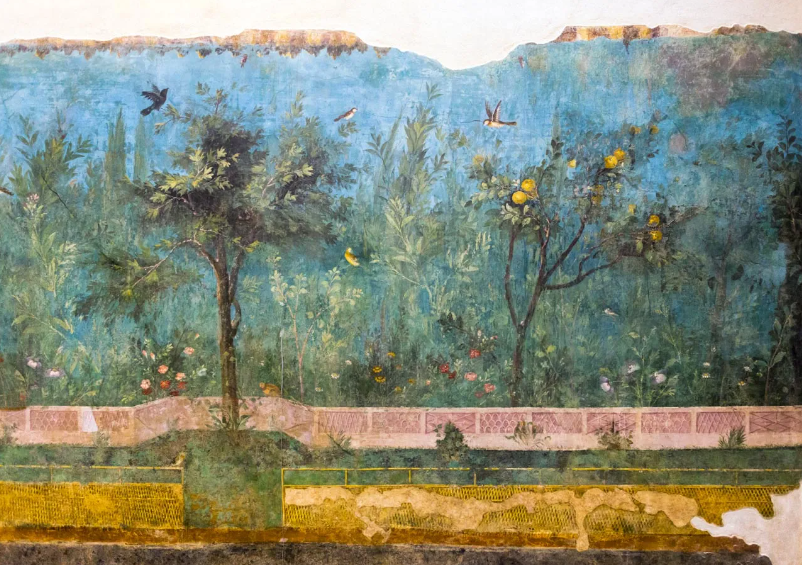
The Villa of Livia, wife of Augustus
Freakishly hardy and resistant to both stress ( we imagine transport) and various pathogens, the Decius has, like many other varieties debased by those of greater commercial value in recent decades, enjoyed great popularity up to the turn of the century. Count Gallesio, which we will certainly discuss in later posts, mentions Decio as one of the most widespread varieties in the House of Este breathing zone north of the Apennines, between Ferrara, Modena and Reggio Emilia. It spread as far as the Veneto region, where it is still considered indigenous and guarded by a group of courageous farmers in the province of Verona. It is not dissimilar in shape and ripening methods to the campanina, with which it also shares the characteristic ‘double’ bell-like fruit (so much so that it is sometimes also called Decio Campanino). Fragrant and excellent when cooked, the next time you taste it, think that it is the same flavour and aroma that the Romans of the Empire also smelled.
In the cities of Emilia, Romagna and Le Marche, the shouts of the Thirty Years’ War resounded, and the Baroque spread through churches and buildings, while the Este family held court in Modena. It was the 1600s, and far from the din of shouts and cannons in the surrounding countryside and hills, with the arrival of autumn, the ground softened and mists spread silently among the rows of vines. Here, children were able to amuse themselves with what the land offered them, such as the so-called granny apple or ‘rattle apple’ (sunaìa in dialect). This apple, which elsewhere was also called ‘batocchia‘ after the sound of the bell’s clapper, took its name from a particular characteristic: the seeds inside the fruit tended to detach, creating a rattling sound when the apple was shaken. This apple was greenish-yellow in colour, with shades of bright red at sun-exposed spots, creating a wonderful colour effect. Its flesh was sweet and slightly sour, and it had that characteristic smell of apples of yesteryear. That apple is still there, fortunately, although there are no children to shake it.
The sunaia apple shares a peculiar characteristic with one of its sister apples, typical of the Modena area: the cavicchia apple (cavécc in dialect, with the ‘c’ pronounced like the ‘c’ in chocolate and the ‘a’ closed in the Modenese way). Both apples have a particularly large internal cavity, which contains the seeds that break off and dance inside 🍎.
As mentioned above, in addition to the hills of Emilia, the ‘mela sunaia’ was also popular in the Marche region, particularly in the area of the Sibillini and Nera river valleys and then down further to Perugia. In the Marche region, before the 1950s, mela sunaia was used to prepare paccucce, quarters of apples that were left to dry in the sun on trays or willow trellises and baked in the oven to prevent spoilage. Spartecche were often eaten as the main course of the peasant dinner during times of scarcity.
Medicinally, apple parcels were used to treat colds in the form of herbal teas. This ancient apple was thus a valuable resource for rural populations, not only as a source of nourishment, but also for its therapeutic properties.
In Umbria, our beloved apple takes on a wonderful role as a filling for Rocciata Folignate, a dessert made of apples, sultanas and dried fruit that is very popular throughout the region.
Although it indicated this apple as an orange (autumn) fruit, only the harvest took place in October, but then the apple was left to ripen in the fruit cellar until December, when it released its full aroma. So delicious was the aroma that it was even used to deodorise laundry.
The Cornucopia Recipe: Pastry of Stewed Sunaie Apples
With this post I shall venture to inaugurate this section of Cornucopia recipes, or rather, suggestions for historical recipes attributable to the Emilia and Romagna region and to be used to enhance our agricultural biodiversity. Recipe and variety from the same region in short. This is the idea that lies at the heart of the genesis of Cornucopia, namely to create a connection between cuisine and historical varieties. Obviously this project is open to suggestions and advice, especially regarding recipes from the early 1900s countryside that still remain hidden in grandmothers’ drawers and that someone might want to share 🍩. What better legacy for these recipes than to create a direct correlation with the raw materials of our history?
So let’s start with grandma’s apple and a recipe from our Estense steward, Cristoforo Messisbugo, whom I may tell you about one day. He is a very important figure in the history of Renaissance cuisine in my region, but there is so much to say about him that he really deserves a whole article.
Given the fragrance and the vocation of this apple for cooking, and since we have talked about the rocciata, which is a sheet of stuffed pastry, I thought I would propose the following recipe from the 1500s. The recipe for stewed apples (i.e. cut into pieces and cooked in wine) has two versions, one fat and one lean as they used to say in those days: as a thin pie (a ‘batter’) stuffed or as a dish containing only the filling.
Take pears or apples in the necessary quantity to make the pastries or dishes you desire. I think you’ll need six for six pastries and eight for a dish. After giving them a good scorch in the fire, you will wash them and, once cooled, peel them while leaving the stem in the middle. Then, you will put them in a pot to boil in a good black wine with plenty of sugar, a few pieces of whole cinnamon, and a few whole cloves. You will let it cook until the flavor is well blended and it appears like a jelly. If you want to make pastries, you will prepare some crusts and fill them with the fruit mixture, or you will spread it on the dishes and sprinkle candied cinnamon on top. I think you will need six ounces of sugar, half an ounce of cinnamon, and ten cloves to make one of these pastries, while you will also use candied cinnamon to decorate the dishes or pastries.
Sheet of the Sunaia Apple (17th century, Autumn, Winter)
Digita almeno due lettere per cercare nelle schede dell’enciclopedia.
Gestisci Consenso
Per fornire le migliori esperienze, utilizziamo tecnologie come i cookie per memorizzare e/o accedere alle informazioni del dispositivo. Il consenso a queste tecnologie ci permetterà di elaborare dati come il comportamento di navigazione o ID unici su questo sito. Non acconsentire o ritirare il consenso può influire negativamente su alcune caratteristiche e funzioni.
Funzionale
Sempre attivo
L'archiviazione tecnica o l'accesso sono strettamente necessari al fine legittimo di consentire l'uso di un servizio specifico esplicitamente richiesto dall'abbonato o dall'utente, o al solo scopo di effettuare la trasmissione di una comunicazione su una rete di comunicazione elettronica.
Preferenze
L'archiviazione tecnica o l'accesso sono necessari per lo scopo legittimo di memorizzare le preferenze che non sono richieste dall'abbonato o dall'utente.
Statistiche
L'archiviazione tecnica o l'accesso che viene utilizzato esclusivamente per scopi statistici.L'archiviazione tecnica o l'accesso che viene utilizzato esclusivamente per scopi statistici anonimi. Senza un mandato di comparizione, una conformità volontaria da parte del vostro Fornitore di Servizi Internet, o ulteriori registrazioni da parte di terzi, le informazioni memorizzate o recuperate per questo scopo da sole non possono di solito essere utilizzate per l'identificazione.
Marketing
L'archiviazione tecnica o l'accesso sono necessari per creare profili di utenti per inviare pubblicità, o per tracciare l'utente su un sito web o su diversi siti web per scopi di marketing simili.