
Tag: Renaissance

  • In Praise of Ulisse Aldrovandi

    In Praise of Ulisse Aldrovandi

    It would be completely foolish and inconsiderate to think of tackling a project dedicated to the historical research of biodiversity and culinary habits without talking about a figure who was born and lived in my neighbouring (and until less than a century ago, also the regional capital) Bologna: Ulisse Aldrovandi. I would therefore like to say a few words about this man, who lived between the 16th and 17th centuries, and inaugurate a series of articles dedicated to naturalists, cooks, stewards and chroniclers who contribute their writings to this research path that is Cornucopia.

    Even as a young boy, Ulysses was curious and driven by a desire to learn that made his blood flow and his muscles and bones vibrate with energy. He ran away from home as a little more than a child, just a handful of years after the coronation of Charles V just a stone’s throw from his home, in a city still reeling from the conflicts with France. Still a young boy, and gripped by a desire to learn about the world, he sneaked into Modena where he dressed in pilgrim’s clothes to make a long journey to the burial place of the apostle of Jesus Christ, James, in Spain. A place today famous by the name of Compostela. Perhaps it was that journey that triggered in him the desire to learn and catalogue all the natural beauties of the world

    The importance of his works, which are still preserved in Bologna, are such that they influenced even the likes of Linnaeus, who considered him the father of modern Natural History. To get an idea of who Linnaeus is: you know that L. listed next to all the names of plants and animals on Wikipedia? That’s him.

    Aldrovandi devoted himself to a life of study, juggling philosophy and jurisprudence that were not those of today but part of a well-rounded cultural baggage of a ‘universal man’ that has been lost over the centuries. His efforts to classify and catalogue everything he could collect and observe occurred during the years of the establishment of the Archiginnasio and the Orto Pubblico, which he managed for decades.

    In many respects, Cornucopia represents, in a way, the opposite of Aldrovandi’s work. His efforts were aimed not only at a work of identification circumscribed to a cultural microcosm such as Italy might be, or to the sphere of gastronomy alone, but was projected onto a universal vision. These were the years following the discovery of the Americas and Ulisse’s curiosity was probably particularly stimulated by what we would call ‘allochthonous’ life forms. His thinking was so irrepressible that he went as far as the territories of cryptozoology, into a world of monsters and chimeras. Yet in his plates I lost myself for days imagining what those strange fruits and animals might have looked like four centuries ago.
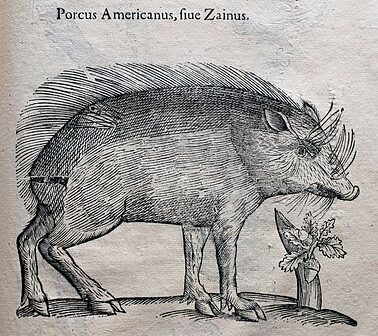
    Porcus Americanus
    Porcus Americanus

    In addition to admiring him as a person and innovator, and being fascinated by his endless curiosity, I would like to invite everyone today to browse through his plates or visit the Garden and its collection in Palazzo Poggi a Bologna. The splendid plates partly illustrated by himself and partly painted by great contemporary artists, the hundreds of dried leaves and plants (Aldrovandi was a pupil of Luca Ghini, whom we will return to in another post where we will discuss botanical gardens), are also available online.

  • Grandma’s apple

    Grandma’s apple

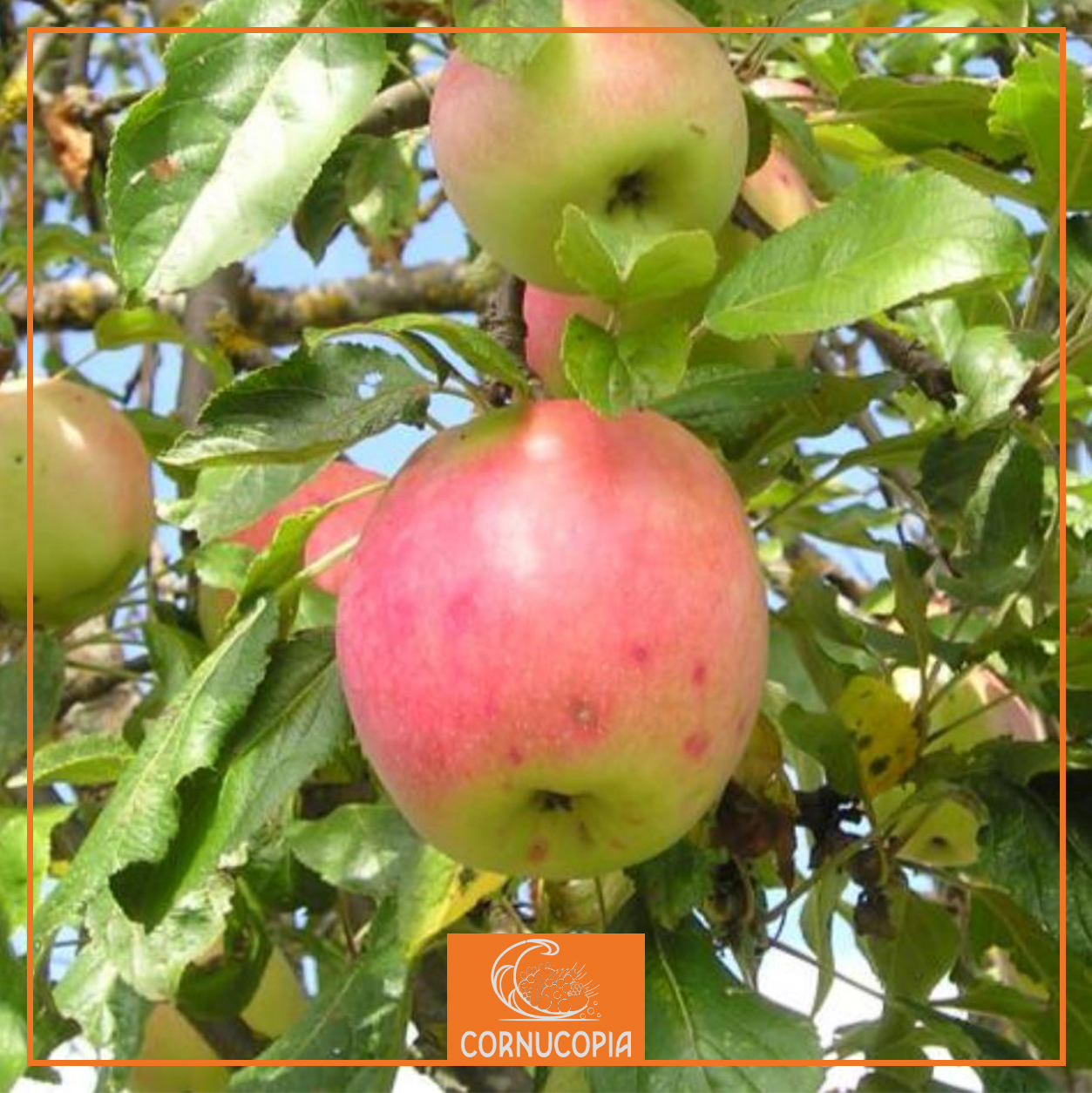
    In the cities of Emilia, Romagna and Le Marche, the shouts of the Thirty Years’ War resounded, and the Baroque spread through churches and buildings, while the Este family held court in Modena. It was the 1600s, and far from the din of shouts and cannons in the surrounding countryside and hills, with the arrival of autumn, the ground softened and mists spread silently among the rows of vines. Here, children were able to amuse themselves with what the land offered them, such as the so-called granny apple or ‘rattle apple’ (sunaìa in dialect). This apple, which elsewhere was also called ‘batocchia‘ after the sound of the bell’s clapper, took its name from a particular characteristic: the seeds inside the fruit tended to detach, creating a rattling sound when the apple was shaken. This apple was greenish-yellow in colour, with shades of bright red at sun-exposed spots, creating a wonderful colour effect. Its flesh was sweet and slightly sour, and it had that characteristic smell of apples of yesteryear. That apple is still there, fortunately, although there are no children to shake it.

    The sunaia apple shares a peculiar characteristic with one of its sister apples, typical of the Modena area: the cavicchia apple (cavécc in dialect, with the ‘c’ pronounced like the ‘c’ in chocolate and the ‘a’ closed in the Modenese way). Both apples have a particularly large internal cavity, which contains the seeds that break off and dance inside 🍎.

    As mentioned above, in addition to the hills of Emilia, the ‘mela sunaia’ was also popular in the Marche region, particularly in the area of the Sibillini and Nera river valleys and then down further to Perugia. In the Marche region, before the 1950s, mela sunaia was used to prepare paccucce, quarters of apples that were left to dry in the sun on trays or willow trellises and baked in the oven to prevent spoilage. Spartecche were often eaten as the main course of the peasant dinner during times of scarcity.

    Medicinally, apple parcels were used to treat colds in the form of herbal teas. This ancient apple was thus a valuable resource for rural populations, not only as a source of nourishment, but also for its therapeutic properties.

    In Umbria, our beloved apple takes on a wonderful role as a filling for Rocciata Folignate, a dessert made of apples, sultanas and dried fruit that is very popular throughout the region.

    Although it indicated this apple as an orange (autumn) fruit, only the harvest took place in October, but then the apple was left to ripen in the fruit cellar until December, when it released its full aroma. So delicious was the aroma that it was even used to deodorise laundry.

    The Cornucopia Recipe: Pastry of Stewed Sunaie Apples

    With this post I shall venture to inaugurate this section of Cornucopia recipes, or rather, suggestions for historical recipes attributable to the Emilia and Romagna region and to be used to enhance our agricultural biodiversity. Recipe and variety from the same region in short. This is the idea that lies at the heart of the genesis of Cornucopia, namely to create a connection between cuisine and historical varieties. Obviously this project is open to suggestions and advice, especially regarding recipes from the early 1900s countryside that still remain hidden in grandmothers’ drawers and that someone might want to share 🍩. What better legacy for these recipes than to create a direct correlation with the raw materials of our history?

    So let’s start with grandma’s apple and a recipe from our Estense steward, Cristoforo Messisbugo, whom I may tell you about one day. He is a very important figure in the history of Renaissance cuisine in my region, but there is so much to say about him that he really deserves a whole article.

    Given the fragrance and the vocation of this apple for cooking, and since we have talked about the rocciata, which is a sheet of stuffed pastry, I thought I would propose the following recipe from the 1500s. The recipe for stewed apples (i.e. cut into pieces and cooked in wine) has two versions, one fat and one lean as they used to say in those days: as a thin pie (a ‘batter’) stuffed or as a dish containing only the filling.

    Take pears or apples in the necessary quantity to make the pastries or dishes you desire. I think you’ll need six for six pastries and eight for a dish. After giving them a good scorch in the fire, you will wash them and, once cooled, peel them while leaving the stem in the middle. Then, you will put them in a pot to boil in a good black wine with plenty of sugar, a few pieces of whole cinnamon, and a few whole cloves. You will let it cook until the flavor is well blended and it appears like a jelly. If you want to make pastries, you will prepare some crusts and fill them with the fruit mixture, or you will spread it on the dishes and sprinkle candied cinnamon on top. I think you will need six ounces of sugar, half an ounce of cinnamon, and ten cloves to make one of these pastries, while you will also use candied cinnamon to decorate the dishes or pastries.